Vesak in Vietnam — Buddha's birthday, explained
Vesak (Đại lễ Phật đản) is the year's biggest Buddhist festival: the birth of Buddha Shakyamuni, celebrated on the full moon of the fourth lunar month. In 2026 Vesak week ran May 24–31. Processions of flower palanquins, lotus lanterns on the water and a vegetarian week — all while the day stays off the public-holiday list and ordinary life runs as usual.
What Vesak Is and When It Happens
- Quan Su Pagoda (Chùa Quán Sứ): Hanoi, Sangha headquarters — Main Vesak ceremony
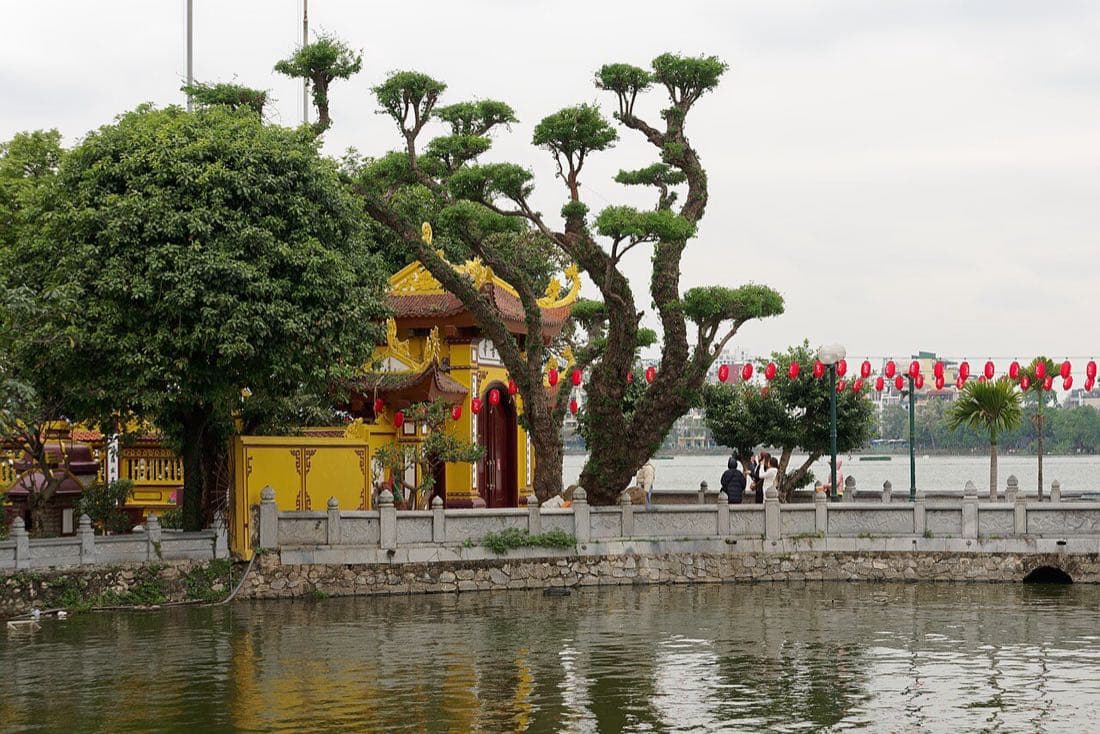
- Tran Quoc Pagoda (Chùa Trấn Quốc): Hanoi's oldest pagoda (6th c.) — On West Lake
- Viet Nam Quoc Tu (Chùa Việt Nam Quốc Tự): Ho Chi Minh City, procession finish — Buddha bathing ceremony
- Vinh Nghiem Pagoda (Chùa Vĩnh Nghiêm): One of the largest pagodas in the city — Old northern pagoda style
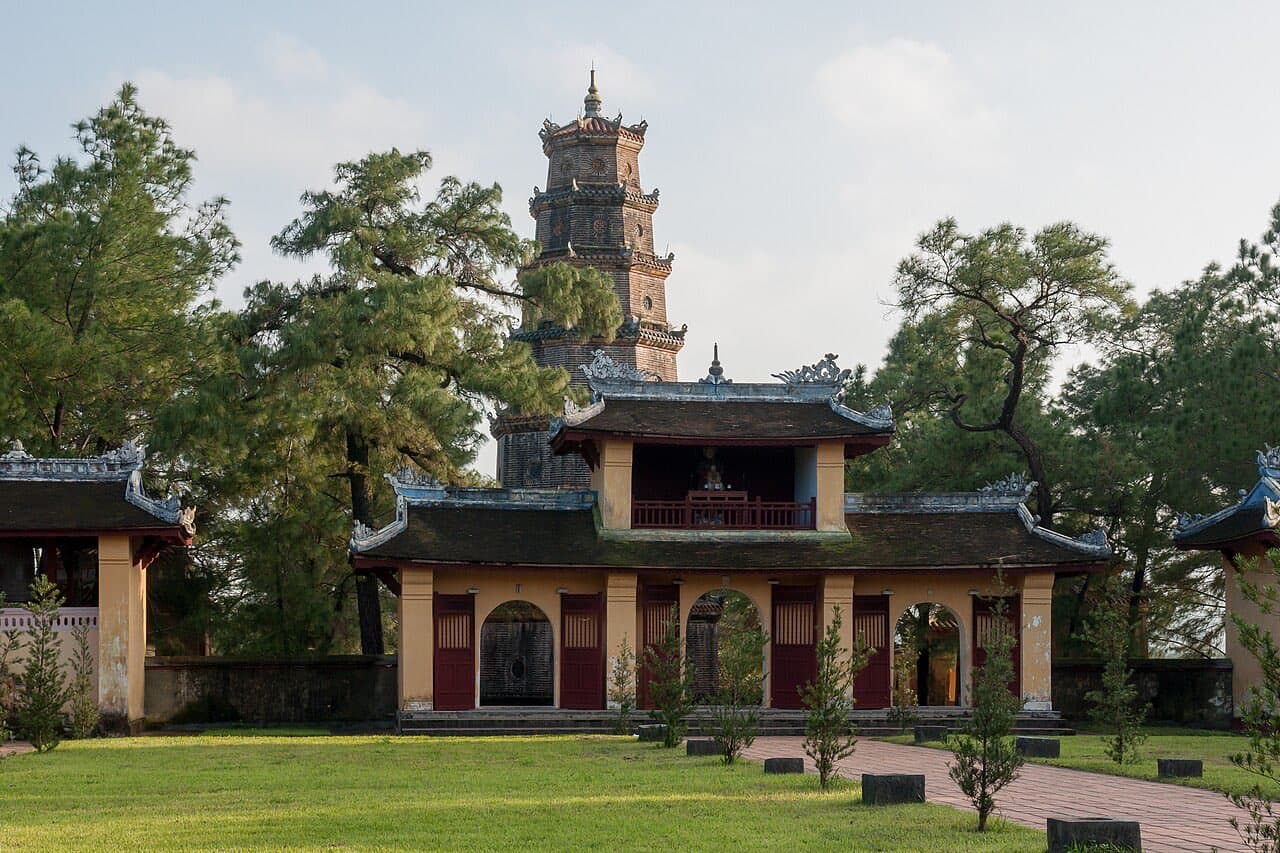
- Thien Mu Pagoda (Chùa Thiên Mụ): Hue city symbol — Processions and river lanterns
- Linh Ung Pagoda (Chùa Linh Ứng): Da Nang, Lady Buddha statue — 67 meters tall
Vesak marks the birth of Buddha Shakyamuni; in Vietnam it is called Phật đản. It falls on the full moon of the fourth lunar month, with festivities spread across a week — from the 8th to the 15th day of that month. In 2026 that meant May 24–31, peaking on the 31st. In the Buddhist calendar it was the year 2570.
| Year | Vesak week | Peak day |
|---|---|---|
| 2026 | May 24–31 | May 31 |
| 2027 | mid-May (TBA) | full moon, 4th lunar month |
| 2028 | late May (TBA) | full moon, 4th lunar month |
The Buddhist Sangha announces exact dates in spring, a couple of months ahead. The reliable rule of thumb: Vesak lands somewhere between early May and early June.
One planning detail matters most: Vesak is not one of Vietnam's public holidays. Banks, offices and schools work, transport runs normally, hotel rates usually do not spike. That is the opposite of the April 30 block or Tet, when the country stops. Vesak lives inside pagodas and on evening streets without disrupting anything.
What Exactly Is Being Celebrated
In Theravada countries Vesak bundles three events at once: the Buddha's birth, his enlightenment and his passing into parinirvana. Vietnamese Mahayana splits them across different dates, and Phật đản celebrates the birth specifically. Enlightenment (Thành đạo) falls in the 12th lunar month, the passing in the 2nd, and both are noticeably quieter.
The story reenacted in pagodas comes straight from the canonical texts: Queen Maya stopped in the Lumbini grove on her way home, and Prince Siddhartha was born there. Legend holds that the newborn took seven steps, a lotus blooming under each footfall. Hence the seven lotus lanterns on Hue's Perfume River, the lotus as the festival's core symbol, and the reason the infant Buddha statue always has its right hand raised.
Dates for the Buddha's birth differ across traditions: Japan marks April 8 on the solar calendar, Korea and China the 8th day of the 4th lunar month, Vietnam the 15th day of the same month, at full moon. The gap is a calendar artifact, not a dispute about facts.
How It's Celebrated: Bathing, Processions, Lanterns
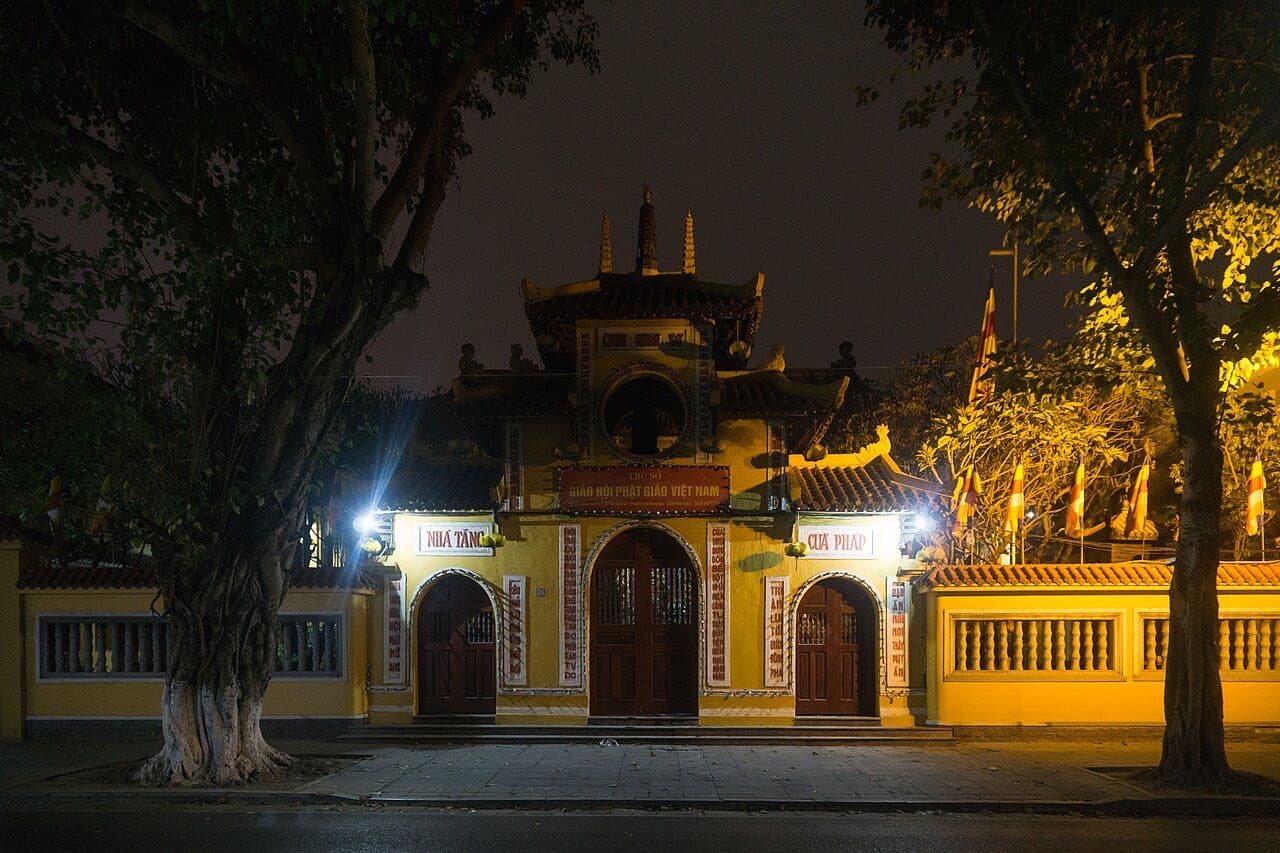
Three rituals define the festival, and you can catch them in any city.
Bathing the infant Buddha (Tắm Phật) is the central rite. A basin of water and flower petals holds a small statue of the infant Buddha with one hand raised. Worshippers take turns ladling water over it three times while making a wish. The point is cleansing your own mind, not the figurine. Visitors are welcome to join: it is one shared queue and nobody asks about your religion.
Processions (rước Phật) run in the evenings: columns of flower palanquins, Buddhist flags and mobile altars move from one pagoda to another. In Ho Chi Minh City on May 24, 2026, a procession carrying the infant Buddha statue and sixteen flower palanquins went from An Quang Pagoda to Việt Nam Quốc Tự, where the main bathing ceremony took place.
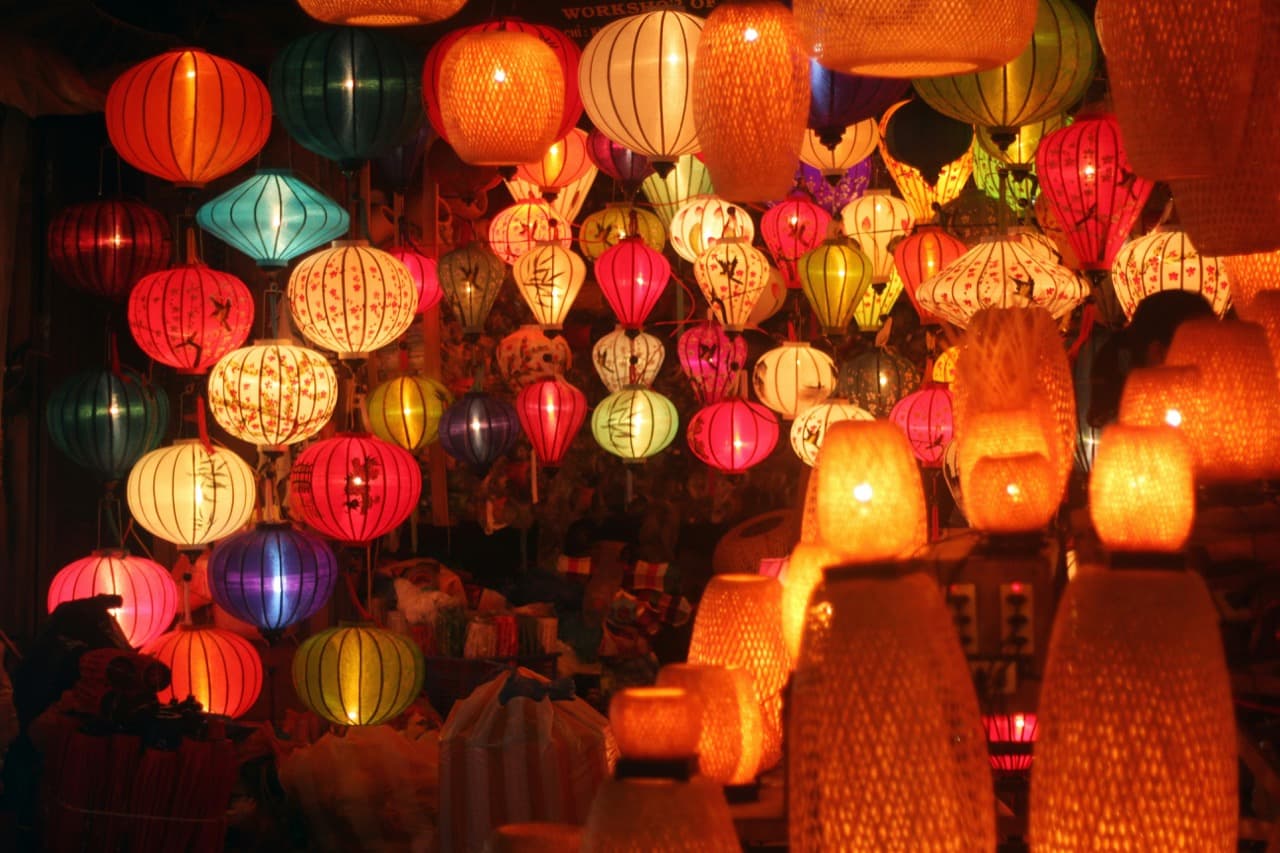
Lotus lanterns are the visual highlight. In Hue seven large lotuses are floated on the Perfume River, symbolizing the newborn Buddha's seven steps. Pagodas nationwide string up lantern garlands, turning their courtyards into lit gardens.
There is a fourth, quieter layer: charity. Communities hand out free meals, raise money for hospitals and practice phóng sinh, releasing birds and fish. The practice is contested — traders catch birds specifically for the holiday — and younger Buddhists increasingly swap it for donations.
An Evening of Vesak, Hour by Hour
By 17:00 worshippers in white and grey gather at the pagodas, often whole families arriving by motorbike. From 18:00 to 18:30 the main hall holds its service: sutra chanting, the Patriarch's message, sometimes a short sermon. Around 19:00 the procession forms up on the street, lanterns and candles are lit, and the palanquins roll out. It moves slowly — two or three kilometers take an hour and a half — with police closing the route.
By 20:30–21:00 the column reaches the final pagoda for the Buddha bathing: the queue stretches tens of meters but moves fast. After that comes the informal part — food, photos, lanterns — and by 22:00 the city returns to a normal evening.
Fast Track — no queue at the border
5–10 minutes instead of an hour in the immigration queue
from$11per passenger
Cities: Where to See Vesak
The festival runs nationwide, but three cities offer fundamentally different versions.
Hanoi. The main ceremony takes place at Quán Sứ Pagoda, headquarters of the Vietnam Buddhist Sangha. The Supreme Patriarch's message is read there and the processions start there; in 2026 the Buddha's relics were carried through the central streets, rare even by Vesak standards. For atmosphere without officialdom, head to Trấn Quốc, the city's oldest pagoda on West Lake. The rest of the city is covered in our Hanoi attractions guide.
Ho Chi Minh City. The largest and most carnival-like version: palanquins, altar trucks, kilometer-long columns of worshippers in white. The finish line is Việt Nam Quốc Tự in District 10; the second hub is Vĩnh Nghiêm, one of the city's largest pagodas. More in our Ho Chi Minh City attractions guide.
Hue. The most beautiful version, and even people from other cities admit it. Hue is historically Vietnam's Buddhist capital: seven lotus lanterns on the Perfume River, night processions from Thiên Mụ Pagoda, and a vegetarian food festival — in 2026 held jointly with Hue Festival. What to see beyond the festival is in Hue attractions.
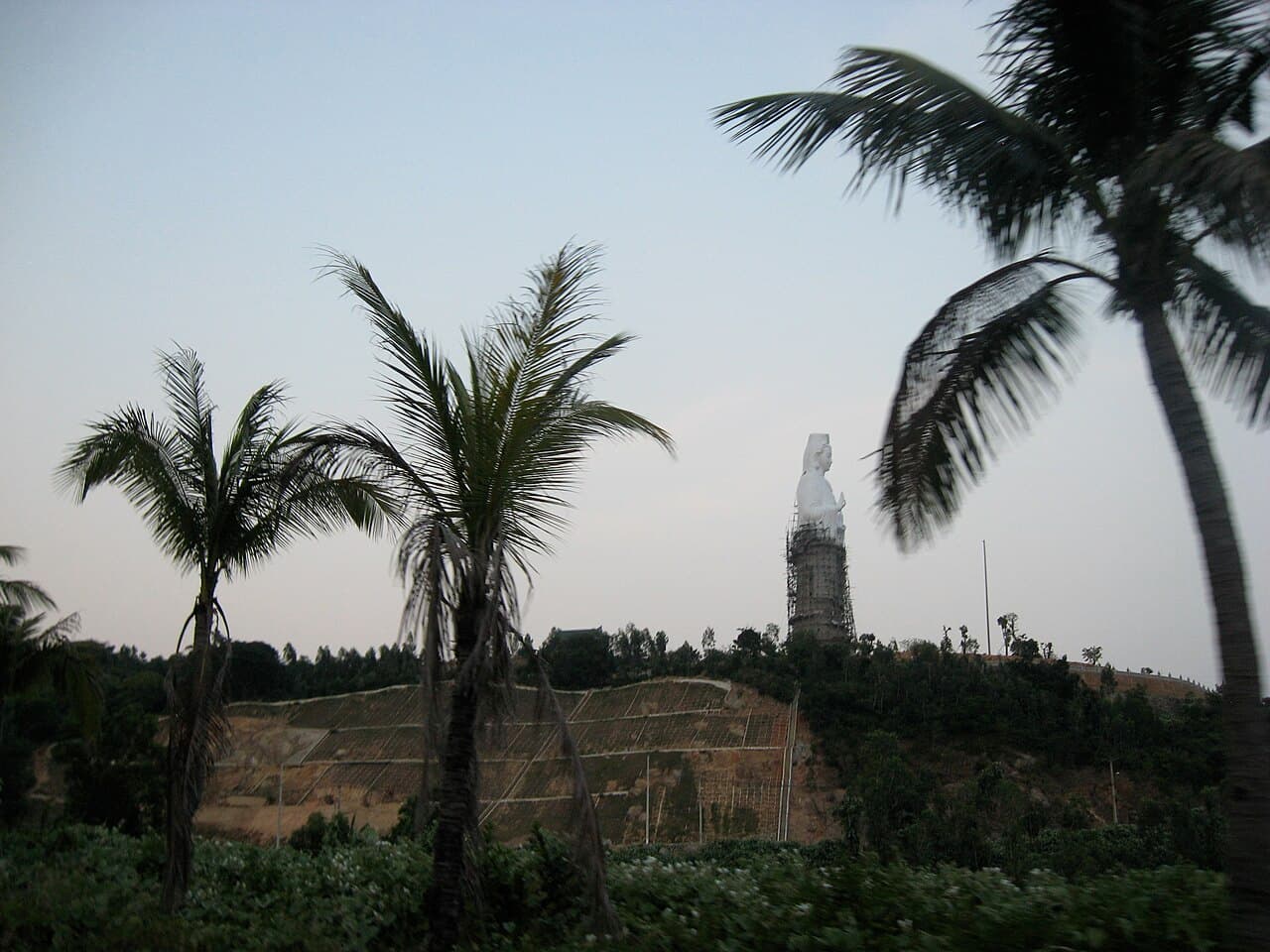
Da Nang adds central Vietnam's biggest visual landmark: Linh Ứng Pagoda on the Son Tra peninsula with its 67-meter Lady Buddha. Evening processions climb to it during Vesak, and the terrace overlooks the lit-up city.
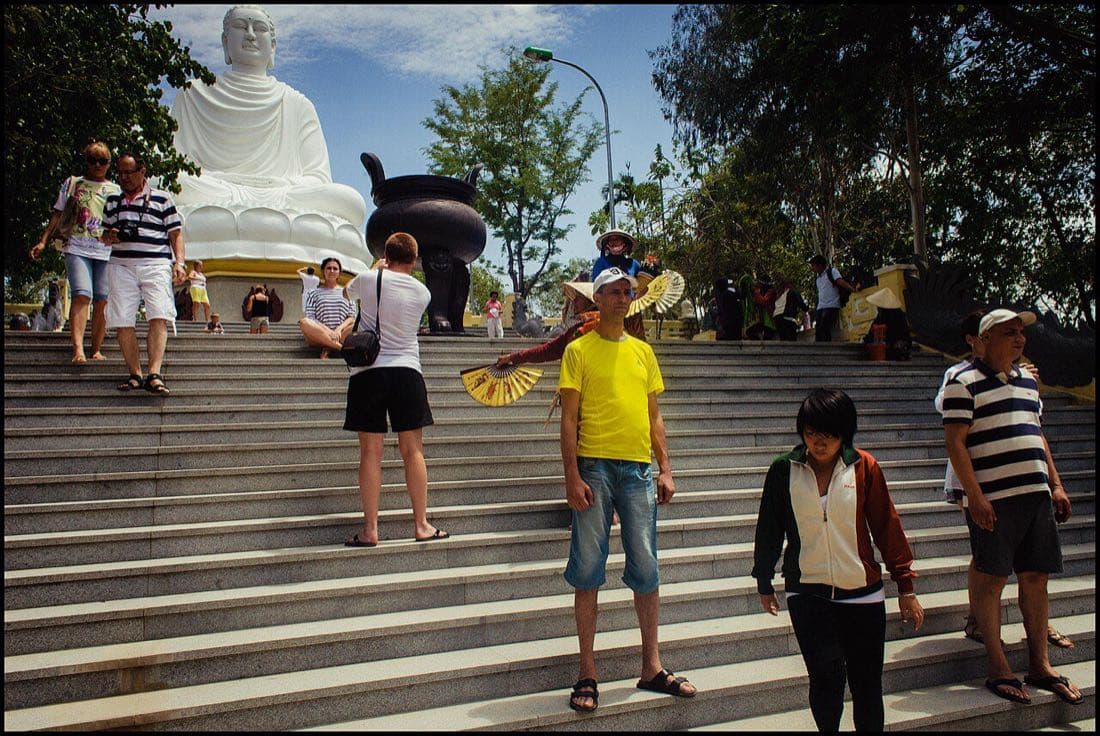
Nha Trang has its own accent: the giant white seated Buddha at Long Sơn Pagoda is visible from half the city, and candle processions climb the long stairway up the hill after dark — a glowing ribbon on the hillside.
Hoi An barely changes: it runs its own monthly lantern night on the 14th of every lunar month. In the 4th month it always falls on the eve of Vesak's main day, with the festival week in full swing — two events in one evening is the best-case scenario for a photographer.
Phu Quoc and the island resorts mostly skip it: Buddhist infrastructure there is young and there are no major processions. If Vesak is the point of the trip, choose mainland cities.
Vegetarian Week: What to Eat and Where
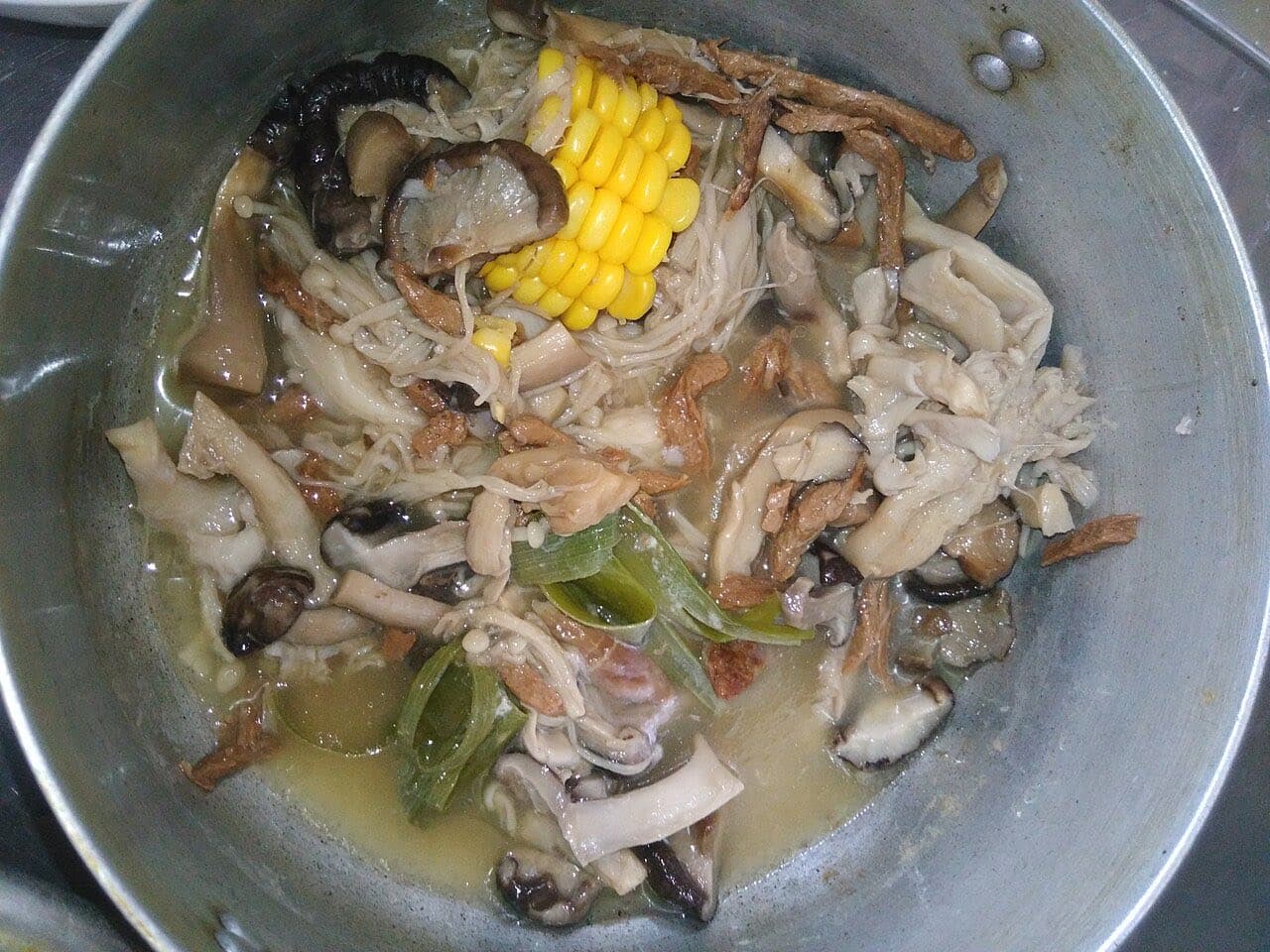
For Vesak week millions of Vietnamese switch to vegetarian food (ăn chay). Some keep it all seven days, others only on the 15th. For a visitor it is pure upside: pop-up meat-free stalls appear and regular cafés add chay versions of familiar dishes.
| Dish | What it is | VND | ~$ |
|---|---|---|---|
| Cơm chay | Rice with vegetable sides | 30,000–50,000 | 1–2 |
| Phở chay | Pho on vegetable broth with tofu | 35,000–60,000 | 1.5–2.5 |
| Bún riêu chay | Tangy tomato soup, no meat | 35,000–55,000 | 1.5–2 |
| Bánh mì chay | Baguette with tofu and mushrooms | 20,000–35,000 | 0.8–1.5 |
| Pagoda chay buffet | Buffet, often donation-based | 0–50,000 | 0–2 |
Finding them is easy: look for the word CHAY on the sign or the manji swastika (a Buddhist symbol — the rotation differs from the Nazi one). Search "quán chay" on maps for rated options. Our Vietnamese cuisine guide covers the wider food scene.
One caveat: Vietnamese vegetarianism is stricter than the European kind. Out goes not just meat and fish but nước mắm, the fish sauce underpinning nearly every local flavor. Your first chay dish may taste flat; soy sauce and chili paste on the table fix that.
Ordering Meat-Free Without Vietnamese
| Phrase | Vietnamese | Rough pronunciation |
|---|---|---|
| I'm vegetarian | Tôi ăn chay | toy an chai |
| Do you have a chay menu? | Có món chay không? | ko mon chai khong |
| No fish sauce | Không nước mắm | khong nook mam |
| No meat, no eggs | Không thịt, không trứng | khong tit, khong chung |
| Delicious, thank you | Ngon lắm, cảm ơn | ngon lam, kam un |
A trap worth knowing: "chay" sometimes means "no meat" rather than strictly vegan, so eggs or dairy may appear. If that matters, ask about trứng (egg) and sữa (milk) separately.
Another feature of the week: pagodas often hand out free meals. It is not charity for the needy but cúng dường, food as an offering. Foreigners are invited like everyone else; refusing is awkward, and dropping a note in the donation box afterwards is the right gesture.
Pagoda Etiquette for Visitors
Pagodas are open to everyone during Vesak, regardless of faith, and entry is free. Donations are voluntary — there is a box by the altar, and 10,000–50,000 VND (~$0.4–2) is perfectly normal.
- Clothing. In shorts and tank tops you usually won't be let into the main hall; some pagodas hand out wraps at the door.
- Photos. The courtyard, lanterns and processions are fair game. Inside the hall: no flash, not during services. With monks, make eye contact first — a nod means yes.
- Behavior. Do not turn your back on the Buddha statue when leaving, do not point at images, and do not sit with your feet aimed at the altar.
Six Pagodas Worth a Visit Any Day
| Pagoda | City | Why go |
|---|---|---|
| Chùa Quán Sứ | Hanoi | Sangha headquarters, the country's main ceremonies |
| Chùa Trấn Quốc | Hanoi | Oldest in the city (6th century), on a West Lake islet |
| Chùa Việt Nam Quốc Tự | Ho Chi Minh City | 13-tier tower, endpoint of the processions |
| Chùa Vĩnh Nghiêm | Ho Chi Minh City | One of the largest in the city, in the old northern style; the bell was a gift from Japanese Buddhists |
| Chùa Thiên Mụ | Hue | City symbol, seven-tier tower above the Perfume River |
| Chùa Linh Ứng | Da Nang | The 67-meter Lady Buddha above the sea |
Timing rule: come early (7:00–9:00) when services run and tour groups have not arrived, or after 17:00 when the lighting comes on. Midday pagodas are empty and hot.
Vietnamese Buddhism in Brief
Vietnamese Buddhism is Mahayana, arriving via China, rather than the Theravada of Thailand or Myanmar. The differences are visible: monks wear brown and grey rather than orange, pagodas hold statues of the Buddha, the bodhisattva Guanyin and guardian spirits side by side, and the religion has interwoven with Confucianism and ancestor worship for centuries.
Official numbers are elastic: only part of the population formally identifies as Buddhist, but Buddhist practice — pagoda visits, offerings to ancestors, the lunar calendar — reaches far wider as everyday culture rather than declared religion.
Internationally the country punches above its weight: Vietnam has hosted the UN Day of Vesak four times — Hanoi in 2008, Ninh Binh in 2014, Ha Nam in 2019 and Ho Chi Minh City in 2025.
The Supreme Patriarch called on Buddhist dignitaries, monks, nuns, and followers to continue serving society with mindfulness and compassion, uphold the noble traditions of Vietnamese Buddhism, and spread the light of kindness to foster a better life for all.VNA, Happy Vietnam, May 2026
Vesak and the Other Buddhist Dates
| Lunar date | Festival | What happens |
|---|---|---|
| 15th day, 1st month | Rằm tháng Giêng | First full moon of the year, mass pagoda visits |
| 15th day, 4th month | Vesak (Phật đản) | Buddha's birth: processions, bathing, lanterns |
| 15th day, 7th month | Vu Lan | Parents' remembrance day, a rose on the chest |
| 8th day, 12th month | Thành đạo | The Buddha's enlightenment, modest services |
Vu Lan is the one travelers underrate: emotionally it rivals Vesak and it is closest in meaning to a European remembrance day. It falls in August or September and is often confused with the Mid-Autumn Festival, which comes a month later.
Pagoda, Temple, Shrine: the Difference
- Chùa — a Buddhist pagoda: Buddha and bodhisattva statues, resident monks, services. This is where Vesak happens.
- Đền — a temple to a historical hero, king or guardian spirit. Often not Buddhist at all.
- Miếu — a small shrine, usually roadside, for local spirits.
- Đình — a village communal house: part shrine, part assembly hall.
Practical rule: search "chùa" for Buddhist sites. "Đền" will take you to places like Ngoc Son Temple on Hoan Kiem Lake — beautiful, but not Buddhist.
Is It Worth Planning a Trip Around?
- ✓ Anyone curious about Buddhism: access is open almost everywhere
- ✓ Photographers: lanterns, palanquins, night processions
- ✓ Anyone traveling in May: the festival adds itself for free
- ✗ Anyone expecting a mega-show: Vesak is intimate, not spectacular
- ✗ Anyone set on a specific meat restaurant: half the kitchens go chay
The strongest argument for Vesak as a travel reason is that it breaks nothing. Unlike Tet, when shops close and tickets spike, and unlike the April holiday block with its packed resorts, Vesak runs in the background: the country works, transport runs, hotels cost normal money. You simply gain an extra layer of evenings.
The one downside: if you expect Thai Loi Krathong scale, it will feel quiet. Vietnamese Vesak is about focus, not spectacle.
VietnamSpot on InstagramTips, lifehacks and news for living in VietnamFollow
FAQ — Vesak in Vietnam
The celebration week ran May 24-31, 2026, peaking on May 31 — the full moon of the fourth lunar month. In the Buddhist calendar that was the year 2570. Dates shift in 2027: Vesak almost always lands between early May and early June, with exact dates announced by the sangha in spring.
No. Vesak is not on the list of public holidays: banks, offices, schools and transport run normally and accommodation prices usually stay flat. The festivities are concentrated in pagodas and on evening streets, so it barely affects trip logistics.
Yes — pagodas are open to everyone regardless of faith, and entry is free. You need covered shoulders and knees, and shoes come off before the prayer hall. Photographing the courtyard and processions is fine; inside, no flash and not during services.
The main Vesak rite: a statue of the infant Buddha stands in a basin of water and petals, and worshippers take turns ladling water over it three times. The meaning is cleansing your own mind and renewing intentions. Anyone can take part, visitors included — it is one shared queue with no conditions attached.
Hue: historically Vietnam's Buddhist capital, it floats seven lotus lanterns on the Perfume River and runs a vegetarian food festival. The most crowded version is Ho Chi Minh City, with processions and flower palanquins; the most official is Hanoi at Quan Su Pagoda.
There is no ban — it is a voluntary practice. Many Vietnamese keep the vegetarian fast for the whole Vesak week or at least on the peak day, so cafés add chay menus en masse. Meat restaurants operate as usual, though in Buddhist neighborhoods there are temporarily fewer of them.
In form: Vietnam is Mahayana, monks wear brown and grey, and the festival is built around bathing the Buddha, palanquin processions and lotus lanterns. Thailand is Theravada, where the central act is circling the temple with candles. The Vietnamese version is more intimate and noticeably more urban.
Nothing is required. To join in the local way, buy a pack of incense at the gate (10,000–20,000 VND) or a bunch of lotuses. Fruit offerings are welcome too: they go on the altar and are shared out after the service. Money goes in the donation box; handing it to monks directly is not done.
Vesak Checklist
- Check exact dates 2–3 weeks out: they move with the lunar calendar
- Pack clothes covering shoulders and knees for pagodas
- Arrive for processions by 18:30–19:00; columns set off at dusk
- Small notes for donations (10,000–50,000 VND / ~$0.4–2)
- Cash for food: chay spots rarely take cards
- Do not book that evening at a specific meat restaurant
- Guide
Flights to Phu Quoc: Airport, Visa-Free Entry & Hubs
How to reach Phu Quoc by air: PQC airport, domestic flights, hub connections and the island's 30-day visa-free entry for arrivals from abroad.Flights to Phu Quoc: Airport, Visa-Free Entry & Hubs - Guide
Nha Trang Reviews 2026: Is It Worth Visiting?
Honest Nha Trang reviews: the pros, the cons and who it suits — beaches, food, hotels and season, with traveller quotes and a clear verdict.Nha Trang Reviews 2026: Is It Worth Visiting? - Guide
Pu Luong Nature Reserve 2026: Rice Terraces & Homestays
Pu Luong Nature Reserve guide: getting there from Hanoi, two rice harvests a year, stilt-house homestays, treks, prices in USD and a map of 9 spots.Pu Luong Nature Reserve 2026: Rice Terraces & Homestays