Cao Dai Temple in Tay Ninh: a practical guide for 2026
The Cao Dai Temple in Tay Ninh has a mural by the entrance showing Victor Hugo, Sun Yat-sen and a 16th-century Vietnamese poet writing a covenant between God and humanity. Caodaists venerate Hugo as one of their spirit messengers, and he greets everyone who walks into the Holy See. The temple is about 100 km northwest of Ho Chi Minh City, which makes it an easy day trip.
This guide covers getting there, when to arrive for the noon ceremony, what to wear, what else is nearby and what the day costs.
Fact sheet
- Cao Dai Holy See (Toà Thánh Tây Ninh): Main temple, free entry — Services 6am / noon / 6pm / midnight
- Ba Den Mountain (Núi Bà Đen): 986 m, 72 m Quan Am statue — Cable car to the pagoda 250,000 VND, to the summit 450,000 VND
- Dau Tieng Lake (Hồ Dầu Tiếng): 270 km² reservoir — About 30 km from the temple
- Long Hoa Market (Chợ Long Hoa): 2 km from the temple — Fruit, street food, souvenirs
- Cu Chi Tunnels (Ben Duoc) (Địa đạo Bến Dược): About 55 km by road — On the way from HCMC
- Tay Ninh Bus Station (Bến xe Tây Ninh): Buses from HCMC end here — About 5 km to the temple
| Item | Details |
|---|---|
| Official name | Toà Thánh Tây Ninh (Tay Ninh Holy See) |
| What it is | The main temple of the Cao Dai religion |
| Address | Đại lộ Phạm Hộ Pháp, phường Long Hoa, tỉnh Tây Ninh |
| Coordinates | 11.3036, 106.1336 |
| Distance from HCMC | About 100 km (2 to 2.5 hours by car) |
| Services | 6:00, 12:00, 18:00 and 00:00 daily |
| Entry | Free |
| Dress code | Shoulders and knees covered, shoes off inside |
| Best time | Noon ceremony, arrive by 11:30 |
| Photos | From the upper gallery, no flash |
Vietnam abolished districts and district-level towns in July 2025. The old town of Hoa Thanh, where the temple stands, is now part of Long Hoa ward, and Tay Ninh province absorbed neighbouring Long An. The province kept the name Tay Ninh, so "Tòa Thánh Tây Ninh" still works in Grab and Google Maps.
Caodaism in three minutes
Cao Dai is a Vietnamese monotheistic religion that blends Buddhism, Taoism, Confucianism, Christianity and spiritism. It was formally founded in Tay Ninh in 1926. Its first follower is usually named as Ngô Văn Chiêu, a civil servant in the French colonial administration who received "messages" from the Supreme Being during séances. Vietnam's 2019 census counted about 556,000 Caodaists; the church itself gives figures several times higher.
The full name is Đại Đạo Tam Kỳ Phổ Độ, roughly "the Great Way of the Third Period of Universal Salvation". The idea: God has already spoken to people twice through prophets and founders of religions, their teachings drifted apart, and Cao Dai is the third attempt to pull everything into one system.
The pantheon includes the Buddha, Laozi, Confucius and Jesus. Caodaists also honour "messengers" whose words came through séances: Victor Hugo, the Chinese revolutionary Sun Yat-sen and the Vietnamese poet Nguyen Binh Khiem. Some sources add Joan of Arc and Shakespeare.
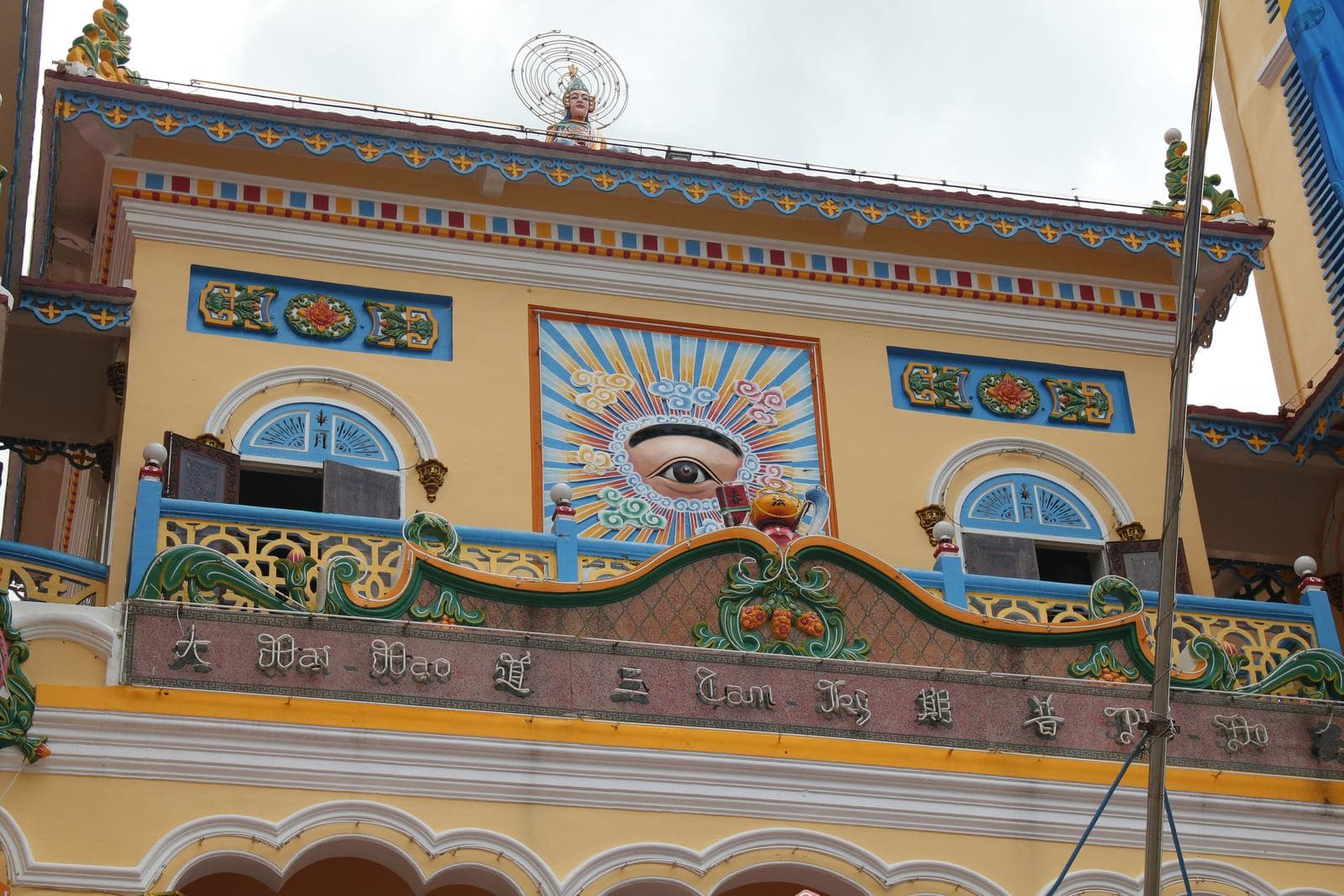
The main symbol is Thiên Nhãn, the Divine Eye. You'll see it on the facade, on the walls and on the altar globe: the Supreme Being sees everyone, always.
Architecture of the Great Divine Temple
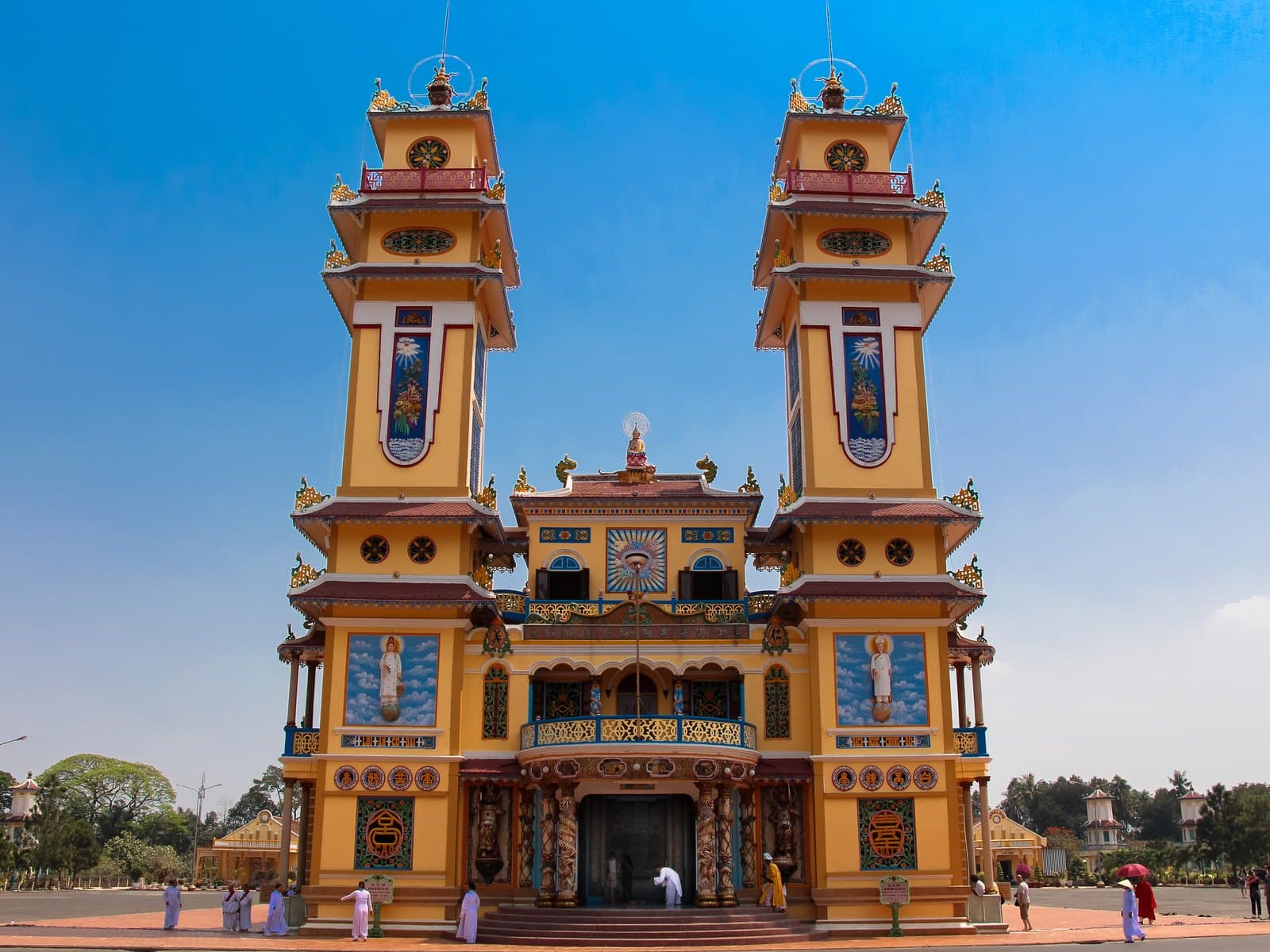
Work on the Holy See began in 1931, the building was finished by 1947, and it was consecrated in 1955. From outside it looks like a cathedral, a pagoda and a palace had a meeting: two towers at the entrance, yellow walls, pink and blue trim, dragons on the roof. It's 97.5 m long and 22 m wide, with the highest point at about 28 m.
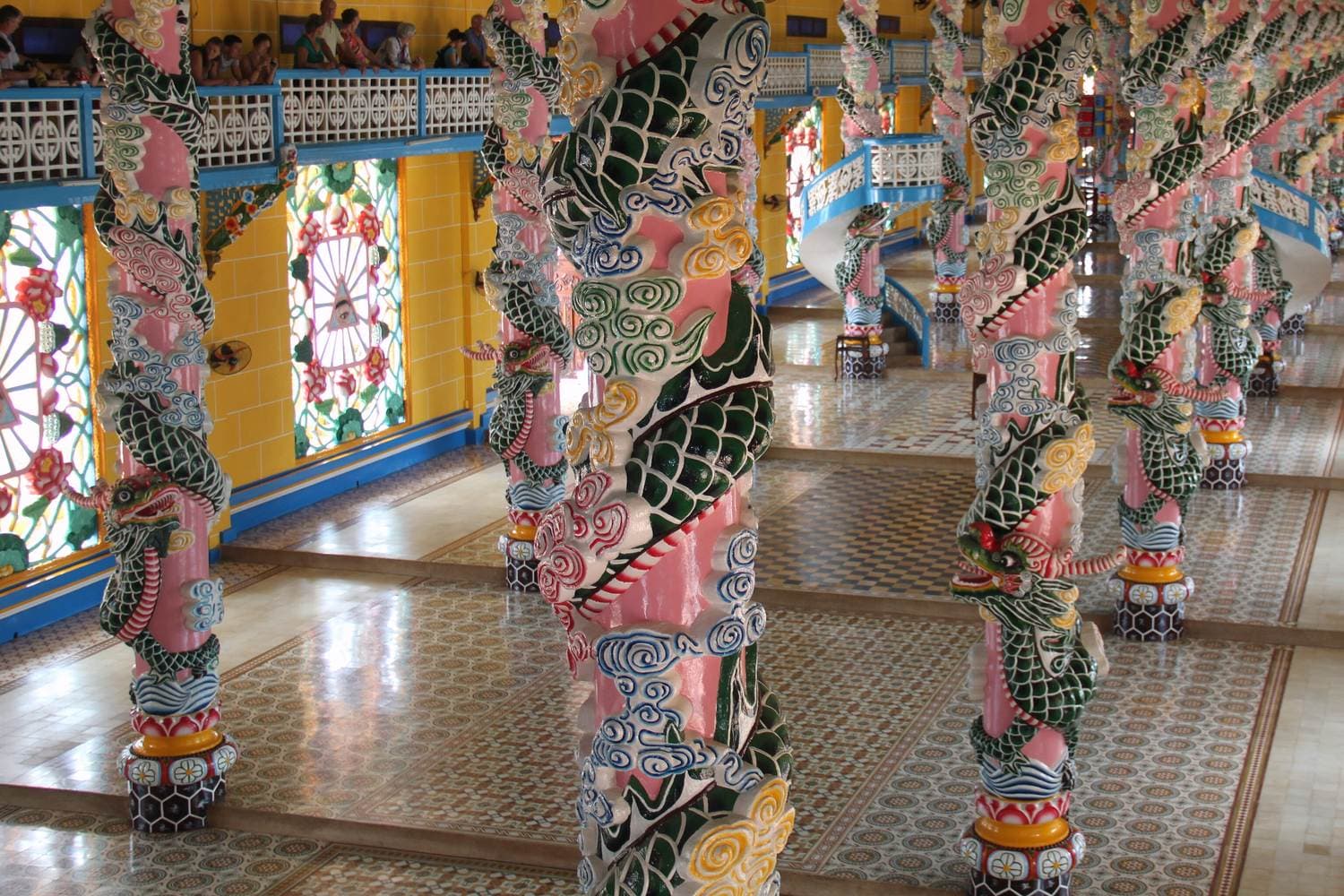
The floor of the main hall rises towards the altar in nine levels, one for each step of the spiritual path in Cao Dai teaching. Two rows of dragon-wrapped columns hold up the hall, and the ceiling is painted like a sky.
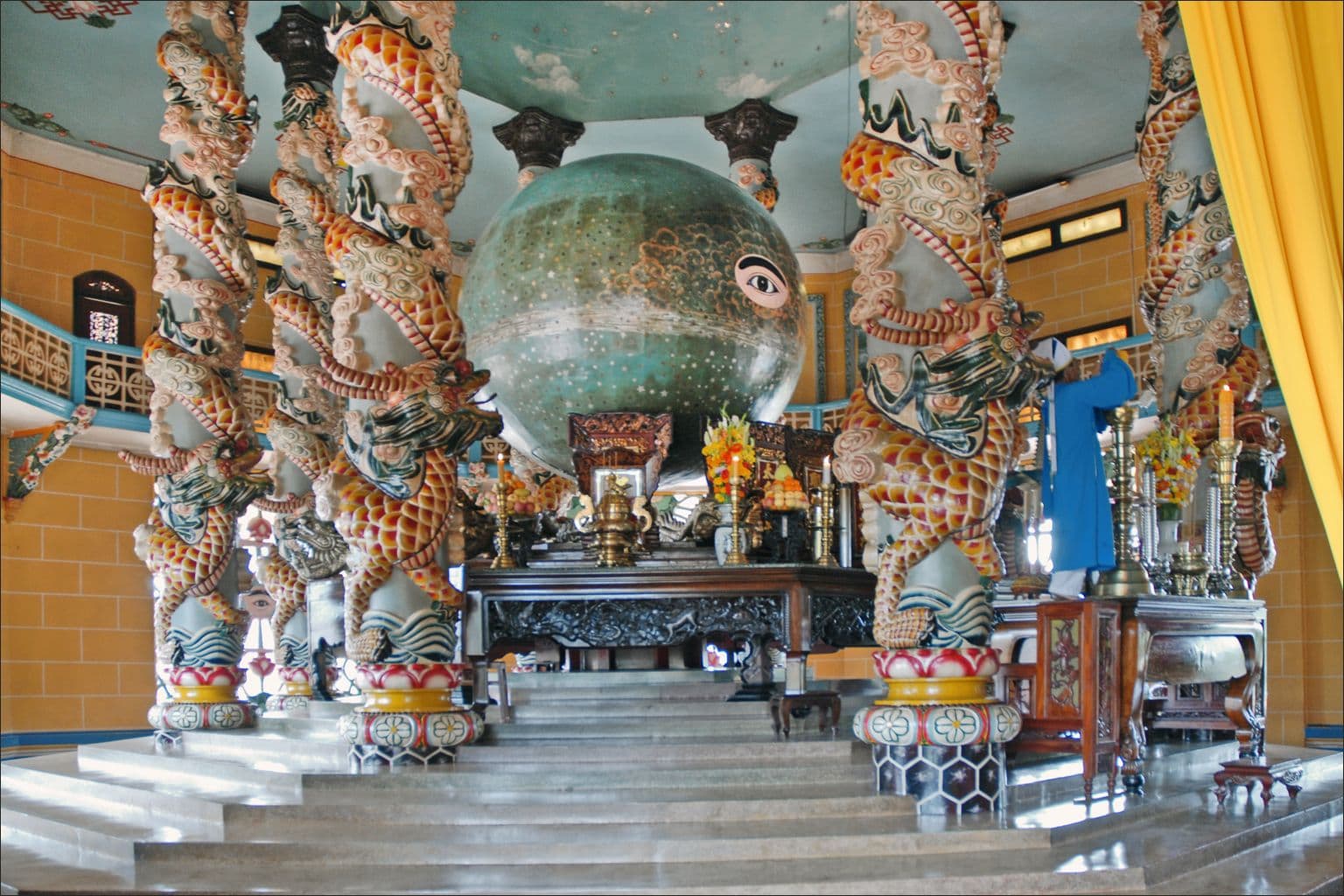
On the altar sits a globe 3.3 m across, painted with 3,072 stars, with the Eye in the middle.
The temple sits inside a walled compound, Nội Ô Tòa Thánh, with parks, offices and housing for clergy. Several gates lead in. The main gate opens for official delegations; worshippers and visitors use the numbered side gates. Drivers usually drop you on the Pham Ho Phap avenue side, a few minutes' walk down a tree-lined path. The building has 156 columns in total, more than a hundred of them in the outer galleries.
By the entrance is the Three Saints mural:
- Sun Yat-sen, the Chinese revolutionary who founded the Kuomintang
- Victor Hugo, the French writer
- Nguyen Binh Khiem, a 16th-century Vietnamese poet and scholar
The three are writing down a covenant between God and humanity. For Caodaists it's a core story: messengers from three cultures sealing a new pact.
Three colours show up everywhere, from robes to paintings. They stand for the three branches of the faith: yellow for Buddhism, blue for Taoism, red for Confucianism.
Temples and pagodas of Vietnam · Ho Chi Minh City attractions
The noon ceremony
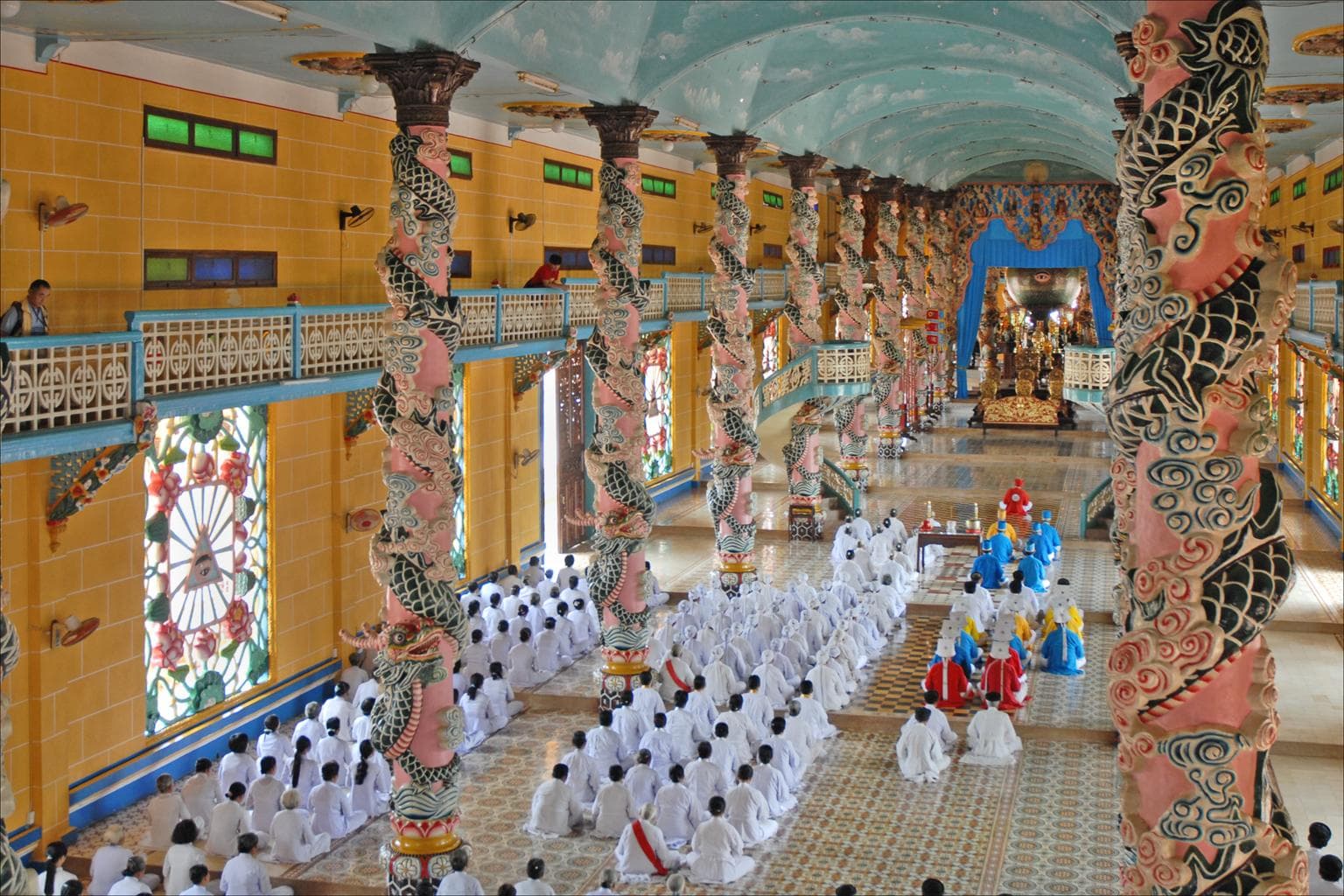
The noon ceremony starts at 12:00, lasts about 45 minutes and happens every day. It's why most people come. Hundreds of worshippers file in wearing white, with senior dignitaries in yellow, blue and red. Visitors watch from the upper gallery, which looks down over the whole hall.
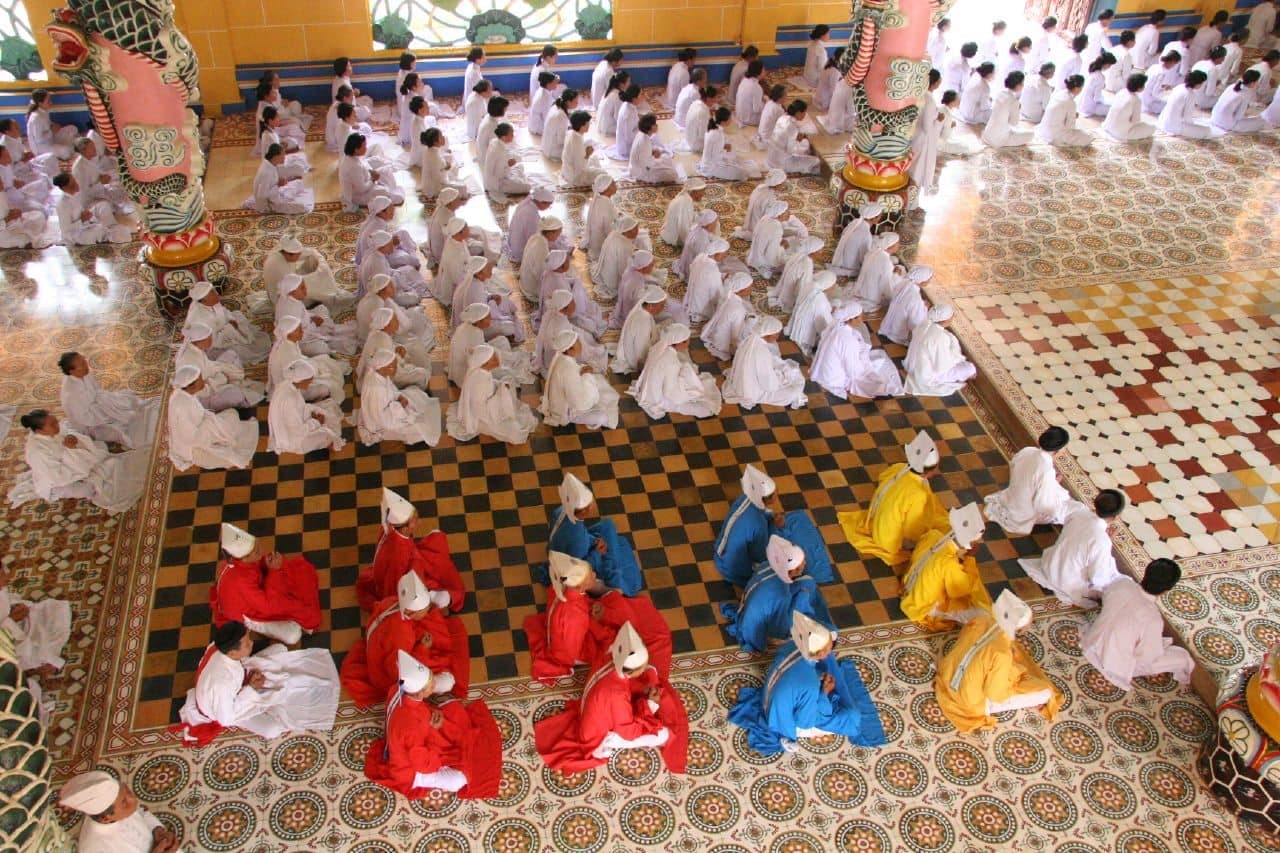
The robe colour tells you the branch:
| Colour | Who wears it | Branch |
|---|---|---|
| White | Most worshippers and clergy | None |
| Yellow | Dignitaries of the Buddhist branch | Buddhism |
| Blue | Dignitaries of the Taoist branch | Taoism |
| Red | Dignitaries of the Confucian branch | Confucianism |
Men and women enter through different side doors and stand apart, in rows by rank. An orchestra of traditional instruments plays from the balcony while a choir sings. It looks a bit like opera: colour, rhythm, everyone bowing at once. And it isn't staged for tourists. It's the ordinary daily service, and visitors are allowed to watch.
There are four services a day: 6:00, 12:00, 18:00 and midnight. On a day trip from HCMC you can only realistically make noon, so that's the one almost every visitor sees. The schedule can shift on major festival days.
Fast Track — no queue at the border
5–10 minutes instead of an hour in the immigration queue
from$11per passenger
Dress code and rules for visitors
Cover your shoulders and knees or you won't get in. Tank tops, shorts and miniskirts are out; plain, light clothing is best. Wraps are sometimes handed out at the door, but don't count on it. Bring your own scarf.
You go into the hall without shoes and leave them at the entrance. Socks are fine.
How to enter:
- Men and women use different side doors, so watch where the locals go
- The central entrance is reserved for senior clergy and official guests
- Don't cross the central aisle during a service
You can take photos from the gallery, without flash. Close-ups of people praying are rude, even if nobody stops you. Keep your voice down on the gallery and put your phone on silent.
No smoking, no alcohol and no noise during services anywhere in the compound.
Getting there from Ho Chi Minh City
The temple is about 100 km from central HCMC, a 2 to 2.5 hour drive. You have five options, from a group tour to your own motorbike.
| Option | One way | Cost | Best for |
|---|---|---|---|
| Group tour | 2 to 2.5 h | 700,000 to 1,100,000 VND (~$27 to $42) per person | Most visitors |
| Private tour (1 to 2 people) | 2 to 2.5 h | from ~$240 | Your own guide and pace |
| Taxi / Grab | 2 to 2.5 h | about 1,800,000 VND (~$69) return | Two or three people |
| Bus | 3 to 3.5 h | about 150,000 VND (~$6) one way | Tight budgets |
| Motorbike rental | 2.5 to 3 h | 200,000 to 300,000 VND (~$8 to $12) per day plus fuel | Experienced riders with a valid licence |
To make the noon ceremony, leave HCMC between 7:00 and 7:30. The road runs along highway QL22 through Cu Chi to Go Dau, then QL22B into Tay Ninh. Traffic leaving the city can be slow, so give yourself 30 minutes of slack.
By bus, step by step
- Get to Bến xe An Sương bus station in the northwest of HCMC, where buses for Tay Ninh leave. Grab from the centre costs about 100,000 to 150,000 VND (~$4 to $6).
- Buy a ticket to Tây Ninh, roughly 150,000 VND (~$6) one way. Buses run through the day; check the timetable at the ticket desk.
- The ride takes 3 to 3.5 hours.
- From Tay Ninh bus station it's about 5 km to the temple: 50,000 to 80,000 VND (~$2 to $3) by Grab or taxi.
- Evening buses back are few, so don't leave it until dark.
By Grab or private car
A return trip with waiting time comes to about 1,800,000 VND (~$69). It's easier to agree the deal with a driver directly than in the app, because getting a car back from Tay Ninh in the evening is hard. For two or three people it isn't much more than the bus, and a lot faster.
With a tour
The most common option is the group tour "Cu Chi in the morning, Cao Dai at noon". It costs 700,000 to 1,100,000 VND (~$27 to $42) per person and includes transport, an English-speaking guide, entry fees and usually lunch. The day runs 10 to 12 hours. The catch: you hit the tunnels first and reach the temple tired and right on noon.
Private tours start at around $240 for two. Worth it if you'd rather not spend 10 hours in a group.
What a full day costs
| Expense | On your own, VND | On your own, USD | With a group tour |
|---|---|---|---|
| Bus, return | 300,000 | ~$12 | Included |
| Grab to stations and temple | 300,000 to 450,000 | ~$12 to $17 | Included |
| Temple entry | 0 | 0 | 0 |
| Lunch | 40,000 to 60,000 | ~$2 | Usually included |
| Cable car to Ba Den summit | 450,000 | ~$17 | Usually extra |
| Total per person | 1,090,000 to 1,260,000 | ~$42 to $48 | 700,000 to 1,100,000 VND plus cable car |
Currency converter
Going independently with the mountain costs more than a group tour without it. The savings only kick in if you do the temple alone: bus plus Grab comes to about 700,000 VND (~$27) per person.
Ba Den Mountain, 30 minutes from the temple
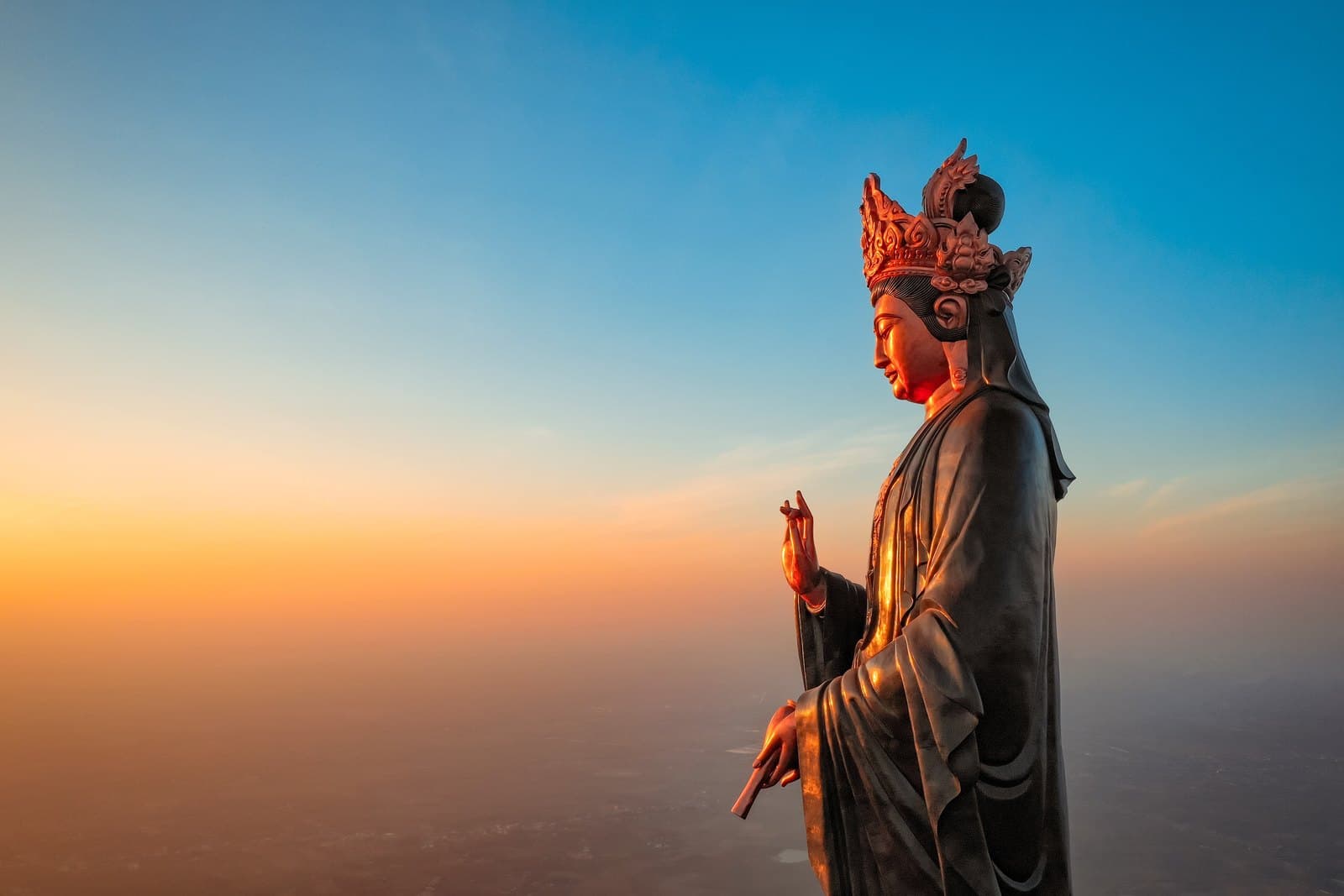
About 10 km northeast of the Holy See rises a lone peak, Núi Bà Đen, the "Black Lady Mountain". At 986 m it's the highest point in southern Vietnam. People used to spend hours hiking up; since January 2020 a Sun World cable car does the work.
The lower cable car station holds a Guinness record as the largest in the world, at 10,959 m². There are three lines: to Chùa Hang pagoda on the slope, to Vân Sơn summit, and the Tâm An line.
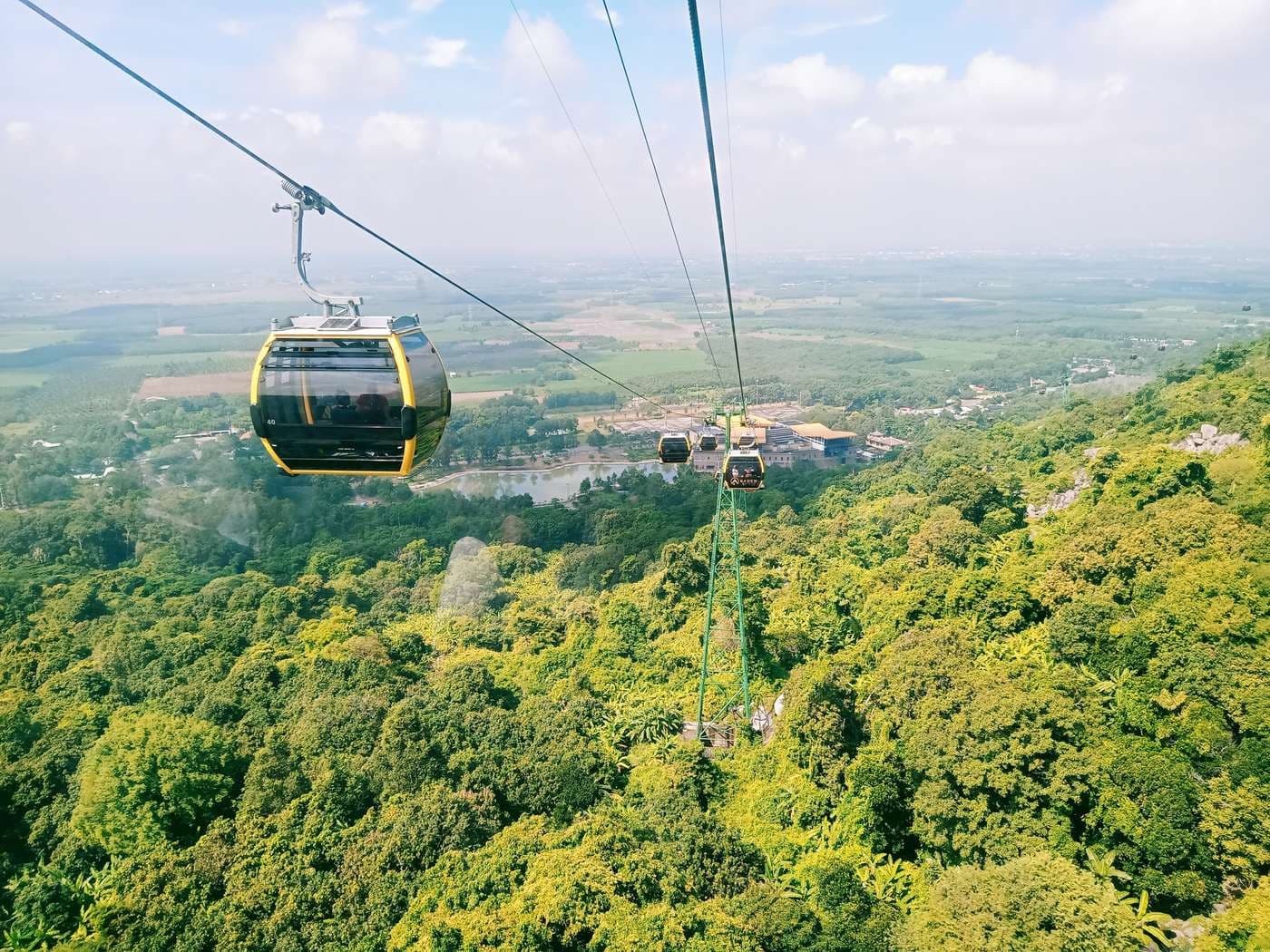
On the summit stands Tây Bổ Đà Sơn, a 72 m statue of the bodhisattva Guanyin (Quan Am) cast from 170 tonnes of copper. It's listed as the tallest copper Guanyin statue on a mountaintop in Asia. From the viewing platform you look out over the plain, rice fields and the Hồ Dầu Tiếng reservoir.
Cable car prices, 16 February to 3 May 2026 (return):
| Ticket | Adult | Child 1 to 1.4 m |
|---|---|---|
| Site entry | 10,000 VND (~$0.40) | 5,000 VND (~$0.20) |
| Cable car to Chùa Hang pagoda | 250,000 VND (~$10) | 150,000 VND (~$6) |
| Cable car to Vân Sơn summit | 450,000 VND (~$17) | 350,000 VND (~$13) |
| Combo Vân Sơn + Chùa Hang + buffet | 850,000 VND (~$33) | 650,000 VND (~$25) |
Children under 1 m ride free. Prices change on holidays and in other seasons, so check sunworld.vn. The cable car runs 6:00 to 20:00 on weekdays and 5:30 to 21:00 on weekends and holidays. It's cooler at the top, so bring a light layer.
Combining it with the temple works: the ceremony ends around 12:45, you have lunch, and you're at the mountain by 13:30 or 14:00. Come down by 16:00 and you'll be back in HCMC around 19:00, traffic permitting.
What else to see in Tay Ninh province
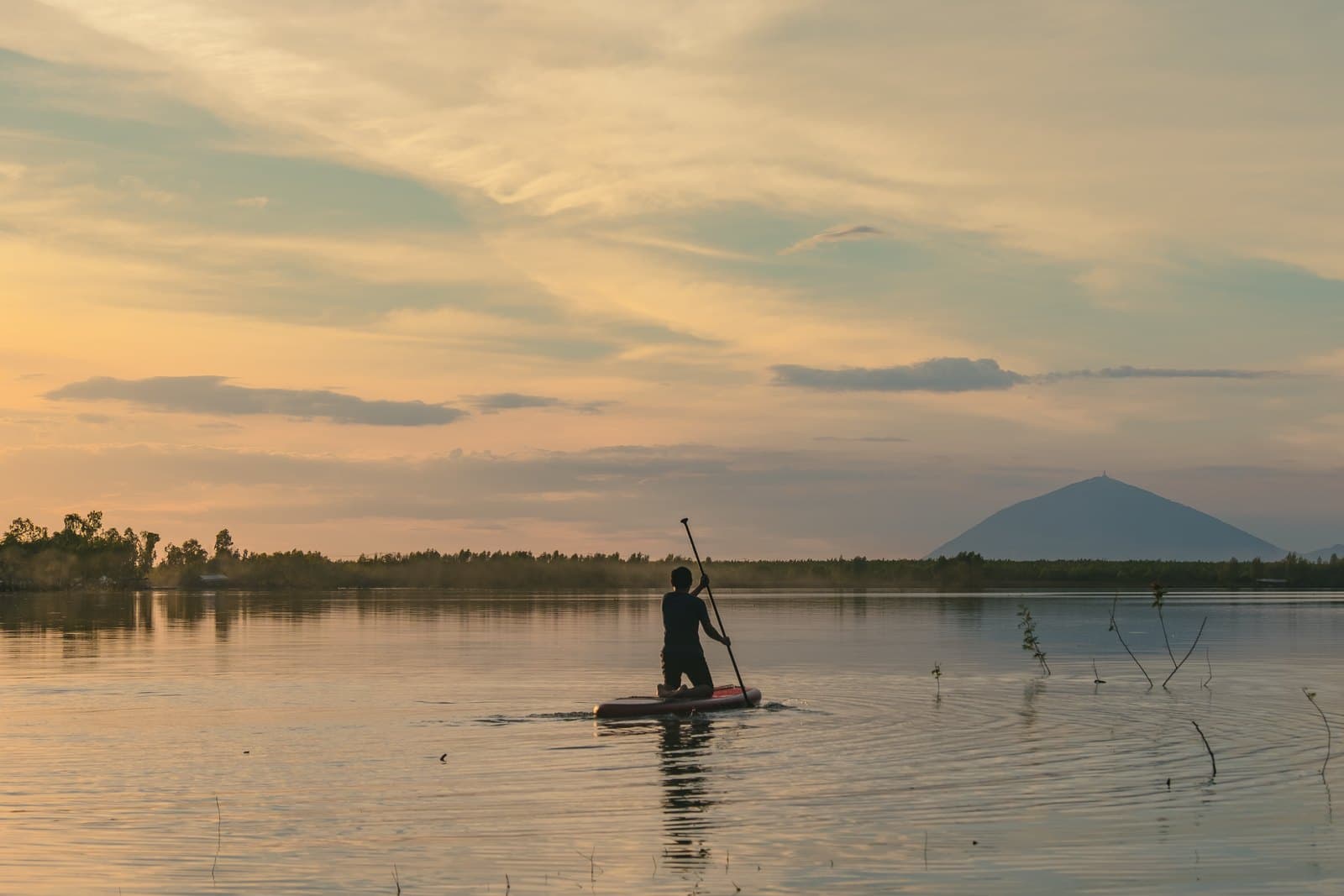
Most people pass straight through Tay Ninh, but an overnight stay gives you enough for a second day.
Dau Tieng Reservoir (Hồ Dầu Tiếng) is one of Vietnam's largest artificial lakes, about 270 km². It's about 30 km from the temple, with Ba Den visible from the shore. Swimming is only safe in some spots; the bottom drops off sharply in places.
Cu Chi Tunnels (Địa đạo Củ Chi), Ben Duoc section. The wartime tunnel network is technically in HCMC, about 55 km from the temple by road. Coming from the city it's on the way, which is why "Cu Chi in the morning, Cao Dai at noon" is the standard combo. Details in our Cu Chi Tunnels guide.
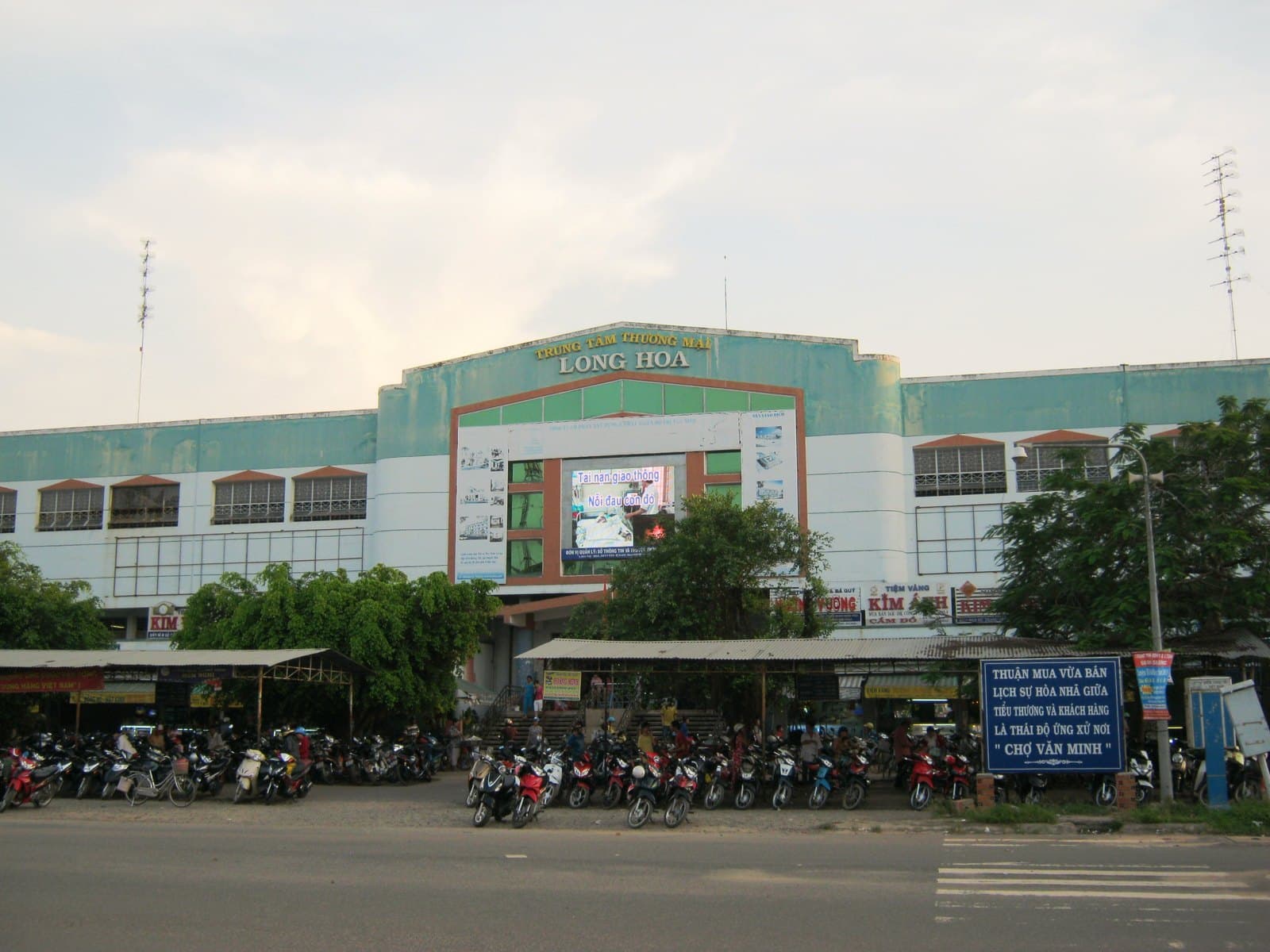
Long Hoa Market (Chợ Long Hoa) is the main market near the temple, about 2 km away. Fruit, street food, and souvenirs with the Divine Eye on anything from magnets to fans.
Hiking Ba Den. There are trails up the mountain, but the climb takes several hours in the heat. Don't go alone or without a local guide.
Food and facilities near the temple
Caodaists eat vegetarian 6 or 10 days each lunar month, and senior clergy do it permanently. That's why vegetarian cafes line the streets around the temple. The food is simple: rice, vegetables, tofu, mushrooms.
| Where | What | Price |
|---|---|---|
| Vegetarian cafes near the Holy See | Cơm chay (rice with vegetables and tofu) | 40,000 to 60,000 VND (~$1.50 to $2.30) |
| Stalls around Long Hoa Market | Bánh mì, phở | 30,000 to 50,000 VND (~$1.20 to $2) |
| Cafes at the foot of Ba Den | Cà phê sữa đá (iced coffee with condensed milk) | 25,000 to 50,000 VND (~$1 to $2) |
Try the cơm chay: the tofu sometimes plays chicken or beef. It's not very convincing, but it tastes good. The local things to take home are bánh tráng phơi sương (rice paper dried in the morning dew) and muối tôm (salt mixed with dried shrimp and chilli).
When to go
| Season | Temperature | Conditions |
|---|---|---|
| December to March | 28 to 33 °C | Dry, the best time |
| April to May | 33 to 36 °C | Hot and humid |
| June to November | 28 to 32 °C | Rainy season, afternoon downpours |
The dry season is easiest. The rainy season is fine too, but the drive takes longer and the mountain gets wet. From June to November, pack a rain jacket and leave extra time.
The big Cao Dai festivals are a different experience:
- 9th day of the 1st lunar month: festival of the Supreme Being (January to February)
- 15th day of the 8th lunar month: festival of the Mother Goddess (September to October)
- 15th day of the 10th lunar month: anniversary of the religion's founding (November to December)
Tens of thousands of pilgrims come to Tay Ninh on these days. More music and processions, but also crowds, queues and higher room prices. Come if you're curious about the culture. For a calm first look at the temple, pick an ordinary weekday.
Ho Chi Minh City weather by month · Vietnam public holidays · Tet
Pros and cons
If you're after an unusual temple and good photos, a day trip is enough. If the religion itself interests you, stay the night and catch the evening service, or come during a festival.
Alternatives
Cao Dai isn't the only day trip from HCMC. If the temple isn't your thing, or you've been:
- Cu Chi Tunnels: the underground side of the Vietnam War, interesting even if military history isn't your thing. More on Cu Chi.
- Mekong Delta: boats, canals, orchards, coconut candy. Water and green instead of temples. Mekong Delta day trips.
- Just Ba Den Mountain: skip the temple, keep the cable car and the view.
- War Remnants Museum in HCMC: if the trip out of town falls through but you still have the day.
What else is near the city · Mekong Delta towns · A weekend in Vung Tau · Cat Tien National Park
Tips before you go
For the SIM or eSIM, see our Vietnam SIM and eSIM guide. Before you head out, have a look at our HCMC practical tips and the guide to getting around the city.
FAQ — Cao Dai Temple in Tay Ninh
The Cao Dai Holy See (Toà Thánh Tây Ninh) is in Long Hoa ward, Tay Ninh province, about 100 km northwest of Ho Chi Minh City. By car it takes 2 to 2.5 hours along highway QL22, then QL22B. By bus it's 3 to 3.5 hours to Tay Ninh bus station, plus about 5 km by Grab to the temple itself
Entry to the Holy See is free. You only pay to get there, and for the mountain if you add it
- Group tour, per person700,000–1,100,000 VND~$27–42usually transport, guide and lunch
- Ba Den cable car to the pagoda250,000 VND~$10
- Ba Den cable car to the summit and statue450,000 VND~$17
The ceremony starts at 12:00 sharp and lasts about 45 minutes. It's the busiest service of the day, and visitors watch from the upper gallery. Arrive by 11:30 so you have time to take off your shoes, find the gallery stairs and get a spot at the railing. The other three services are at 6:00, 18:00 and midnight
Yes, from the upper gallery and without flash. Visitors can't go down into the hall during a service. Close-ups of people praying are considered rude, although nobody is likely to stop you. Video from the gallery is fine as long as you're quiet. Don't fly a drone over the temple without permission; it's an active place of worship
Cover your shoulders and knees; that's the basic rule. Plain, light clothing without low necklines is best. You go into the hall barefoot or in socks and leave your shoes at the entrance. Wraps are sometimes available at the door, but they run out in high season, so your own scarf or a light shirt is the safer bet
Most tours do both: the Cu Chi Tunnels in the morning, the noon ceremony at Cao Dai. That makes a 10 to 12 hour day. If you can only pick one, Cu Chi is about war history and getting your hands dirty, Cao Dai is about religion and spectacle. They're very different and complement each other, so do both if you can
How the tunnel visit works: our Cu Chi Tunnels guide
Yes. The bus from HCMC costs about 150,000 VND (~$6) each way, and a return Grab is about 1,800,000 VND (~$69). Going on your own works well for two or three people who don't need a guide. Little English is spoken in Tay Ninh, so save the temple's Vietnamese address and download offline maps before you set off
Read next: Cu Chi Tunnels · Mekong Delta · Temples and pagodas of Vietnam · Tours from Ho Chi Minh City

- Guide
Quy Nhon Tours 2026: Islands, Phu Yen, Real Prices
Every day tour from Quy Nhon in 2026 — Ky Co and Hon Kho islands, the Phu Yen day trip, Cham towers. Verified prices in VND and USD, operators, what to skip.Quy Nhon Tours 2026: Islands, Phu Yen, Real Prices - Guide
Marble Mountains, Da Nang: Caves, Views, Tickets 2026
How to visit the Marble Mountains near Da Nang: cave temples, viewpoints, the lift vs the stairs, ticket prices and getting there from the city or Hoi An.Marble Mountains, Da Nang: Caves, Views, Tickets 2026 - Guide
Hoi An 2026: UNESCO Old Town, Tailoring & Beaches
Hoi An guide: the lantern-lit Old Town, custom tailoring, beaches, food, day trips and where to stay in Vietnam's prettiest heritage town.Hoi An 2026: UNESCO Old Town, Tailoring & Beaches