Vietnam public holidays: dates, blocks and what actually closes
Vietnam has twelve paid public holidays as of 2026, one more than the year before: the National Assembly added 24 November. But the number that matters is not twelve. It is nine — the length of the Tet block once the statutory days absorb the weekends on either side, and the length of time the banks, government offices and half the food stalls on your street stay shut.
This page answers one question: do your dates land on a holiday, and what does that cost you. Every date below comes from a government decision, not from last year's calendar shifted forward. How each holiday is actually celebrated lives in separate guides, linked from the calendar rows themselves.
How many public holidays Vietnam has, and who sets the dates
Twelve paid days a year. Until 2026 there were eleven, set by Article 112 of the 2019 Labour Code and unchanged since. The twelfth arrived through a separate instrument: National Assembly resolution on developing culture, passed on 24 April 2026 and in force from 1 July 2026.
Here is what the twelve are made of:
| Holiday | Statutory days | Who fixes the actual dates |
|---|---|---|
| New Year's Day, solar calendar | 1 | fixed at 1 January |
| Tết Nguyên đán, Lunar New Year | 5 | Prime Minister, by decision each year |
| Giỗ Tổ Hùng Vương, Hung Kings' Commemoration Day | 1 | 10th day of the 3rd lunar month |
| Reunification Day | 1 | fixed at 30 April |
| International Labour Day | 1 | fixed at 1 May |
| National Day | 2 | 2 September plus one adjacent day, set by the PM |
| Ngày Văn hóa Việt Nam, Vietnamese Cultural Day | 1 | fixed at 24 November |
The 24 November date marks the first National Cultural Conference of 1946, chaired by Ho Chi Minh. For a visitor the more useful fact is that 2026 is the first year anyone actually gets the day off, so any calendar compiled before spring 2026 simply does not have it.
Then comes the part that trips people up. A calendar date and an actual day off rarely coincide here, because two shifting mechanisms are at work.
Nghỉ bù, substitution. A holiday falls on a Saturday or Sunday, so the next working day becomes the day off. Hung Kings' Commemoration Day landed on Sunday 26 April 2026, and the country rested on Monday the 27th.
Hoán đổi, swap. One working day is stranded between a holiday and a weekend, so it is made a day off and the nearest Saturday is made a working day instead. That is why 10 January and 22 August 2026 were ordinary working days in Vietnam despite being Saturdays.
The chain of command is short: the Ministry of Home Affairs proposes, the Prime Minister signs. This normally happens in October–December of the preceding year. Before that signature, any date you read is a draft, and Vietnamese media label it honestly as "đề xuất", a proposal.
Private companies run on their own version. An employer may split the five Tet days differently — three before the new year and two after, instead of the canonical one-and-four. The only hard rule is 30 days' notice. In practice this means your landlord, your bike mechanic and the owner of your usual coffee shop may all disappear on different days.
Vietnam public holidays in 2026: dates, blocks, substitutions
Vietnam had six holiday blocks in 2026. The longest ran nine days, over Tet; the shortest is a single day, 24 November. The holiday blocks add up to 26 days, or 24 after the two make-up Saturdays.
| Holiday | Statutory date | Actual block | Days | Status | What closes |
|---|---|---|---|---|---|
| New Year's Day | 1 January, Thursday | 1–4 January | 4 | approved, already passed | banks, government offices |
| Tet | 17 February, Tuesday | 14–22 February | 9 | approved, already passed | banks, offices, museums, small eateries |
| Hung Kings' Day | 26 April, Sunday | 25–27 April | 3 | approved, already passed | banks, government offices |
| Reunification Day and Labour Day | Thursday and Friday | 30 April — 3 May | 4 | approved, already passed | banks, government offices |
| National Day | 2 September, Wednesday | 29 August — 2 September | 5 | approved, already passed | banks, government offices |
| Vietnamese Cultural Day | 24 November, Tuesday | 24 November | 1 | approved, no swap | banks, government offices |
One row deserves its own paragraph, because most holiday listings skip it: make-up Saturdays. There were two in 2026 — 10 January and 22 August. On those days government offices, banks and most companies work a full weekday. If you were saving an immigration errand for a Saturday on the theory that everything is shut anyway, you can walk straight into a working day.
Dates current as of 10/2026. The 2026 schedule is published by the Ministry of Home Affairs; the November day off was approved on 2 October.
One more planning detail worth internalising. The blocks around 30 April and 2 September almost always absorb a weekend on one or both sides, so "two public holidays" reliably means four or five non-working days. Read the weekday, not the date.
What has already passed and what is left in 2026
After the September block, 2026 holds two more events: the Mid-Autumn Festival on 25 September, which is a working day, and the single day off on Tuesday 24 November. Between them the country runs its normal schedule, with no mass closures from mid-September until late November.
The 29 August — 2 September 2026 holiday produced a record: 6.5 million visitors served, 18% up on the year before. Khánh Hòa province, which covers Nha Trang and Cam Ranh, took roughly 1.25 million visitors across the five days; Da Nang took 850 000, a 37% rise.
Five days off around National Day brought the tourism sector an estimated 6.5 million guests served, 18% more than in 2025. Three cities each cleared over 3,000 billion VND in tourism revenue — Vietnam Government Portal, 3 September 2026
September and October carry no holiday surprises at all. Banks open, offices process, prices sit where they normally sit. The Mid-Autumn Festival, Tết Trung thu, falls on 25 September and is not a day off. It does fill the streets with children carrying lanterns in the evening, and it makes every bakery in the country unapproachable for the week before. The full picture is in the guide to the Mid-Autumn Festival.
November is the one to watch if you have paperwork. Banks and government offices close on Tuesday 24 November; Monday the 23rd stays a working day, as there is no swap.
Fast Track — no queue at the border
5–10 minutes instead of an hour in the immigration queue
from$11per passenger
Vietnam public holidays 2027: approved and statutory dates
On 5 August 2026 the Ministry of Home Affairs submitted two options for Tet and one for National Day; on 2 October the government chose the seven-day Tet. The lunar dates themselves are already fixed — they do not depend on anyone's signature.
| Holiday | Date | Ministry proposal | Status |
|---|---|---|---|
| New Year's Day | 1 January, Friday | — | statutory, 1 day |
| Tet Đinh Mùi | day one is 6 February, Saturday | 4–10 February, 7 days; the 10-day option was dropped | approved 2 October 2026 |
| Hung Kings' Day | 16 April, Friday | 16–18 April | no decision needed |
| Reunification and Labour Day | 30 April Friday, 1 May Saturday | substitution for 1 May expected | not approved |
| National Day | 2 September, Thursday | 2–5 September, 4 days | approved 2 October 2026 |
| Vietnamese Cultural Day | 24 November, Wednesday | — | statutory, 1 day |
What matters for a visitor is when the country goes back to work: after the 4 to 10 February block, government offices and banks reopen on Thursday the 11th. Settle any paperwork before 4 February.
April 2027 falls kindly: Hung Kings' Commemoration Day lands on Friday the 16th, producing a three-day weekend with no substitution required.
A word on the temptation to work the dates out yourself. Lunar holidays cannot be extrapolated from the previous year. Tet 2026 was 17 February, Tet 2027 is 6 February, Tet 2028 is 26 January — eleven days apart each time, and that regularity breaks as soon as an intercalary month appears. Check a calendar rather than your arithmetic.
Tet: the nine days when the country stops
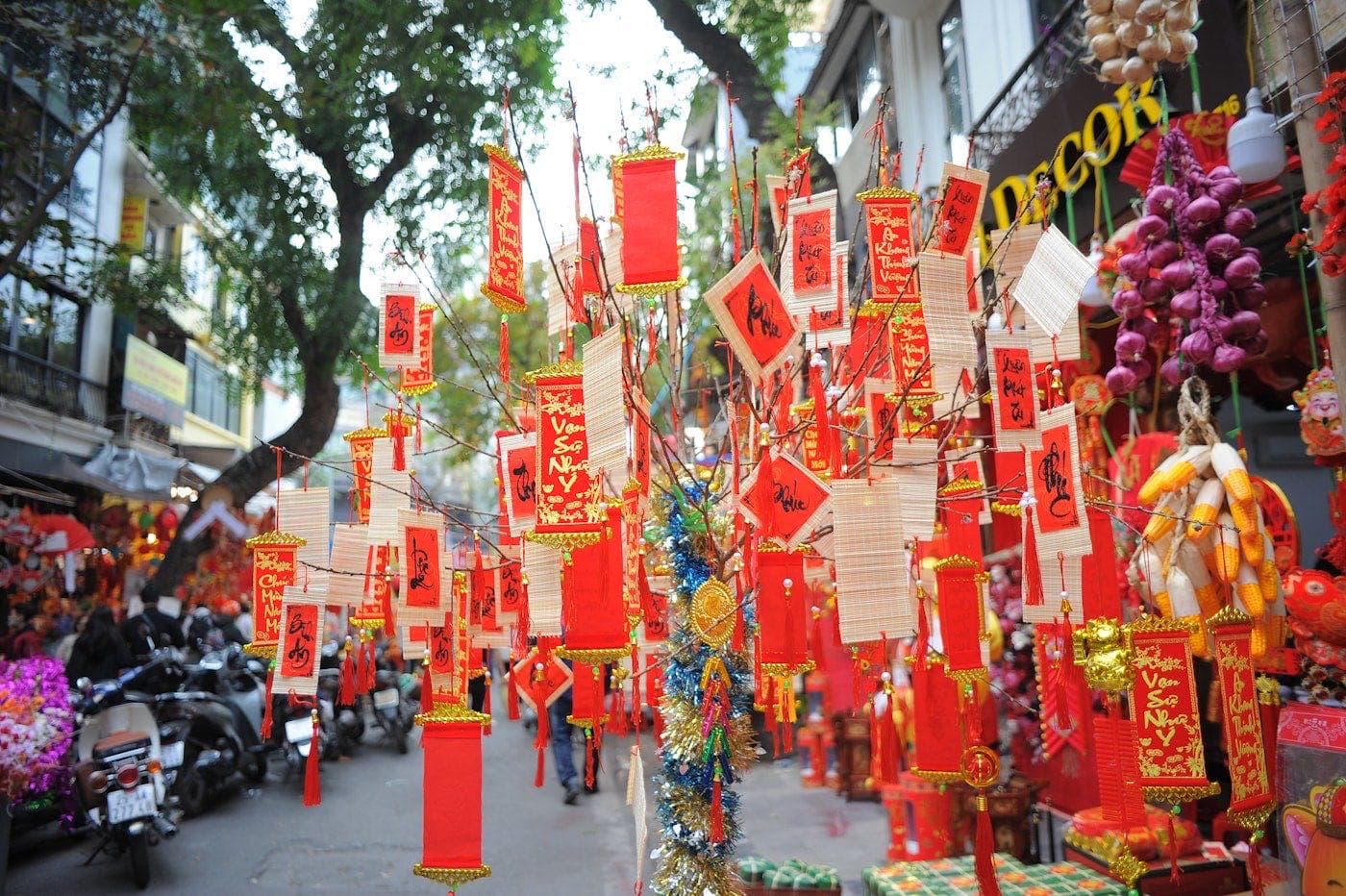
Tet is the only Vietnamese holiday that rearranges the country rather than decorating it. In 2026 the first day of the lunar year fell on 17 February, and the official block ran from Saturday the 14th to Sunday the 22nd: nine days straight. Five were statutory; the other four were ordinary weekends at each end.
The logic runs opposite to the European one. At Christmas people travel to relax; at Tet Vietnamese people travel home. A factory worker in Bình Dương goes back to a village outside Thanh Hóa, a waitress from Da Nang to her parents in Quảng Nam. Cities empty out, buses and trains fill up a month ahead, and the countryside comes alive.
The holiday unfolds in stages, and knowing the stages is more useful than knowing one date:
- 23rd day of the last lunar month — Ông Công Ông Táo, farewell to the Kitchen Gods. Live carp are released into rivers, homes get scrubbed. Flower and fruit prices start climbing a week earlier.
- The last day of the year — everything shuts by lunchtime. Shops, markets, workshops. Families gather in the evening.
- The first three days — the most closed stretch. Small eateries, street carts, barbers and bike repair shops do not operate. The first person to enter a house sets its luck for the year, so nobody drops in uninvited.
- From day four onwards — life returns in instalments. Chains and markets first, small operators after. By the end of the block almost everything works.
Beach destinations get off lightly. Hotels and their restaurants run through the whole block, because Tet is peak season for them: on day five of Tet 2026 the Nha Trang beachfront along Phạm Văn Đồng was packed with international visitors, and Khánh Hòa logged around 320 000 overnight guests. So "everything is closed at Tet" is true for Ho Chi Minh City and false for Nha Trang and Phu Quoc.
The solar New Year on 1 January is also marked, but in a completely different register — a city event with fireworks and no family ritual attached. Where to spend 31 December and what it costs is covered in the guide to New Year in Vietnam.
What actually closes: banks, offices, museums, street food
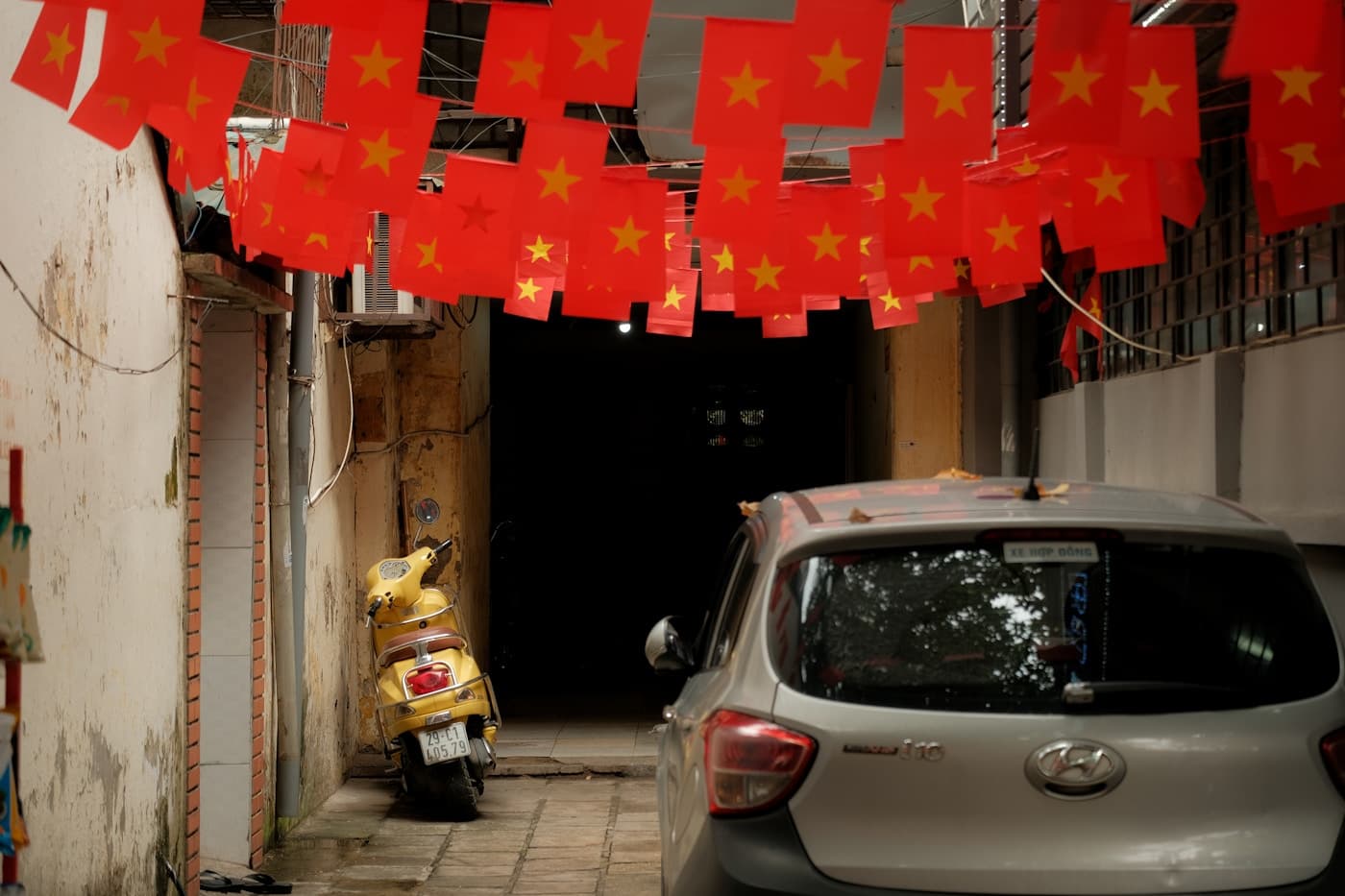
Banks and government offices close for the entire official block, with no duty counters and no exceptions. International chains, hotels and hotel restaurants stay open throughout. Everything between those two poles depends on which holiday it is.
| What | Tet, 9 days | 30 April and 2 September | Hung Kings and 24 Nov |
|---|---|---|---|
| Bank branches | closed all block | closed | closed |
| ATMs | working, often empty in the first days | working | working |
| Licensed exchange counters | closed 3–5 days | partly open | open |
| Government offices, immigration | closed 5–9 days | closed | closed |
| Museums | closed first 3 days | open, long queues | open |
| Small cafes, street food | closed 5–7 days | open | open |
| Chains: KFC, Lotteria, Circle K, GS25 | open | open | open |
| Hotel restaurants | open | open | open |
| Vincom, Lotte, AEON malls | open, shortened hours | open | open |
| Hospitals, duty pharmacies | open | open | open |
| Grab and taxis | open, with a surcharge | open | open |
Cash is the main everyday snag at Tet. Banks close for nine days, and ATMs keep working but are not refilled, so by the third day of the holiday some machines in tourist districts already turn you away. Some small places take cash only during these days, and a few hotels' card terminals simply go offline.
Government offices carry a second complication. The 2025 administrative reform abolished the district tier on 1 July 2025, leaving two levels — province and commune — and from 12 June the number of provinces had already dropped from 63 to 34. Plenty of offices moved and changed jurisdiction. If your errand involves a government counter and your address comes from a two-year-old article, verify it before you go, or you will arrive at the wrong building on a closed day.
Museums and state-run sights follow their own pattern: closed for the first three days of Tet. The Ho Chi Minh Mausoleum in Hanoi is the exception: it receives visitors on the first day of Tet even when that falls on a Monday or Friday. They are open with heavy queues over the May and September blocks. Private theme parks such as VinWonders do the opposite and expand their programmes.
If you need to open a Vietnamese bank account or change a large sum, allow at least three working days before the block starts.
What gets more expensive, and where the rooms run out
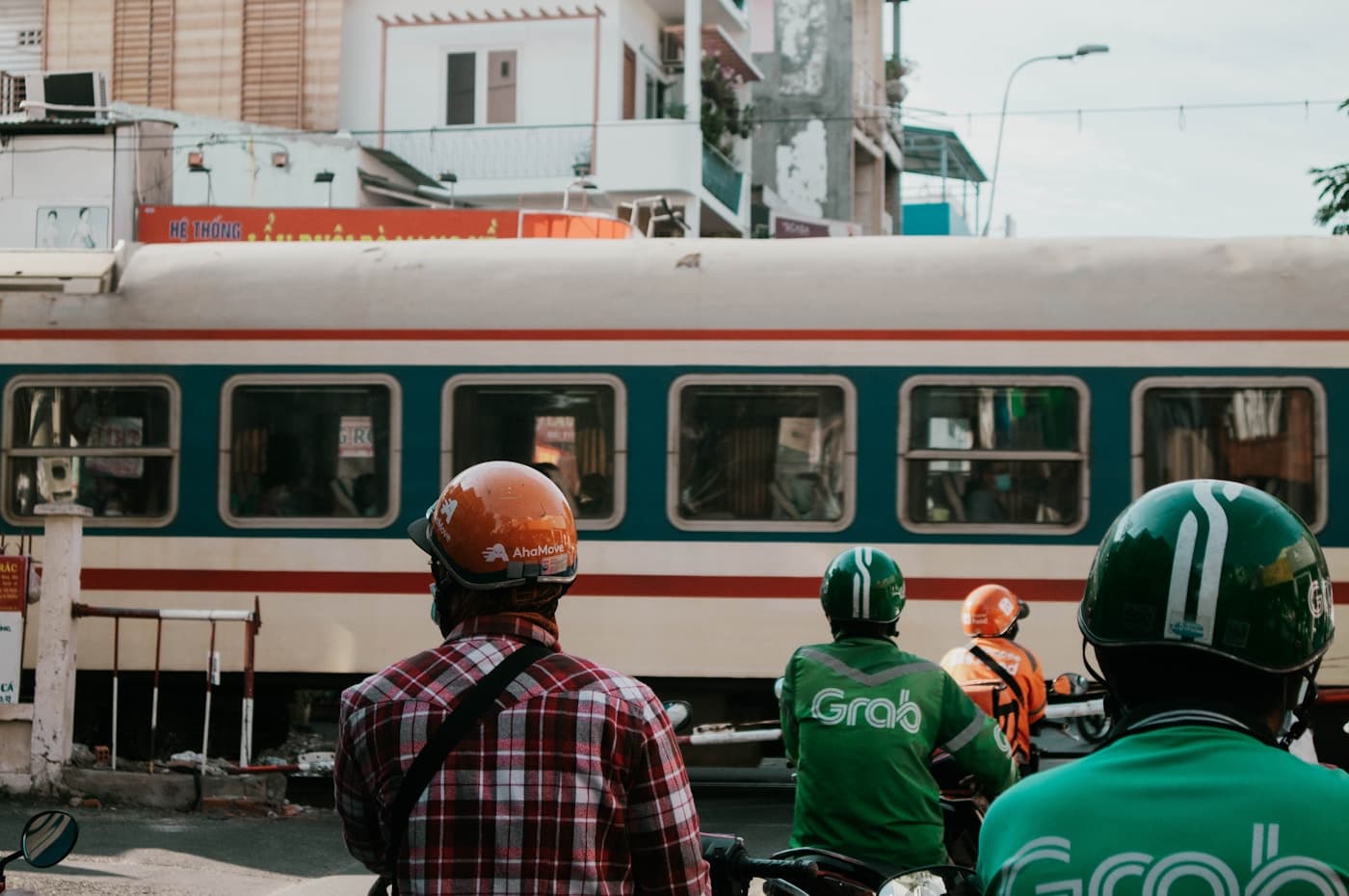
Domestic flights at Tet reach 7–8 m VND (~$265–305) return, seaside hotels add 10–40% over the May and September blocks, and intercity coach fares rise by up to 60%. The figures below are a guide; check the exact surcharge with the carrier.
| Item | Normal | Holiday | ~USD |
|---|---|---|---|
| HCMC ↔ Hanoi return flight | 2–3 m VND | 7–8 m VND at Tet | ~$265–305 |
| Connecting flight, one way | — | 5.5–7.6 m VND at Tet | ~$210–290 |
| Coach under 300 km | base fare | +40% | — |
| Coach over 300 km | base fare | +60% | — |
| Grab bike | base fare | +5 000 VND per trip | ~$0.19 |
| Grab car | base fare | +15 000 VND per trip | ~$0.57 |
| Seaside hotel, 30 Apr and 2 Sep | base rate | +10–30%, Nha Trang +20–40% | — |
Currency converter
The Thống Nhất line running north from Ho Chi Minh City is its own story. Before Tet 2026 the peak dates sold out entirely — 7 to 14 February northbound and days four to seven of the new year coming back — even though the railway had added seats. Airlines increased capacity in the same period and fares still did not soften.
The English-language rule of thumb is worth memorising: book intercity buses about a week ahead, trains several weeks ahead, and expect fares to roughly double at the peak. Hotels and Ha Long cruises sell out two to three months before Tet, which is longer than most first-time visitors assume.
Grab's surcharge runs in a declared window and is announced separately for each Tet: check the dates and hours in the app before you travel. Five thousand dong on a bike is small change, but across ten rides a week it registers. Normal-season pricing is broken down in the guide to Grab and taxis.
The May and September blocks hit accommodation rather than tickets. In 2026 seaside hotels added 10–30% for the 30 April block, up to 40% in Nha Trang, and mid- and upper-tier beachfront rooms were effectively gone in Da Nang and on Phu Quoc. Airfares on the same dates rose about 20% year on year, partly on a fuel surcharge introduced in March.
So the rule is simple arithmetic. Book flights and rooms two months out for Tet, six weeks out for 30 April and 2 September. A ticket bought a week before a holiday is not a bargain, it is whatever nobody else wanted. How to pick a route and where to save the rest of the year is in the guide on choosing a flight to Vietnam.

The holidays nobody takes off
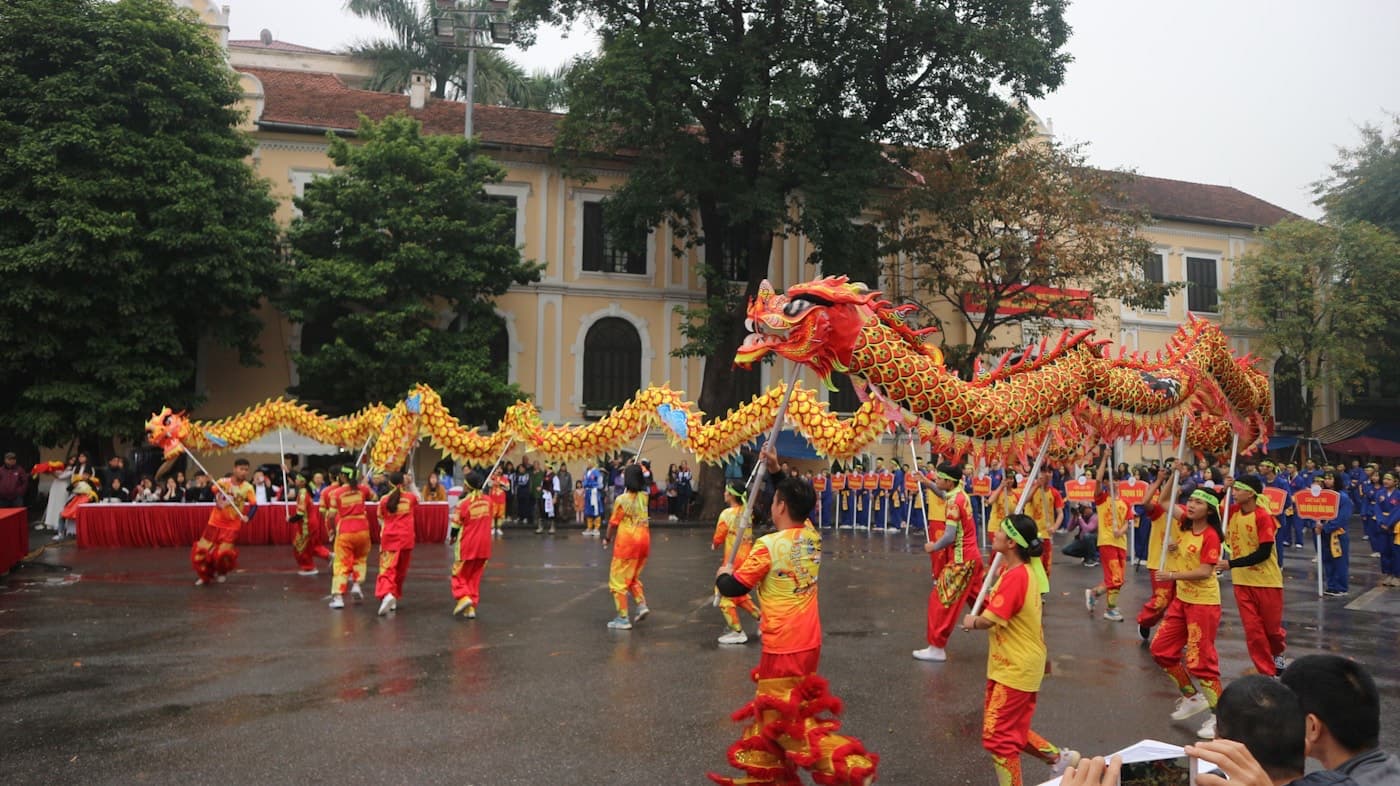
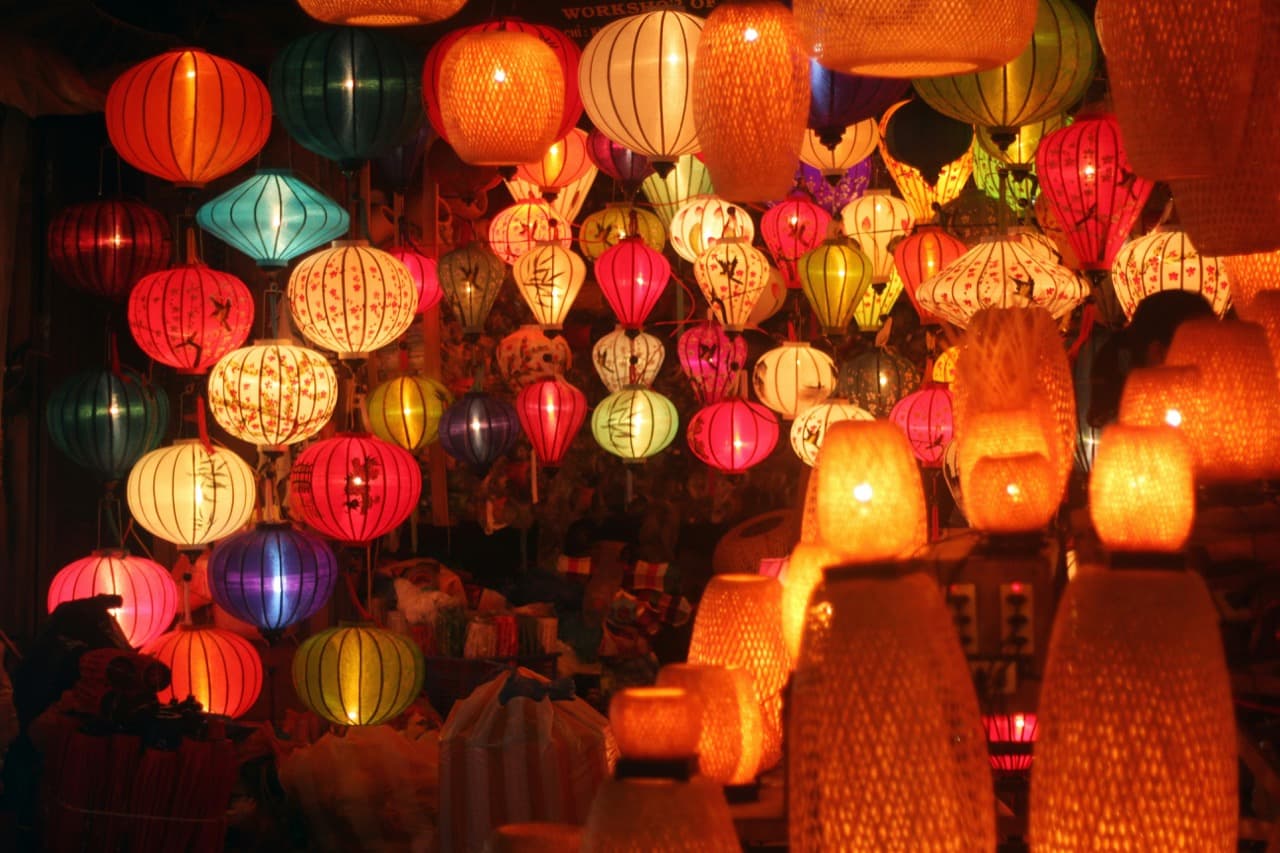
More than half of Vietnam's visible dates are not days off. Streets transform, temples fill, trade booms — and offices, banks and schools run as normal. For a visitor that is the best kind of holiday: atmosphere without closed doors.
| Date | Holiday | What a visitor notices |
|---|---|---|
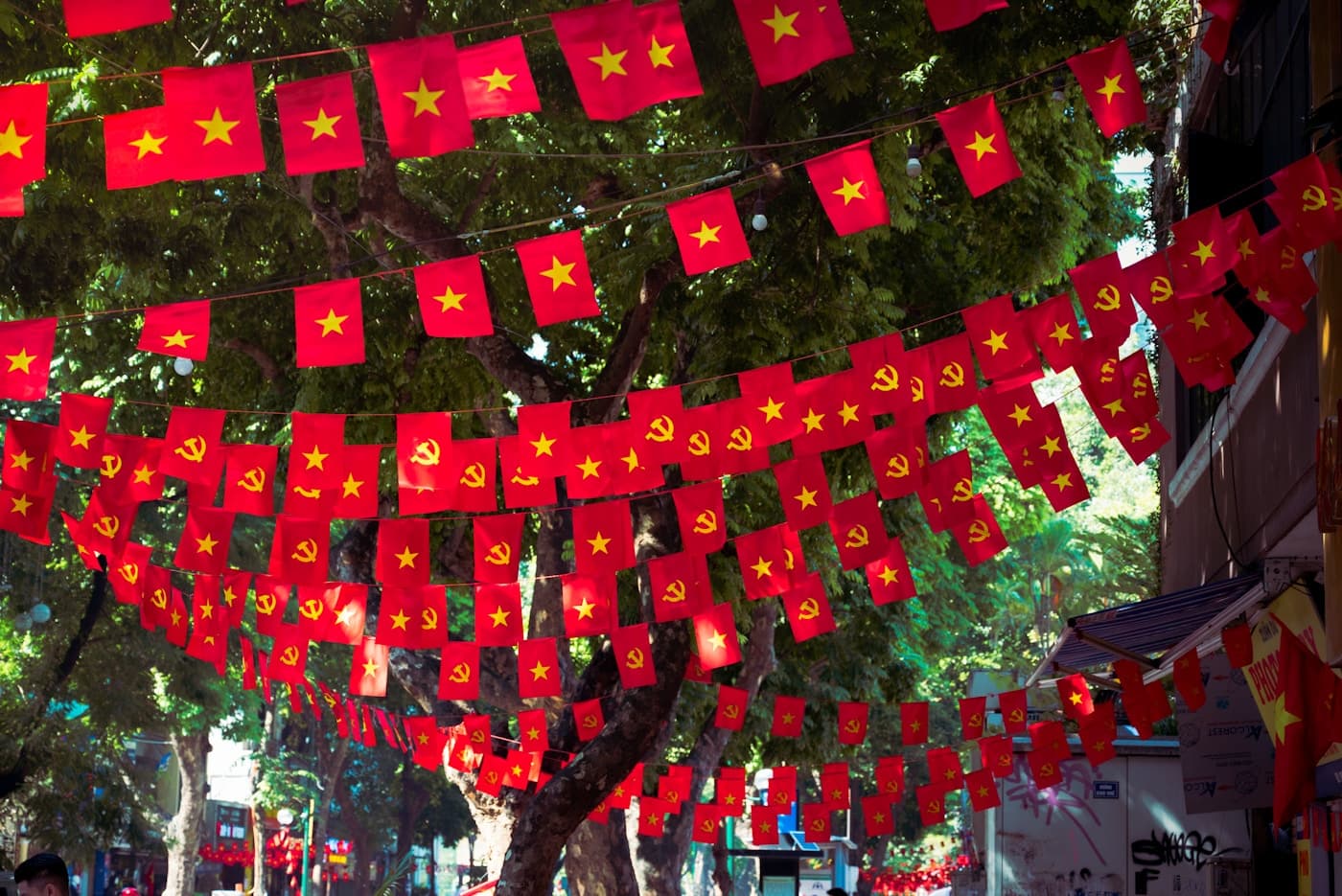
| 3 February | Founding of the Communist Party | flags and banners across the streets |
| 14 February | Valentine's Day | queues at cafes, flowers at triple price |
| 8 March | International Women's Day | restaurant bookings, packed flower markets |
| 3rd day, 3rd lunar month | Tết Hàn thực | bánh trôi rice balls on every counter |
| 15th day, 4th lunar month | Lễ Phật Đản, Vesak | processions and lotus lanterns at pagodas |
| 5th day, 5th lunar month | Tết Đoan Ngọ | morning rituals, rice wine at breakfast |
| 27 July | War Martyrs' Day | ceremonies at memorials |
| 15th day, 7th lunar month | Vu Lan, ancestors' day | paper money burned on pavements, smoke |
| 15th day, 8th lunar month | Tết Trung thu | lion dances, mooncakes, children with lanterns |
| 10 October | Liberation of Hanoi | local events in the capital |
| 20 October | Vietnamese Women's Day | the second women's day of the year |
| 20 November | Teachers' Day | schools in celebration mode, flowers everywhere |
| 25 December | Christmas | illuminations in the cities, mass in the churches |
Four of these lunar dates are worth keeping separately, because they move every year:
| Holiday | 2026 | 2027 |
|---|---|---|
| Vesak, Buddha's birthday | 31 May, Sunday | 20 May, Thursday |
| Tết Đoan Ngọ | 19 June, Friday | moves; date not yet confirmed |
| Mid-Autumn Festival | 25 September, Friday | 15 September, Wednesday |
| First day of Tet | 17 February, Tuesday | 6 February, Saturday |
Vesak is most visible in Hue and Ho Chi Minh City: pagodas hang lotus lanterns, processions move through the streets, and restaurants add vegetarian versions of their dishes for a week. What happens inside the temples and how to behave there is covered in the guide to Vesak.
There are also fixed-programme events that have nothing to do with statutory holidays but occupy the same slot in a traveller's calendar. The Hue Festival runs across four seasons of the year; the Da Lat Flower Festival opens on 19 December 2026 and closes on the 31st. Accommodation for those dates disappears as fast as it does for the May block.
Reunification Day deserves a note of its own. Formally it is a public holiday with a day off, but for a visitor it behaves like this section: only banks and offices close, while the cities fill with parades and fireworks. The detail is in the guide to Reunification Day on 30 April.
Visas and paperwork: a holiday extends nothing
Immigration offices close for the entire holiday block — five to nine days over Tet. Submissions, collections and any changes to pending applications stop. Your visa, meanwhile, keeps running down: the calendar takes no break, the counter does.
Here is the arithmetic that catches people. Your visa expires on 16 February and immigration closed on the 14th. Filing on the last working day does not help, because processing takes several working days and holidays are not working days. From 17 February you are overstaying, and it accrues until the first working day after the block.
Fines are tiered: the minimum penalty is 500 000 VND (~$19), and from a year of overstay it is 30–40 m VND (~$1,150–1,540). Beyond the money there is the blacklist, which can cost you entry for years. The tiers and the correct order of actions are set out in the guide to visa extension.
What to do before a block rather than after:
- Extend your visa or apply for a new one — a week ahead in normal times, two to three weeks ahead before Tet.
- Close out work permits and anything needing an official signature.
- Open or amend a bank account.
- Sign or renew a lease; your landlord is going home to family too.
- Change money and draw cash.
Embassies and consulates run their own holiday schedules and generally close for the full block, so a lost passport during Tet has no fast route. The buffer rule is simple: anything that depends on someone else's signature happens before, not on the last working day. Visa categories and the full application process are in the Vietnam visa guide.
Is it worth travelling during a holiday, and where not to
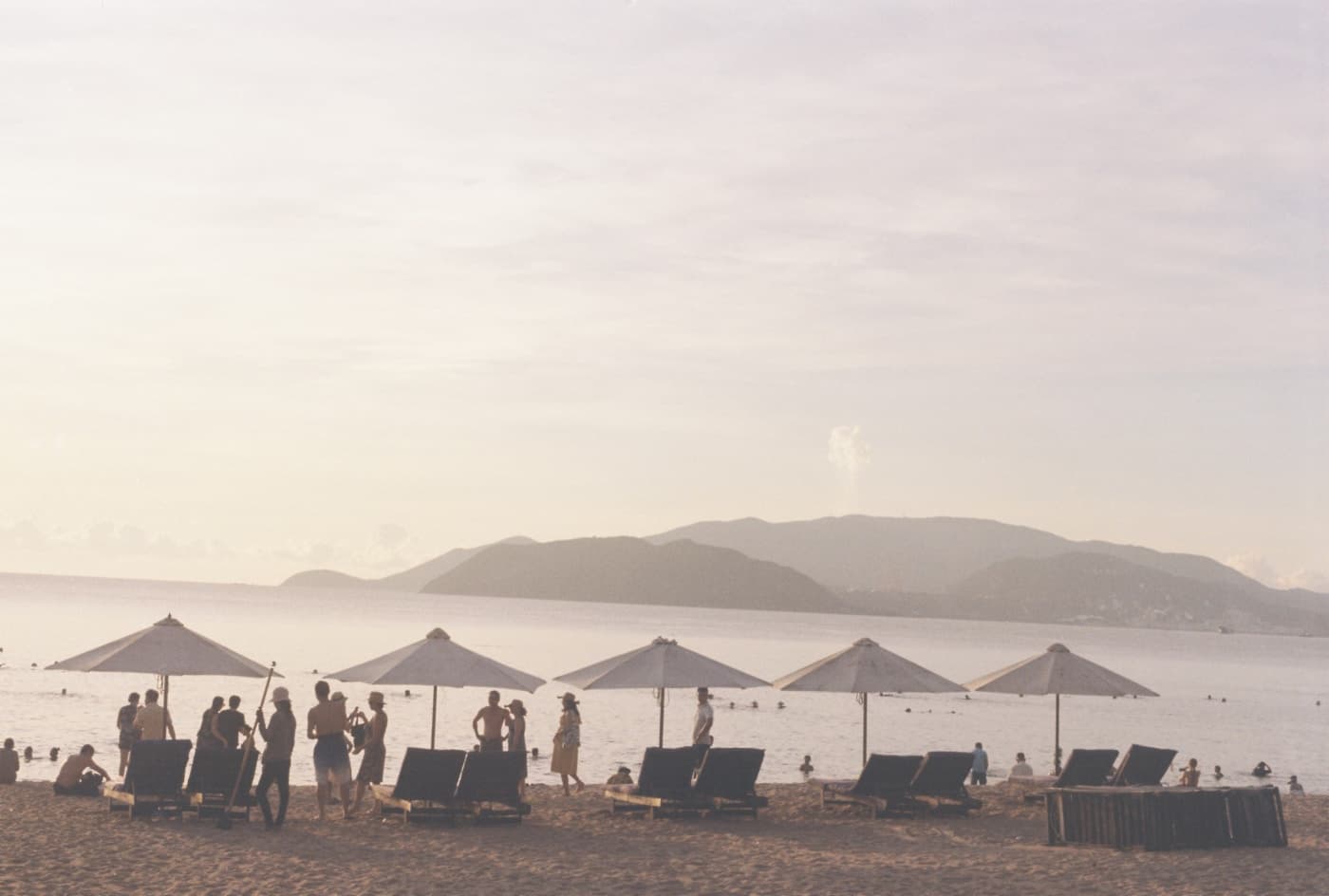
Yes, but Tet and the May block are opposite scenarios. At Tet the country closes and the resorts keep working. On 30 April and 2 September everything works, and the resorts are overrun by Vietnamese travellers who spend those days at the sea.
- ✓ You are staying in a resort hotel with no paperwork to settle
- ✓ You came for the culture: flower markets, lion dances, fireworks
- ✓ You book two months out and accept the holiday premium
- ✗ You have a visa or banking errand in the trip
- ✗ You rely on street food and small cafes, which vanish for the first days of Tet
- ✗ You are hoping for a quiet beach over the 30 April or 2 September block
Tet is easiest in Phu Quoc, Mui Ne and Nha Trang. Resort infrastructure there is built for foreigners and does not take a break: hotels, their restaurants, tour desks and rental shops run the whole block. Hanoi and Ho Chi Minh City in the same days look abandoned — half the venues shut, though the traffic is the best it will be all year.
Where not to go over the May and September blocks: Nha Trang, Da Nang, Vung Tau, Phu Quoc. The numbers above make the case — 1.25 million people in a single province across five days. Beaches, cable cars and seafront restaurants fill up, and the intercity roads queue.
Weather is a separate axis. A holiday date and a good season are different things: February Tet lands in the dry season in the south and in cold drizzle in the north, while the September block on the central coast coincides with the start of typhoon season. Month-by-month conditions are broken down in the guide on when to visit Vietnam, and the geography of the resorts is on the map of Vietnam.
There is an upside too. Holiday blocks put things on the street you will not otherwise see: pre-Tet flower markets, fireworks over the Saigon River on 30 April, lanterns in September. If your trip does not hinge on errands, a holiday adds to it. Working hours and the general rhythm of the Vietnamese day are covered in the guide to the time zone and daily schedule.
Five mistakes people make with holiday dates
- Using last year's Tet date. Tet 2026 and Tet 2027 are eleven days apart; 2027 and 2028 another eleven. There is no formula you can run in your head. Read the table.
- Leaving the visa extension until after the holiday. Immigration is closed the whole block, processing counts working days, and your visa expires in calendar ones. A single missed day is already an overstay, with a fine starting at 500 000 VND (~$19).
- Arriving with a pending e-visa. Processing stops during the block, and without an approved visa you will not be allowed to board. Apply well before the block starts.
- Booking 30 April or 2 September a week out. Seaside rooms are gone by then and airfares are up 20%. The working window is six to eight weeks.
- Confusing a public holiday with a festival. A statutory day off means closed institutions, not street celebrations. And the reverse: the most spectacular events of the year — the Mid-Autumn Festival, Vesak, the Da Lat Flower Festival — are not days off at all.
FAQ
Twelve paid public holidays as of 2026, up from eleven; the twelfth is 24 November. The real number of non-working days is higher: the 2026 holiday blocks add up to 26 days, or 24 after the two make-up Saturdays. The longest unbroken block is nine days over Tet, the shortest a single day, 24 November. Count blocks rather than dates — closed doors last as long as the block does.
The first day of the lunar year is Saturday 6 February 2027. The official block was approved on 2 October 2026: seven days, Thursday 4 to Wednesday 10 February; the ten-day option was dropped. Offices reopen on Thursday 11 February. Private employers may set their own five days, so small shops can open earlier or later. Tickets and rooms for these dates sell out early.
No. Branches close for the whole official block, over Tet and over the May and September holidays alike. ATMs keep working but in the first days of Tet they are often not restocked, especially in tourist districts. Licensed exchange counters close for three to five days at Tet and generally stay open over the shorter blocks. Digital transfers keep running throughout.
Hotels, their restaurants, tour desks, bike rentals and international chains such as Circle K and KFC run the entire Tet block. What closes is the small family-run layer: local eateries, street carts, barbers and workshops, for five to seven days. Phu Quoc, Mui Ne and Nha Trang keep resort infrastructure fully working; Hanoi and Ho Chi Minh City have far more shuttered doors.
Vietnam celebrates its own lunar new year, Tet, and it almost always falls on the same day as Chinese New Year because both follow a lunisolar calendar. The holiday itself is Vietnamese: distinct dishes, distinct superstitions, a distinct set of rituals. Calling it "Chinese New Year" in Vietnam is not the done thing and can land badly. The shared date reflects a shared calendar, not a borrowed holiday.
Vietnamese Cultural Day, introduced by the National Assembly resolution on developing Vietnamese culture of 24 April 2026. The date commemorates the first National Cultural Conference of 1946. It was observed for the first time in 2026 and became the twelfth paid public holiday, so any calendar compiled before spring 2026 omits it. The same resolution provides for free or reduced entry to public cultural and sports venues on the day.
The founding of the Communist Party of Vietnam. It is a commemorative date rather than a day off: banks, offices and schools work as usual. You notice it through red flags and banners on the streets and through events at government institutions. In some years 3 February falls inside the Tet block, in which case the country is resting for a different reason. In 2027 it does not: the approved Tet block starts on 4 February.
Data current as of October 2026. The 2026 schedule is published by the Ministry of Home Affairs; the November day off and the 2027 Tet and National Day blocks were approved on 2 October — check official sources before you buy tickets.
Read also: Tet · Mid-Autumn Festival · Reunification Day · Time in Vietnam
- Guide
Hue Festival 2026: Dates, Program, Tickets & Tips
Hue Festival 2026 guide — four-season program, June 13–18 arts week recap, autumn events, ticket prices in VND and USD, and how to plan your visit.Hue Festival 2026: Dates, Program, Tickets & Tips - Guide
Da Nang Fireworks Festival: 2026 Recap and 2027 Plan
Portugal won DIFF 2026. Real grandstand prices, 10 free viewing spots on the Han River, how to get out after the show, and when DIFF 2027 gets announced.Da Nang Fireworks Festival: 2026 Recap and 2027 Plan - Guide
Sapa 2026: Rice-Terrace Trekking & Village Guide
Sapa guide: trekking the rice terraces with local guides, ethnic villages, Fansipan, homestays, getting there from Hanoi and when to go.Sapa 2026: Rice-Terrace Trekking & Village Guide