Time in Vietnam: the time zone, the gaps and what actually opens when
Vietnam runs on UTC+7 — Indochina Time, one zone for the whole country, no daylight saving, ever. What changes twice a year is not Vietnam but your own clocks: London sits 7 hours behind in winter and 6 in summer, New York 12 and then 11. Bangkok, Phnom Penh and Vientiane never move at all.
Time zone
What time is it in Vietnam right now
UTC+7 all year, no daylight saving
The clock above shows the current time in Vietnam next to your city. Below is the part no converter gives you: what your red-eye arrival means for day one, when banks actually open, and why an appointment at 2 pm means 2:30.
Vietnam's time zone: UTC+7, one zone, no daylight saving
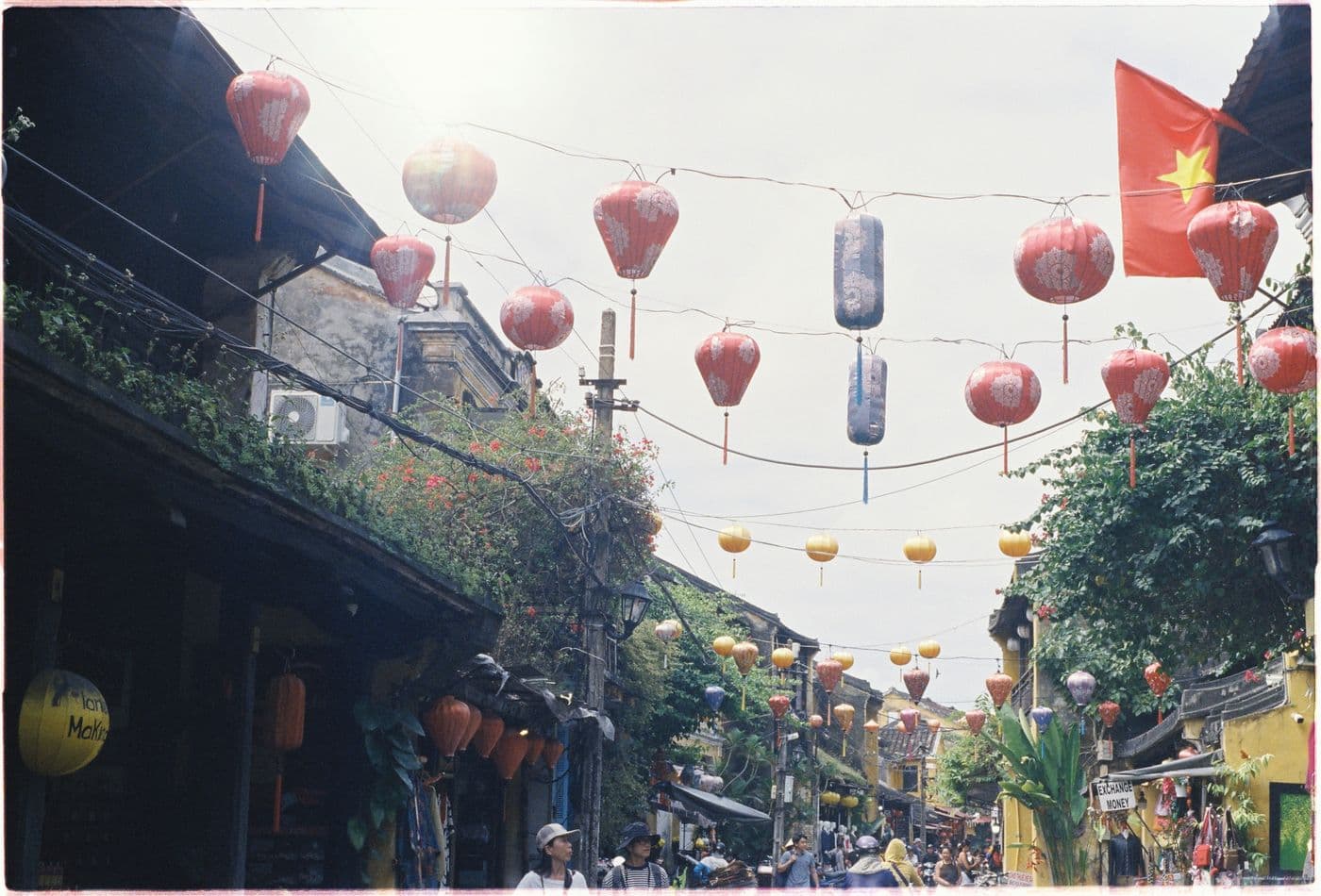
Vietnam sits entirely in UTC+7. The zone is called Indochina Time, abbreviated ICT; in the IANA database that phones and servers sync against, it is Asia/Ho_Chi_Minh. There is no summer time, and none has been recorded in the documented history of the zone.
One zone for a country 1,650 km long sounds odd until you look at a map. Vietnam runs north to south, not east to west: from Apa Chai on the Lao border to Mũi Đôi near Nha Trang is only 7.3 degrees of longitude, which works out to 29 minutes of solar time. Splitting a strip that narrow would be silly.
The clocks also happen to match the sun unusually well. UTC+7 is anchored on the 105th meridian east; Hanoi sits at 105.85, Ho Chi Minh City at 106.7. Solar noon in both lands at about 11:55 on average, drifting by around 15 minutes either way over the year. That is rare in Asia — China crams five natural zones into a single Beijing time, so in its western provinces the sun peaks around 3 pm.
Thailand, Laos and Cambodia share UTC+7. Fly Bangkok to Hanoi and your watch stays where it is. Cross into China at Lao Cai or Mong Cai and it does not: China is an hour ahead.
Time difference from the UK, Europe, the US and Australia
Vietnam never moves, so every number below depends entirely on whether your own country is on standard time or summer time.
| Your city | Their winter zone | Their summer zone | Vietnam is |
|---|---|---|---|
| London, Dublin | UTC+0 | UTC+1 | +7 / +6 |
| Paris, Berlin, Madrid, Amsterdam | UTC+1 | UTC+2 | +6 / +5 |
| New York, Toronto | UTC−5 | UTC−4 | +12 / +11 |
| Chicago | UTC−6 | UTC−5 | +13 / +12 |
| Los Angeles, Vancouver | UTC−8 | UTC−7 | +15 / +14 |
| Sydney, Melbourne | UTC+10 | UTC+11 | −3 / −4 |
| Brisbane | no daylight saving | — | −3 all year |
| Perth | no daylight saving | — | −1 all year |
| Auckland | UTC+12 | UTC+13 | −5 / −6 |
| Dubai | no daylight saving | — | +3 all year |
| Singapore, Hong Kong, Kuala Lumpur, Manila | no daylight saving | — | −1 all year |
| Bangkok, Vientiane, Phnom Penh | no daylight saving | — | 0 all year |
| Tokyo, Seoul | no daylight saving | — | −2 all year |
| Delhi | no daylight saving | — | +1:30 all year |
Two edge cases catch people out. India is an hour and a half behind Vietnam, not one or two — the same half-hour logic applies to Nepal at 1:15 and Myanmar at 30 minutes. And Australia is split: Sydney and Melbourne shift with the seasons, Brisbane and Perth never do, so the gap from Queensland is a flat three hours all year.
If you are flying in from somewhere in the region, none of this matters much. Coming from anywhere with daylight saving, it matters a lot, and the next section explains exactly when.
The gap moves twice a year, and Vietnam has nothing to do with it
Every spring and autumn your recurring calls with Vietnam slip by an hour. Vietnam did not move; you did.
| Region | Clocks go forward | Clocks go back |
|---|---|---|
| UK and Ireland | last Sunday in March | last Sunday in October |
| European Union | last Sunday in March | last Sunday in October |
| United States, Canada | second Sunday in March | first Sunday in November |
| Australia (NSW, VIC, SA, TAS, ACT) | first Sunday in October | first Sunday in April |
| New Zealand | last Sunday in September | first Sunday in April |
The nastiest window is mid-March. The US shifts on the second Sunday, Europe on the last one, so for two to three weeks both the Vietnam–US and Vietnam–Europe gaps sit an hour off their usual value at different times. Late October and early November repeat the trick in reverse.
Same time in Hanoi, Da Nang, Nha Trang and Phu Quoc
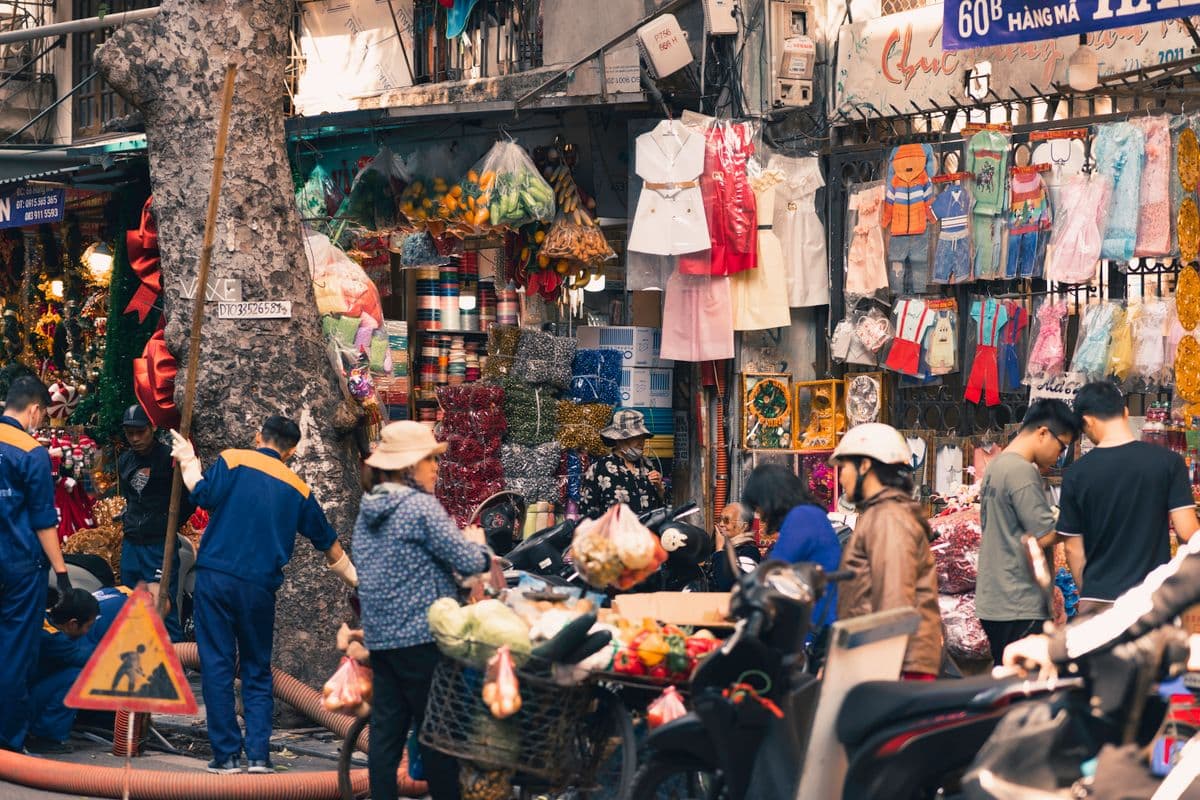
Every city in Vietnam keeps the same clock. Hanoi, Da Nang, Hoi An, Nha Trang, Cam Ranh, Phu Quoc, Da Lat, Mui Ne, Ho Chi Minh City — all UTC+7, with no separate zone for the islands. Hanoi and Saigon are 1,100 km apart and read identically.
What does differ is daylight. Hanoi sits at 21 degrees north, Ho Chi Minh City at 10.8, and their days diverge noticeably.
| Month | Hanoi sunrise | Hanoi sunset | HCMC sunrise | HCMC sunset |
|---|---|---|---|---|
| January | 06:34 | 17:36 | 06:15 | 17:52 |
| April | 05:36 | 18:16 | 05:39 | 18:05 |
| June | 05:13 | 18:40 | 05:32 | 18:18 |
| December | 06:24 | 17:18 | 06:07 | 17:37 |
Across the year Hanoi swings by 2 hours 33 minutes, from 10 hours 54 minutes of daylight in December to 13 hours 27 in June. Ho Chi Minh City swings by just 1 hour 16 minutes, being closer to the equator. Nha Trang, at 12 degrees, behaves much like the south.
The practical read: winter evenings in the north end early. Sunset in Hanoi on 21 December is 17:18, so an Old Quarter walk planned for "after lunch" turns into a walk in the dark. On the same day the south stays light until 17:37. Build that into a December route through Hanoi and Ho Chi Minh City; in Nha Trang and Da Nang the seasonal correction is barely noticeable.
Which month to visit is a separate question entirely — that one is about monsoons, typhoons and sea temperature, and it is covered in the best time to visit Vietnam guide. The time zone has nothing to do with it.
One small oddity for the observant: Hanoi's earliest sunset is not on the solstice but in late November, at 17:16. Blame the equation of time, the mismatch between solar and clock days.
Fast Track — no queue at the border
5–10 minutes instead of an hour in the immigration queue
from$11per passenger
Keeping Vietnam time on your phone
The most reliable fix is a second clock face. On iPhone that is Clock, then World Clock; on Android, Clock, then World time. Search for Ho Chi Minh City rather than Hanoi — Hanoi is missing from some city lists, and the time is identical anyway.
Voice assistants get it right, because they read the same IANA database where the zone is Asia/Ho_Chi_Minh. Windows labels it "(UTC+07:00) Bangkok, Hanoi, Jakarta" — the other capitals in the name are not a mistake, it is the same offset.
Three places where the clock can still lie to you:
- Your phone right after landing. The zone is inferred from the carrier network. With no local SIM or eSIM and roaming switched off, the handset may keep showing home time. Check that automatic date and time is on, or set the zone by hand.
- A laptop on a VPN. Changing the exit server does not change your system zone, but calendar invitations still render in your account's zone. If the account says London, everything shows in London hours.
- Online check-in. Departure times are always local to the departure airport. A flight leaving Cam Ranh at 14:00 leaves at 14:00 Vietnam time, whatever your phone says.
Working remotely across the gap
Whether Vietnam works as a remote base depends almost entirely on which continent pays you.
| Your team is in | Overlap with a normal Vietnam day | Verdict |
|---|---|---|
| Australia, New Zealand | 3–4 hours ahead, nearly a shared workday | Easiest setup in the region |
| Singapore, Hong Kong, Japan, Korea | 1–2 hours ahead | Effectively no adjustment |
| India, Gulf states | 1.5–3 hours behind | Comfortable, slightly late start |
| UK, Ireland | 6–7 hours behind, they come online at 14:00–15:00 your time | Workable: mornings free, afternoons and evenings on calls |
| Continental Europe | 5–6 hours behind, online from 13:00–14:00 | The classic digital-nomad shift |
| US East Coast | 11–12 hours behind, their 9 am is your 8–9 pm | Late evenings, or a genuine night shift |
| US West Coast | 14–15 hours behind | Night shift, no way around it |
The European setup is the one people move for. Your morning is yours: swim, coffee, gym, errands, all before anyone in Berlin has opened a laptop. Work starts around one in the afternoon and runs into the evening. The trade-off is that your evenings belong to the job.
If you are planning to stay on and work remotely, read our digital nomad visa explainer: Vietnam has no dedicated nomad visa, and it covers what people use instead.
What time will I actually land?
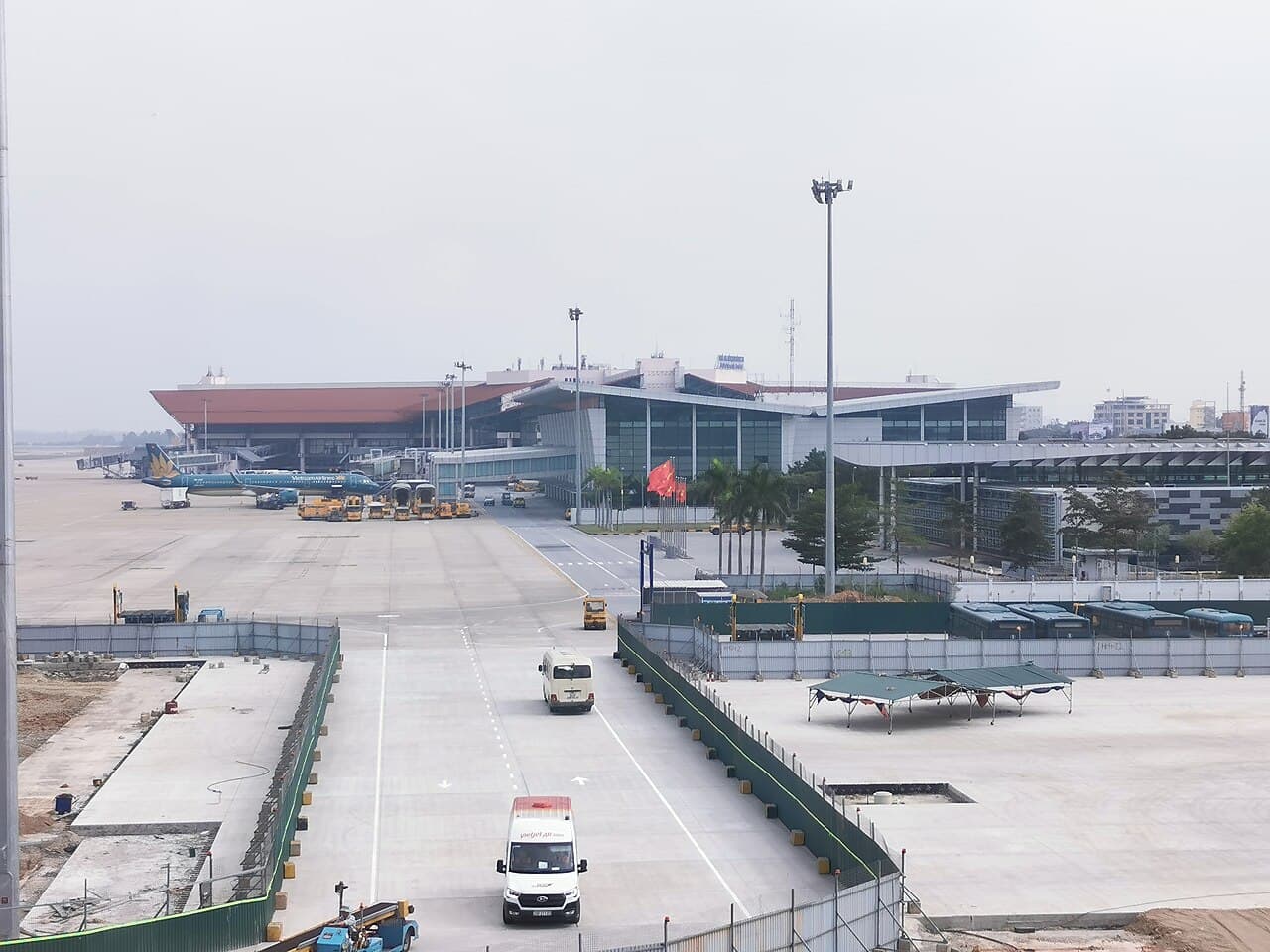
Arrival times on a ticket are always local, which is the single most common planning trap. The arithmetic is short:
- Outbound: local arrival = departure time at home + flight time + the gap.
- Return: arrival at home = departure from Vietnam + flight time − the gap.
- With a layover: work each leg separately, in the zone of the connecting airport. Doha and Istanbul are UTC+3, Dubai UTC+4, Singapore and Hong Kong UTC+8.
| Route | Typical total time | What tends to happen |
|---|---|---|
| London → Hanoi, one stop via the Gulf | 14–16 hours | Evening departure, arrival next afternoon |
| Frankfurt → Ho Chi Minh City, non-stop | about 12 hours | Midday departure, arrival early next morning |
| New York → Hanoi, one or two stops | 19–24 hours | You lose a full calendar day |
| Sydney → Ho Chi Minh City, non-stop | about 9 hours | Land the same evening, no lost day |
| Singapore, Bangkok, Hong Kong → anywhere in Vietnam | 2–3 hours | Same day, barely any adjustment |
Flying east from Europe or North America eats a day; flying home gives it back, and long-haul returns often land on the same calendar date they departed. Durations also run longer westbound because of the jet stream, usually by an hour or so.
One detail worth planning around: red-eyes from Europe land in Vietnam in the morning, hours before hotel check-in. Early check-in is either paid or unavailable, and three hours in a lobby after a twelve-hour flight is the standard opening scene of a Vietnam trip. Book the previous night if you can afford it.
Jet lag: surviving the first three days
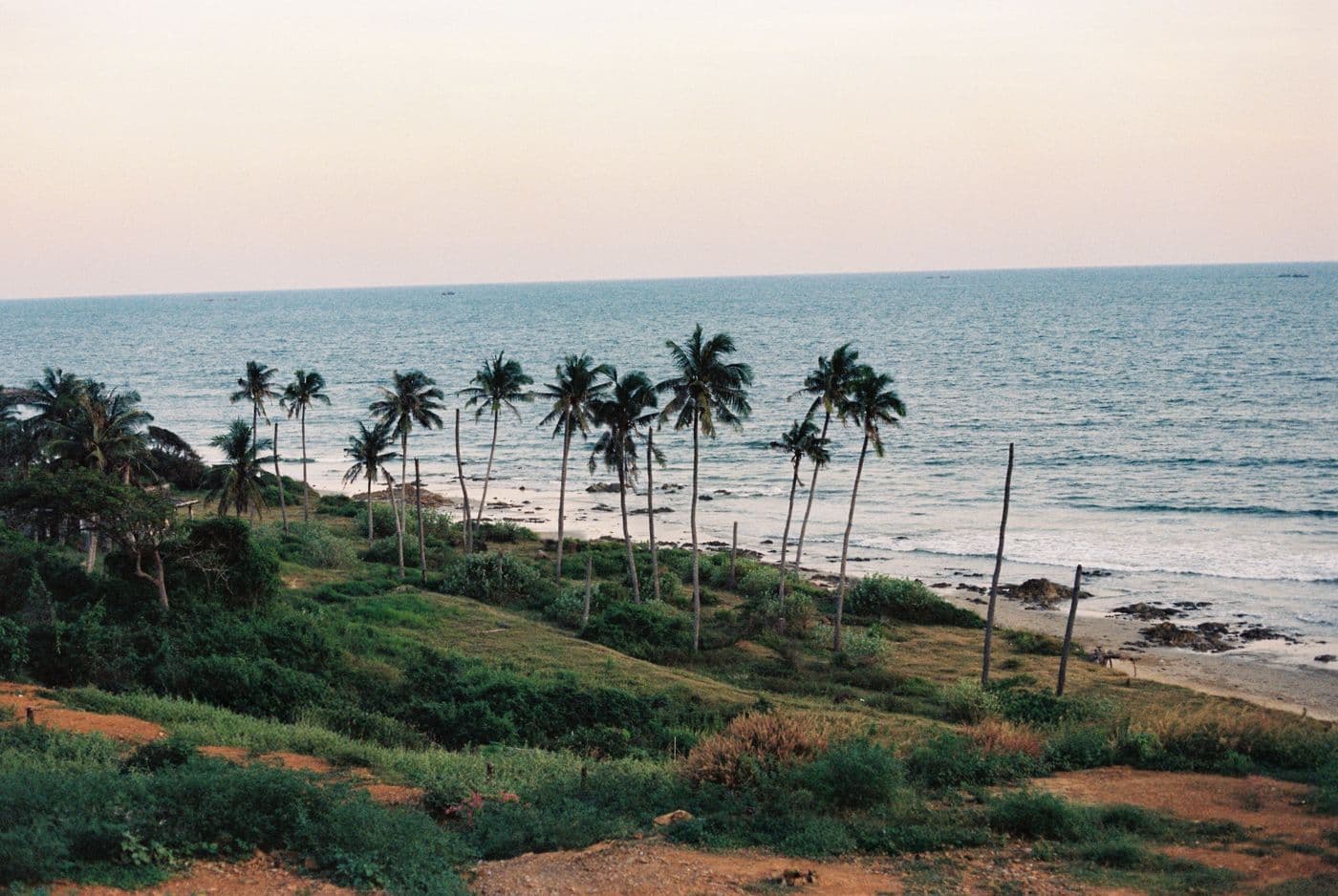
Eastward travel is harder than westward, because the body would rather stretch a day than compress one. Flying to Vietnam from Europe or North America asks you to fall asleep earlier than your system wants, which is exactly the thing it resists. The usual estimate is roughly one day of recovery per hour of shift, though it caps out: nobody spends twelve days adjusting from New York.
What actually helps:
- Use the layover. A long connection in Doha or Singapore already sits partway to Vietnam time. Sleep on the leg that lands in local night, stay awake on the other.
- Chase morning light on day one. Get outside before 08:00 local. Vietnam makes that easy — by seven it is bright, hot and busy.
- Hold out until 21:00 local. Napping on arrival afternoon is the classic mistake. An hour in the sea beats an hour in bed.
- Skip afternoon coffee for two days. Even the cà phê sữa đá, which is a real sacrifice.
Do not schedule anything serious for arrival day: no early-start tour the next morning, no first ride on a rented motorbike, no lease signing, no domestic connection. Day two is for a 07:00 alarm and a street breakfast. By day three, most people are running on local time and can book that sunrise tour.
If you are staying for more than a couple of weeks, sort out travel insurance before you fly. The first days are when your immune system is at its worst.



When things open: Vietnam's daily schedule

Vietnam works from 07:30 to 17:00 with a hard break in the middle. Lunch runs 11:30 to 13:30, and during it government counters and half the offices in the country are shut. Bank windows usually reopen at 13:00. This is the single most useful thing to know about local time if you have any errand at all.
| What | Hours | Notes |
|---|---|---|
| Government offices, immigration | 07:30–11:30, 13:30–16:30, Mon–Fri | Closed Saturday |
| Banks | 08:00–11:30, 13:00–16:30, Mon–Fri | Some branches open Saturday morning |
| Licensed money changers | 08:00–18:00 | Open after the banks shut. Exchanging outside licensed outlets is an offence |
| ATMs | 24/7 | Fees and limits do not vary by hour |
| Markets | peak 04:30–09:00 | Fresh fish and greens are gone by seven |
| Street breakfast stalls | 05:30–08:30 | Most have packed up by nine |
| Cafes and restaurants | 07:00–22:00 | Rush 11:30–13:00 |
| Shops and malls | 09:00–21:00, malls to 22:00 | Vincom and Lotte close at 22:00 |
| Pharmacies | 08:00–21:00 | Resort areas have 24-hour ones |
| Theme parks | 08:30–21:00 | Cable cars stop before the park does |
| Taxis and Grab | 24/7 | Fewer cars and higher fares overnight |
| Company offices | 08:00–17:30 | Break 12:00–13:30 |
Hours current as of 09/2026. Check a specific branch or park on its own site — schedules shift in small ways.
The lunch break is not about eating, it is about sleeping. Ngủ trưa, the midday nap, is an institution: at half past twelve the office lights go off and staff unroll mats or sleep at their desks. Turning up with a question then is pointless and mildly rude.
Mornings start correspondingly early. The country is up at five, and by six the parks are full — tai chi around Hoan Kiem Lake in Hanoi, joggers and outdoor gym machines in Tao Dan in Saigon. The logic is practical: six in the morning is the coolest hour of the day, and after ten the street turns unpleasant. It is also the best light for photographs and the only time the market fish is genuinely fresh.
The flip side is that street food runs on a schedule rather than around the clock. Breakfast phở stalls close by nine, so turning up at eleven means eating in a restaurant built for tourists.
After ten at night the country empties fast. Shops simply close, and by midnight beer lives in bars and 24-hour chains like Circle K and GS25. Most kitchens stop taking orders at 21:30. Taxis and Grab run all night, though between two and five there are noticeably fewer cars and fares climb.
Theme parks follow one broad pattern: ticket booths from 08:30 to 09:00, last entry an hour or two before closing, cable cars and water zones winding down first.
Planning to open a Vietnamese bank account? Go on a weekday morning. Afternoon queues are longer, and by Friday evening the staff are watching the clock.
"Rubber time": why 2 pm means 2:30
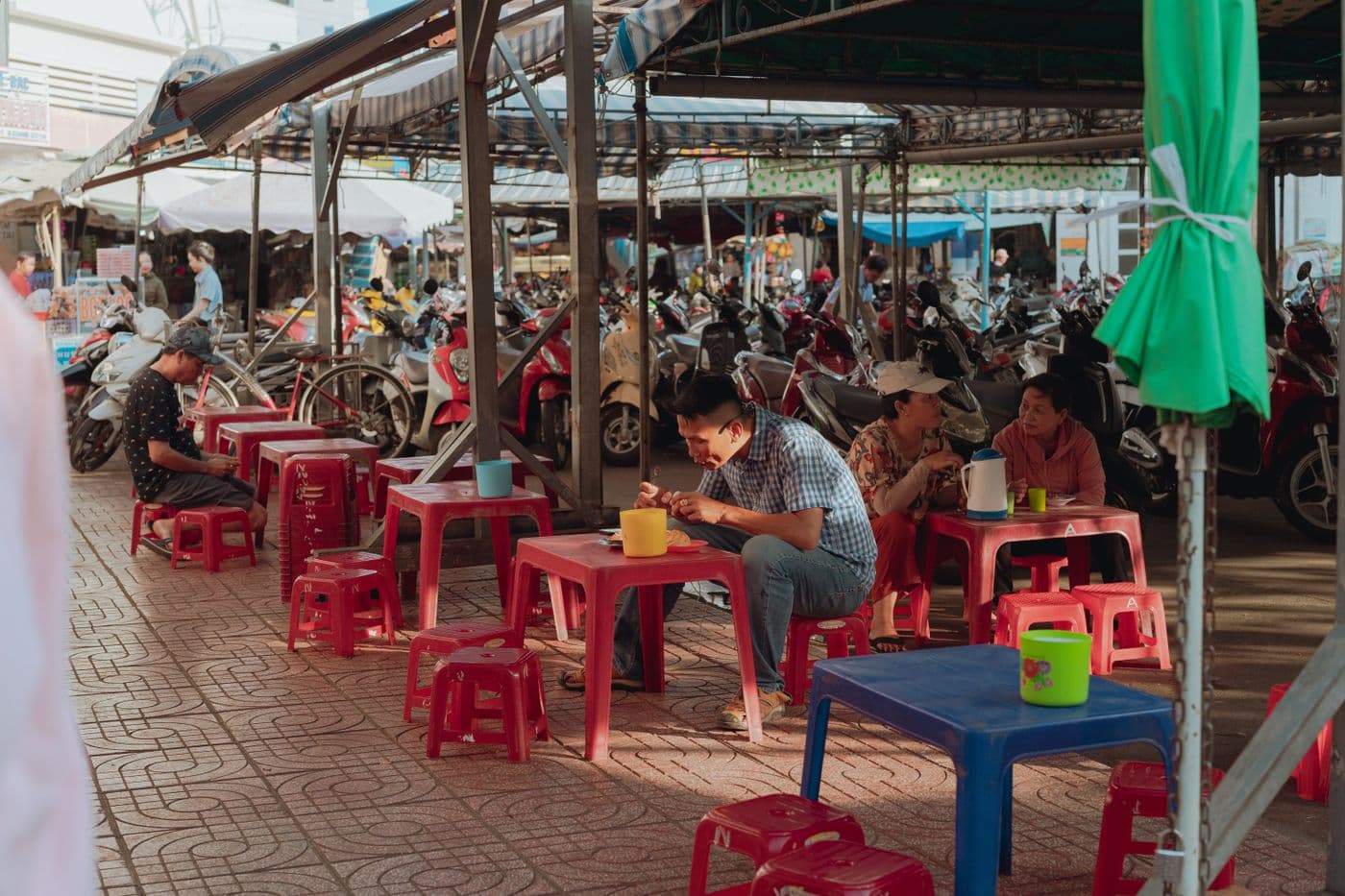
Vietnamese has a phrase for it: giờ cao su, literally "rubber time." People use it about themselves, wryly, to describe a habit of running late — the agreed hour stretches like an elastic band. In casual arrangements, twenty to thirty minutes is not lateness and needs no apology.
The usual explanation is agricultural. For centuries work was set by sun and season, not by a dial. Planting does not begin at 9:00 sharp.
Where rubber time applies:
- the landlord coming to show you a flat;
- the mechanic collecting your motorbike;
- a delivery driver;
- a friend who invited you for coffee;
- the crew who promised to fix the air conditioning.
Where it does not apply at all: flights, trains, intercity buses, immigration offices and any bank counter before lunch. There the clock is rigid, and missing an 11:29 window means coming back after half past one.
The workaround is dull but effective. Build in a buffer, confirm an hour ahead, never stack two appointments back to back. And do not get wound up about it: the deal cuts both ways, and nobody expects punctuality from you either.
Asking the time in Vietnamese is easier than it looks: mấy giờ rồi? means "what time is it?" Younger Vietnamese and international offices, meanwhile, increasingly treat giờ cao su as an embarrassment — the more formal the setting, the stricter the clock.
Two calendars: solar and lunar

Vietnam runs two counting systems side by side. Dương lịch, the solar calendar, is the familiar Gregorian one: schedules, working hours, contracts and tickets all use it. Âm lịch, the lunar calendar, governs festivals, ancestor days, weddings and the choice of a date to open a business.
You can see it on any wall calendar in the country: under the big solar date, the lunar one is printed small. Locals read both.
| Year | Tet, first day of the lunar year | Zodiac sign | Public holiday block |
|---|---|---|---|
| 2026 | 17 February | Horse | passed, in February |
| 2027 | 6 February | Goat | 4–10 February (draft, awaiting approval) |
The government confirms the holiday block by decree in the autumn of the preceding year, and the statutory five days usually stretch into a continuous 7 to 10. During Tet, banks, government offices and many shops are closed, and transport timetables are rewritten wholesale. Domestic tickets sell out a month in advance.
There is a smaller rhythm too. Ngày rằm, the fifteenth day of the lunar month, is the full moon, and many Vietnamese eat vegetarian on it. Some cafes swap their menu for the day: you order bún bò and get the tofu version.
How Tet is actually celebrated, and what the country looks like during it, is covered separately in the Tet guide. The full list of public holidays with dates is in the holiday calendar.
How Vietnam ended up on UTC+7
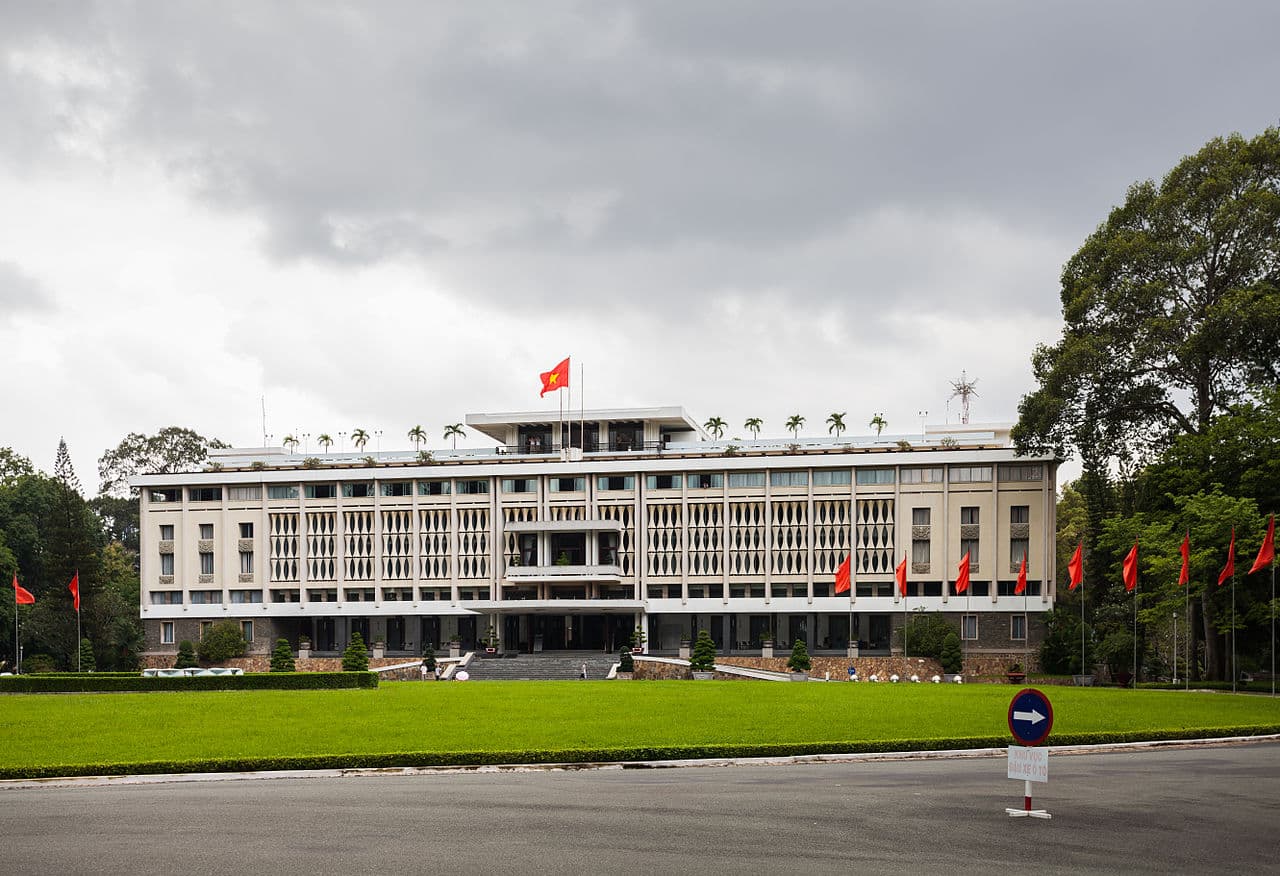
The current offset has stood since 1975. Before that the clocks were reset six times, and almost every shift was political rather than astronomical.
| Date | Zone | What happened |
|---|---|---|
| 1 May 1911 | UTC+7 | French Indochina replaces local solar time with a single zone |
| 31 December 1942 | UTC+8 | The Vichy administration moves the colony an hour forward |
| 14 March 1945 | UTC+9 | Japanese occupation; the country runs on Tokyo time |
| 1945–1954 | UTC+7 | The DRV restores the pre-war zone, with confusion in contested areas |
| 1954–1975 | UTC+7 and UTC+8 | The North on UTC+7, the South on UTC+8 from 1960. Two zones, one country |
| 13 June 1975 | UTC+7 | After reunification the whole country moves to a single zone |
For fifteen years, from 1960 to 1975, Hanoi and Saigon were an hour apart, and that was not a technicality — it was a front line drawn across a clock face. Reunification closed the question overnight: on 13 June 1975 the south simply wound its watches back sixty minutes.
Nothing has changed since, and no summer-time experiment has ever been tried. Compared with most of Europe and North America, where the rules have been rewritten repeatedly, Vietnamese timekeeping is remarkably boring.
Five time mistakes travellers make
- Assuming the gap is fixed. It is fixed on Vietnam's side only. If your home country uses daylight saving, the difference changes twice a year, and a number you memorised in January is wrong by April.
- Turning up at a bank or immigration office at noon. Government counters shut from 11:30 to 13:30, banks usually until 13:00. Arriving at lunch costs you two hours, or the whole day if you travelled in from out of town.
- Booking a recurring call without checking the season. Nine in the morning in London lands at 16:00 Vietnam time in winter and 15:00 in summer — both civilised. Nine in the morning in New York lands at 21:00 or 20:00, which is a weekly evening gone.
- Planning anything for arrival day. Long-haul flights land mid-morning, check-in starts at 14:00, and your body thinks it is the middle of the night. Give day one to the sea and an early bedtime.
- Expecting punctuality to the minute. Turn up on time yourself, but do not be surprised at a half-hour wait. Irritation achieves nothing here; a buffer in the schedule achieves everything.
FAQ
No. Vietnam does not shift its clocks and, going by the documented history of the zone, never has. The country stays on UTC+7 all year. That means any change in the gap between you and Vietnam comes from your own side — the UK, EU, US, Canada, Australia and New Zealand all move, and the difference moves with them.
One, for the entire country. Vietnam stretches 1,650 km north to south but only 7.3 degrees of longitude east to west, which amounts to 29 minutes of solar time — far too little to justify a second zone. Hanoi, Da Nang, Nha Trang, Phu Quoc and Ho Chi Minh City all read exactly the same.
Ahead, by seven hours in the British winter and six during British Summer Time. When it is 09:00 in London in January, it is 16:00 in Hanoi; in July it is 15:00. The gap changes on the last Sunday in March and the last Sunday in October, both times because London moves rather than Vietnam.
Identical. The two cities are 1,100 km apart on one national time zone. Only the daylight differs: in December the sun sets at 17:18 in Hanoi and 17:37 in Ho Chi Minh City, because the north is further from the equator. In June the north gets the longer evening instead, by roughly twenty minutes.
It depends on the shift. From Australia or Southeast Asia there is barely any. From Europe, six or seven hours eastward usually costs two or three days. From North America, eleven to fifteen hours means the better part of a week, and splitting the trip with a long layover in the Gulf or Singapore helps more than anything you can do on arrival.
Shops and malls run roughly 09:00 to 21:00, with the large malls staying open until 22:00. Markets start far earlier, around 04:30, and the good produce is gone by seven. Street breakfast stalls open at 05:30 and close by 08:30. Banks and government offices keep their own hours and shut for lunch: government offices from 11:30 to 13:30, banks usually until 13:00.
No. Visa-free stays are counted in calendar days from the date of entry, not in hours, so the offset is irrelevant. It does mean a landing at 23:50 burns a whole day of your allowance. Eligibility, lengths and extensions are covered in the visa-free entry guide.
Eligibility, lengths and extensions for visa-free stays are covered in the visa-free entry guide.
Data current as of September 2026. Opening hours and flight schedules change — check official sources before you travel.
- Preparation
Vietnam SIM Card & eSIM (2026): Operators & Data Plans
Which SIM is best in Vietnam? Viettel for coverage, an eSIM before you fly for convenience. Operators, data plans, where to buy and real 2026 USD prices.Vietnam SIM Card & eSIM (2026): Operators & Data Plans - Preparation
Healthcare in Vietnam for Expats 2026: Insurance and Costs
What health costs an expat in Vietnam per year: BHYT at 4.5% of salary, private plans $200-1,500, check-ups from $100, evacuation up to $50,000.Healthcare in Vietnam for Expats 2026: Insurance and Costs - Preparation
Visa-Free Entry to Vietnam: What to Show at the Border
How visa-free entry to Vietnam works in practice: the digital arrival card, what to show at immigration (onward ticket, passport), the process and refusals.Visa-Free Entry to Vietnam: What to Show at the Border