Sea dangers in Vietnam: jellyfish, sea urchins, stonefish and rip currents
Jellyfish in Vietnam sting mostly in spring and summer. The Nha Trang Bay authority warns about them from May to July, and Phu Quoc's season runs from April to August. Most stings fade without trouble, but Vietnamese dermatologists treat blisters and infected stings every summer, and in rare cases a sting can lead to anaphylaxis. The deaths in the 2025–2026 news reports came from waves and rip currents, not jellyfish. Lifeguards pull swimmers out in April, at the start of the hot season, as well as in stormy January.
This guide covers what in Vietnamese waters can actually hurt you, where and when Vietnamese sources confirm it, and what first-aid protocols say to do instead of beach folklore. Where no source exists, the guide says so. Risks away from the water, from traffic to scams, are in our Vietnam safety guide.
What to do if a jellyfish stings you
If a jellyfish stings you, get out of the water, rinse the area with seawater and lift off any tentacles with tweezers or the edge of a bank card. For pain, the IFRC and NHS recommend hot water up to 45 °C for 20–30 minutes; Australia's ANZCOR protocol recommends a cold pack in tropical waters and keeps heat for bluebottles. Vinegar for 30 seconds makes sense only when a box jellyfish is suspected, and then use cold only for pain.
- Get out of the water and sit down. After a bad sting, someone should stay with the person and watch them.
- Don't rub. Not with a towel, not with sand, not with your hand. Undischarged stinging cells stay on the skin, and friction can make them release venom.
- Rinse with seawater. Don't pour bottled water or the beach shower on it. ANZCOR warns fresh water can make the cells fire.
- Remove tentacles. Tweezers, a plastic card, or fingers in a glove or plastic bag. A dead jellyfish on the sand can still sting.
- Ease the pain. Protocols differ here. The IFRC and NHS recommend hot water up to 45 °C for 20–30 minutes: put a hand or foot in a basin, or use a shower for other areas, and test the water on your own hand first. ANZCOR recommends a cold pack in a dry bag in tropical waters where box jellyfish are possible, because heat may speed up venom absorption. Signs of a box jellyfish (see the table below): cold only. Looks like a bluebottle: hot water.
- Watch for 30–40 minutes. If it was bearable at first and then severe whole-body pain, vomiting, sweating and breathlessness set in, call an ambulance. That's Irukandji syndrome, caused by small box jellyfish.
- See a doctor for blisters, stings on the face, mouth or near the eyes, any sting on a child or an older person, or if redness, warmth and pus show up a day or two later. Those are signs of infection, flagged by the IFRC and Vietnamese dermatologists. Check your tetanus shot is up to date.
Vinegar, hot water or cold: which one when
| Situation | Vinegar (household) | Hot water ~45 °C | Cold pack |
|---|---|---|---|
| Unknown jellyfish, small sting, no box-jellyfish signs | Not needed | IFRC and NHS: yes, 20–30 min | ANZCOR in the tropics: yes |
| Suspected box jellyfish: long tentacles, extreme pain, "ladder" marks | ANZCOR: consider, 30 seconds, then remove tentacles | No | Yes, for pain |
| Bluebottle / Portuguese man-of-war (blue float) | No | Yes, 43–45 °C up to 30 min | If heat doesn't help |
| Stonefish, stingray | — | Yes, as hot as the helper can stand | No |
| Sea urchin | — | Yes, up to 45 °C for 30–90 min (DAN) | — |
The box jellyfish, bluebottle and fish rows follow ANZCOR 9.4.5, approved June 2025. For an unknown jellyfish the protocols differ: the IFRC 2020 guidelines and the NHS put heat first, while ANZCOR prefers cold in the tropics and warns that heat may spread the venom of dangerous species. The protocol itself notes conflicting evidence on whether vinegar reduces or increases venom discharge in the Australian box jellyfish, so it says "consider", not "must". A Cochrane review (2023) rated all the evidence on jellyfish-sting treatments as very low certainty: 9 studies, 574 people. Nothing is firmly proven yet, and the steps above are agreed practice.
[There is a] possibility that this will increase absorption or distribution of the venom increasing the risk of fatalityANZCOR Guideline 9.4.5, on heat for stings from dangerous jellyfish, 2025
When to call 115
Call 115 straight away if, after a sting or a spine wound, the person has trouble breathing, chest pain, dizziness or loses consciousness. Same goes for heavy swelling, vomiting, seizures, a sting covering half a limb or more, or a sting to the eye. If they're unresponsive and not breathing normally, start CPR until help arrives.
Numbers to save before you hit the beach:
- 115 — ambulance;
- 114 — fire and rescue;
- 113 — police;
- 112 — national line for reporting incidents and disasters, linked to 113, 114 and 115 (Decision 2024/QĐ-TTg).
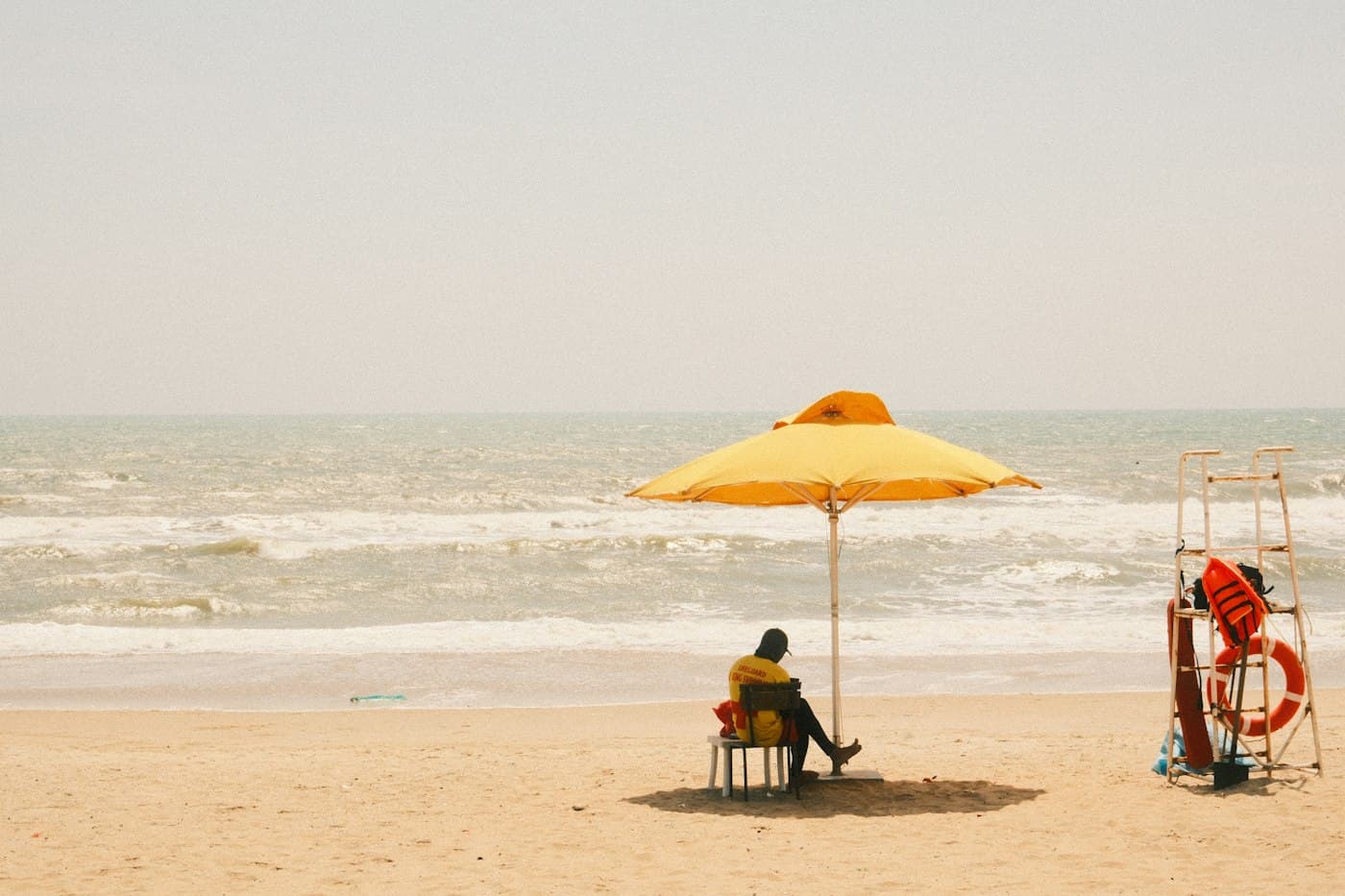
If you don't speak Vietnamese, ask a lifeguard, a local nearby or your hotel reception to make the call and name the beach. Keep your hotel address saved in Vietnamese on your phone. On Nha Trang's beaches, lifeguard posts run around the clock and carry first-aid kits, the bay authority said. Running to the tower can be faster than waiting for an ambulance.
Hospitals and clinics with English-speaking staff, city by city, are in our guide to hospitals and pharmacies in Vietnam. Numbers and phrases for the call are in the guide's Emergency help section.
Myths: urine, fresh water, sand, lime
Peeing on a jellyfish sting doesn't help, and neither do fresh water or sand. The UK's NHS puts it bluntly: "do not pee on the sting." Vietnam's National Children's Hospital in Hanoi also warns against rinsing with urine or putting leaves and unknown ointments on the wound.
| Beach advice | What protocols say | Source |
|---|---|---|
| Pee on it | No. Doesn't help, may cause infection | NHS, National Children's Hospital |
| Rinse with fresh water | No. Can trigger stinging cells. Seawater only | ANZCOR |
| Rub with sand or a towel | No. Protocols say not to rub a sting | IFRC 2020, Tuổi Trẻ |
| Vinegar on any sting | Only for suspected box jellyfish. Never on a bluebottle | ANZCOR |
| Vietnamese medicated oil dầu gió | No, says a dermatologist at Hospital 22-12 in Nha Trang | Tuổi Trẻ, 27.07.2026 |
| Meat tenderiser, aluminium sulphate | Don't use | IFRC 2020 |
| Ice on a stonefish or stingray wound | No. Hot water only | ANZCOR |
| Lime juice to "dissolve" urchin spines | No evidence. DAN advises against scientifically unsound remedies | DAN |
| Tight bandage above a jellyfish sting | Not needed. Among marine injuries, ANZCOR uses a pressure bandage for cone snail, blue-ringed octopus and sea snake | ANZCOR |
There's a local lime story. In August 2014, when sea urchins piled up under the sand off Nha Trang's city beach, lifeguards were handed about 20 kg of limes to work spines out of swimmers' feet, Zing reported. It's local practice, not evidence.
Which jellyfish live in Vietnam
Most jellyfish off Vietnam's beaches give a mild sting. The real confusion is a name: sứa lửa, "fire jellyfish", is used for different animals, and they need different first aid. In the north it's Chrysaora; in reports from Nha Trang the name is used for the Portuguese man-of-war. Dangerous box jellyfish barely appear in open databases for Vietnam.
"Fire jellyfish" isn't one species
In September 2026 the Hai Phong branch of the Institute of Oceanography identified the "fire" or "itching" jellyfish at Hon Gai beach in Quang Ninh province as Chrysaora sp., VietnamPlus reported. According to the branch director, it appears in large numbers from June to August. Under the same name, Vietnam's National Children's Hospital and Tuổi Trẻ describe the Portuguese man-of-war, Physalia physalis.
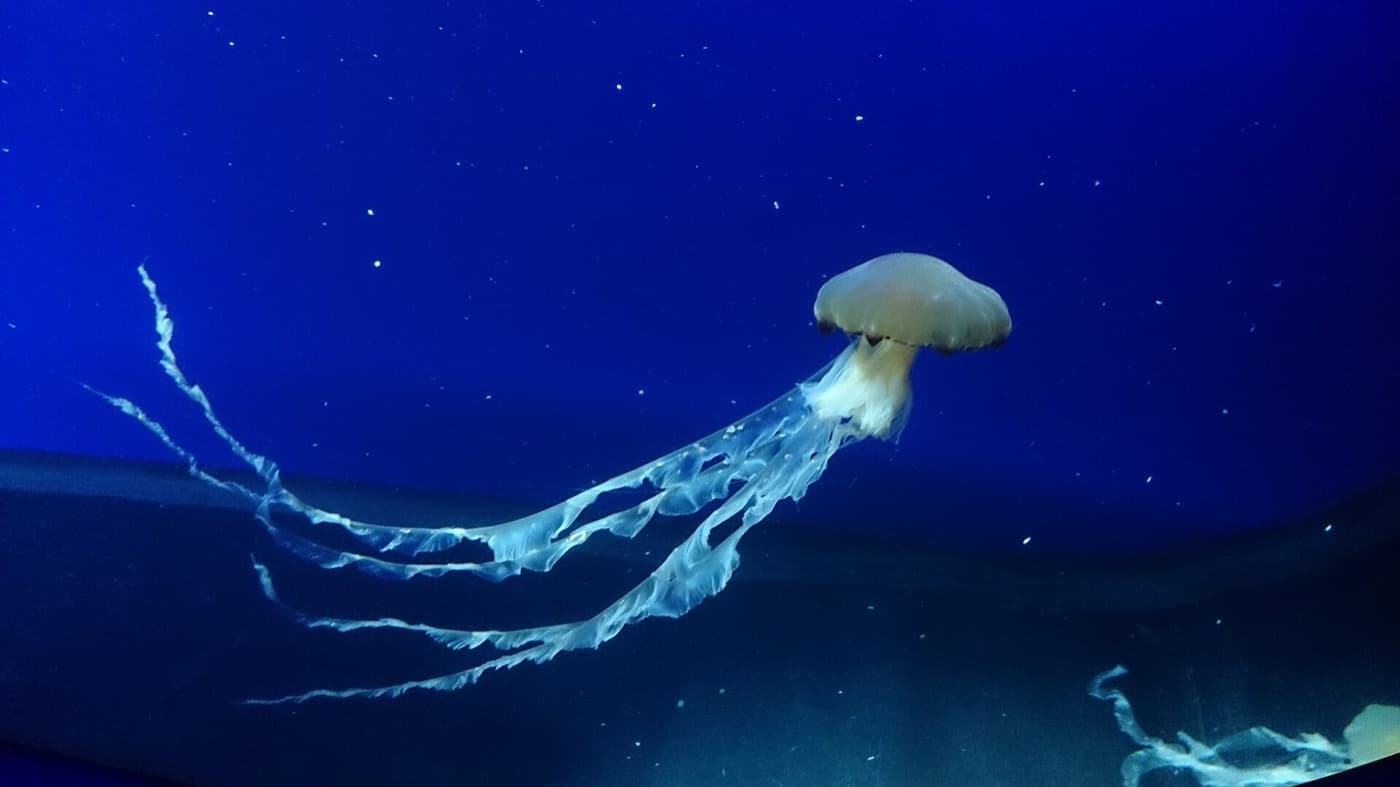
The practical point: if you don't know what stung you, use the universal routine of seawater and tentacle removal, then treat the pain per the table above (cold only if there are box-jellyfish signs). The "just pour vinegar on it" advice in many leaflets is specifically wrong for bluebottles.
Bluebottle, or Portuguese man-of-war
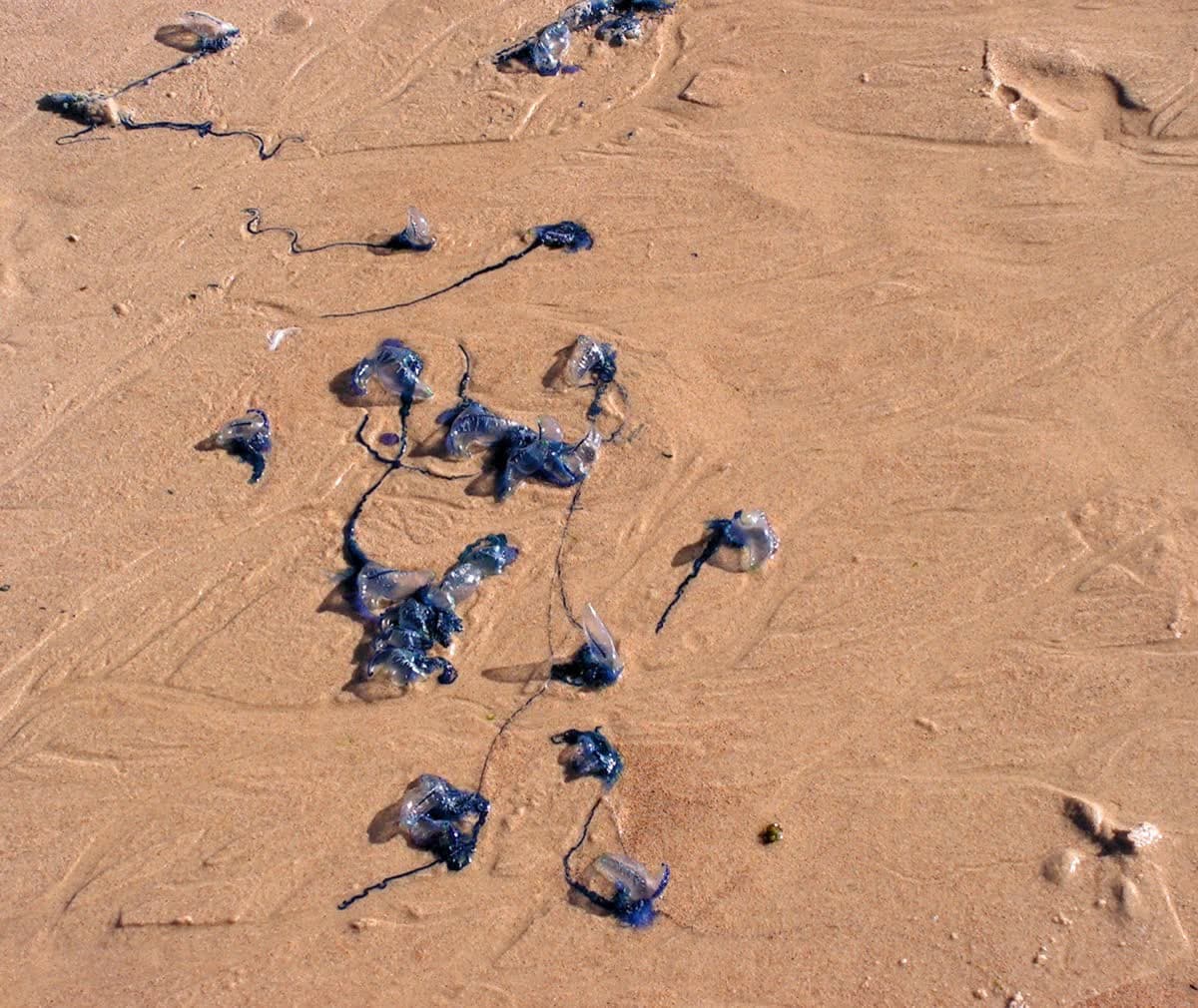
A bluebottle isn't a true jellyfish but a colony: a blue gas float on the surface with long stinging threads below. The Indo-Pacific Physalia utriculus has been identified from photos in Vietnam. GBIF holds 10 community-verified iNaturalist sightings from Khanh Hoa, the former Ninh Thuan province (also part of Khanh Hoa since 2025) and Vung Tau, all made between January and March in 2020–2026.
In July 2024 the Nha Trang Bay authority warned swimmers specifically about bluebottles, also known as the "Pacific Man of War", Tuổi Trẻ News reported. Local guidance, including the Khanh Hoa tourism department's page, still tells you to pour vinegar on the sting. That conflicts with ANZCOR for bluebottles. On one point everyone agrees: no fresh water on the sting.
Bluebottles often wash up on the sand, especially at high tide, Tuổi Trẻ News wrote. Don't touch them, and keep kids away: the tentacles sting even when the animal is dead.
Box jellyfish: how real is the risk?
Box jellyfish barely show up in open records for Vietnam, and no confirmed death from one turned up in Vietnamese sources.
- Chironex (the Australian sea wasp): 0 records for Vietnam on GBIF.
- Alatina alata: 4 museum specimens caught in the open sea in 1929 and 1960, far from any beach.
- Tripedalia binata, a small box jellyfish: one iNaturalist sighting on GBIF, March 2024, off the coast between Vung Tau and Can Gio.
- The director of the Kien Giang Marine Protected Area told Tuổi Trẻ in May 2025 that box jellyfish around Phu Quoc are more dangerous than others but rarely seen.
Still, don't write them off. In neighbouring Thailand, fatal and severe box jellyfish stings are documented in the medical literature. ANZCOR's rule is simple: if the species isn't identified and can't be confidently called harmless, watch the person as if the risk is real.
Jellyfish season by coast
Each stretch of Vietnam's coast has its own jellyfish season. Phu Quoc peaks April to August, Nha Trang May to July, Ha Long June to August. The table includes only coasts with a Vietnamese primary source: a bay authority, a marine protected area or a branch of the Institute of Oceanography.
| Coast | Peak jellyfish months | Reported by | Details |
|---|---|---|---|
| Nha Trang (Khanh Hoa) | May–July | Nha Trang Bay authority (2023, 2025) | 27.07.2026: jellyfish in the bay, densest around Hon Mun and Hon Bac according to a dive operator (Tuổi Trẻ) |
| Phu Quoc (special zone, An Giang province) | April–August | Phu Quoc authorities and the Kien Giang Marine Protected Area (Tuổi Trẻ, 05.05.2025) | More around Ganh Dau, Cua Can, Bai Thom, Ham Ninh, An Thoi; after rain and at high tide |
| Ha Long, Hon Gai beach (Quang Ninh) | June–August | Hai Phong branch, Institute of Oceanography (VietnamPlus, 16.09.2026) | Chrysaora sp. |
| Vung Tau, Back Beach (Ho Chi Minh City) | Spike in April 2026 | Vung Tau ward public services centre (Tuổi Trẻ, 25.04.2026) | Jellyfish and sea worms; over by 25 April |
| Da Nang, Hoi An, Phan Thiet and Mui Ne, Quy Nhon, Cam Ranh | — | No official source found | Ask the lifeguards on duty |
The season is a rough guide. The Kien Giang director advises staying out of the water after rain and when you see jellyfish or unusual foam. Locals in Vung Tau tie jellyfish wash-ups to weather, currents and tides, so you can meet one in a "clean" month too.
Weather and sea temperature by month for each resort are in our Vietnam weather guide.
Sea urchins
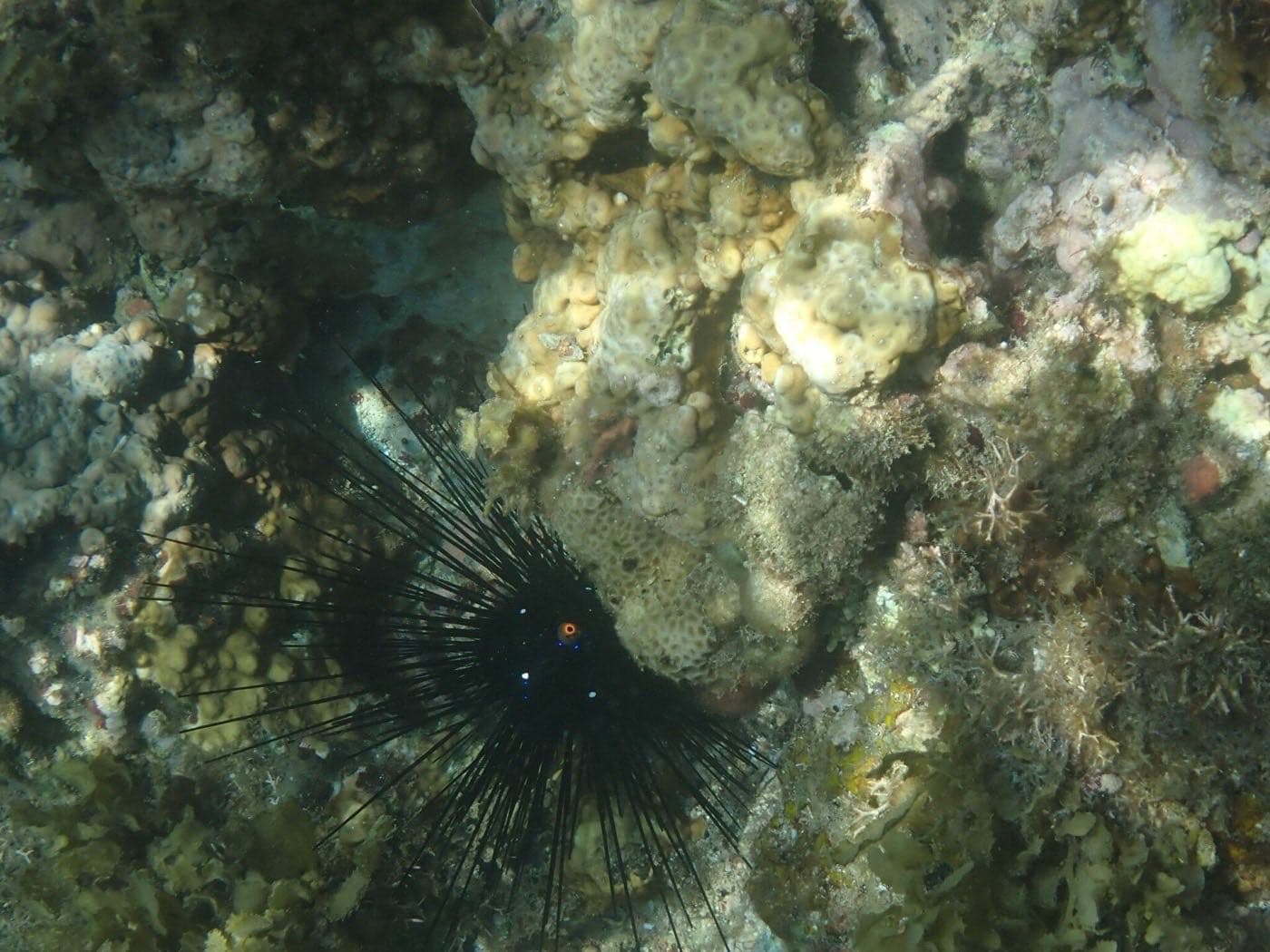
Sea urchins live on rocks and reefs along the whole Vietnamese coast. The long-spined Diadema setosum is the most recorded on GBIF, mostly from Khanh Hoa. Stepped on one? Soak the foot in hot water no hotter than 45 °C for 30–90 minutes, pull out spines sticking above the skin and leave deep ones to a doctor.
GBIF lists 57 Vietnamese records of Diadema setosum: Khanh Hoa, former Quang Nam, Phu Yen, Kien Giang, Binh Dinh. There are also Echinothrix calamaris (24 records) and the flower urchin Toxopneustes pileolus (15). Don't pick up any urchin, even short-spined ones.
They turn up off sandy city beaches too. In August 2014, "sand urchins" packed the sand three metres off Nha Trang's beach between the Tram Huong tower and the Sunrise hotel. Twelve lifeguards raked out hundreds of kilograms over a few mornings, Zing reported.
What to do, per DAN:
- Hot water no hotter than 45 °C, 30–90 minutes, repeat if needed. Check the temperature yourself, because pain can stop the injured person judging it correctly.
- Spines above the skin come out with tweezers. Leave deep ones for a doctor.
- Clean with antiseptic without scrubbing. Don't seal the wound with tape or glue.
- See a doctor even if it feels better. Deep punctures breed infection, including tetanus, and a spine near a joint needs attention.
Stonefish, lionfish and stingrays
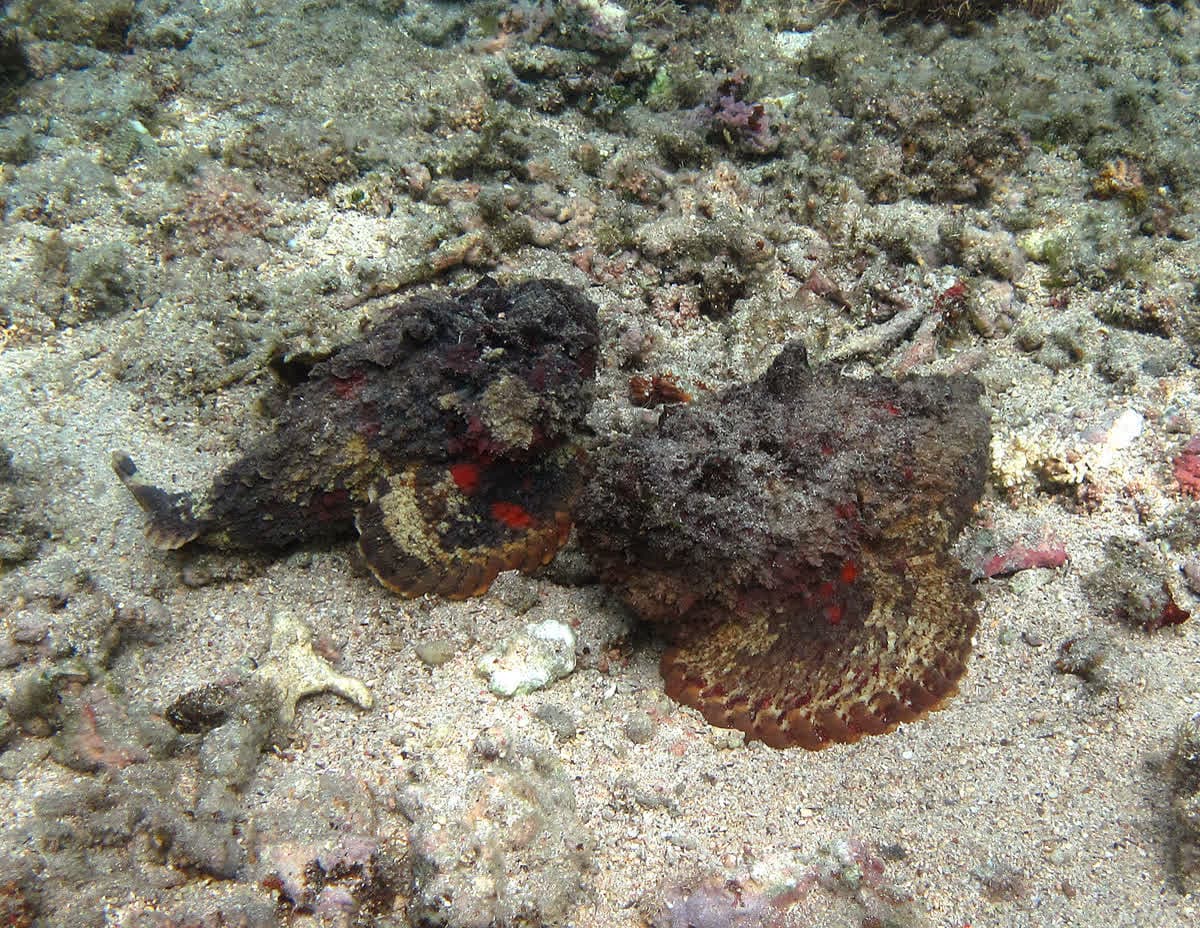
Stonefish (Synanceia verrucosa, cá mặt quỷ in Vietnamese) and lionfish live in Vietnamese waters, and stingrays hide in shallow sand. A spine wound causes intense pain. First aid is the same for all three: hot water, no ice, no pressure bandage, then hospital.
Cá mặt quỷ (Synanceia verrucosa) and cá mao quỷ (S. horrida) are "common in Vietnam", Thanh Niên wrote. The same piece describes a Ho Chi Minh City restaurant chef poisoned after grabbing a fish that had fallen, treated at Nhan Dan Gia Dinh hospital. The piece dates from 2009. Stonefish is served here as a delicacy, so the risk isn't only for swimmers but for anyone handling the catch at a market. No reports of tourists stepping on a stonefish on a Vietnamese beach turned up.
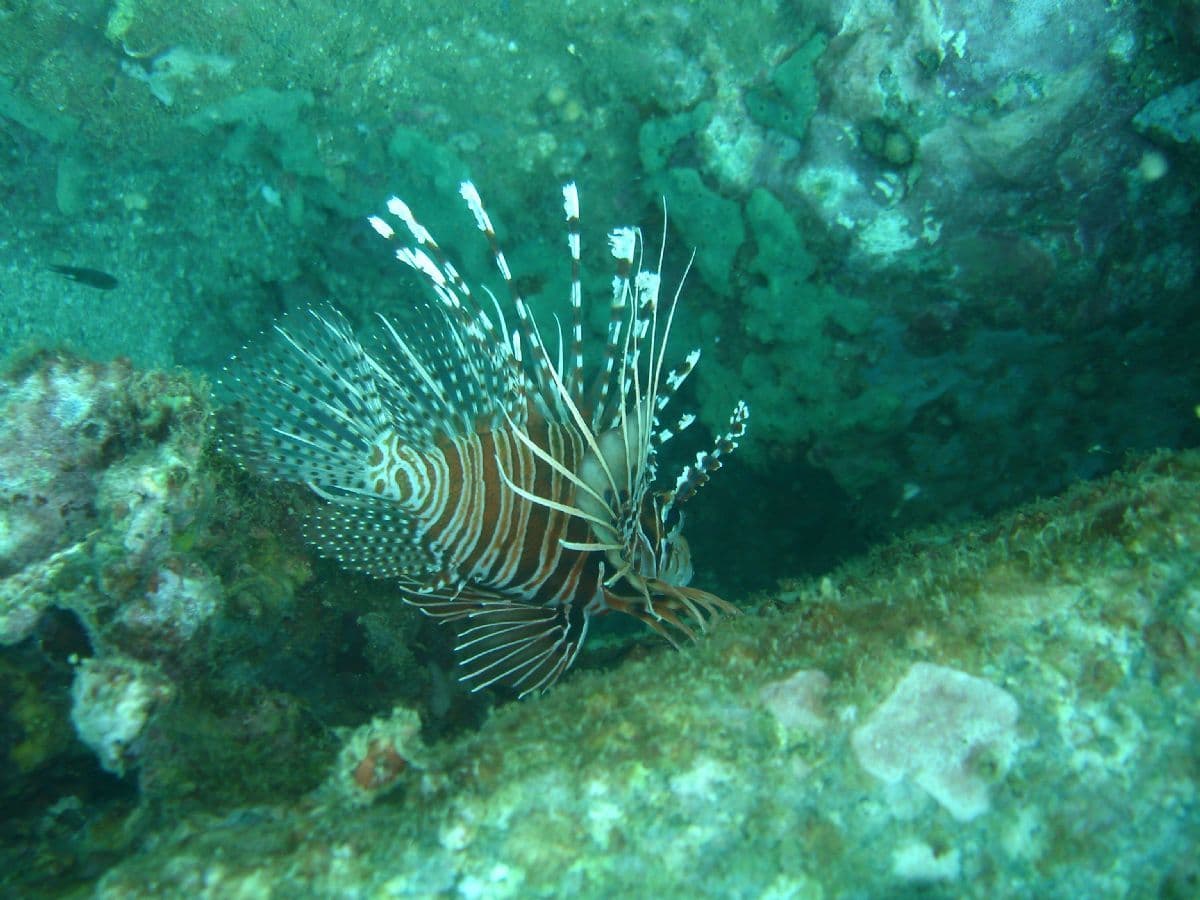
Lionfish (Pterois antennata, P. volitans) are also recorded for Vietnam on GBIF. Their spiny fins carry venom, so don't reach for one while you take photos.
Stingrays (Neotrygon kuhlii and others) lie in the sand, and the tail spine can do serious damage. In May 2024 in Quang Ngai, a stingray's tail pierced the lung of a 31-year-old man who picked up a ray a friend had caught. Surgeons removed a 3.5 cm piece, VnExpress reported. According to ANZCOR, injuries usually happen when someone steps on a ray, hauls one into a boat or swims too low over it.
What to do, per ANZCOR and DAN:
- Call an ambulance (115). Unresponsive and not breathing: CPR.
- Limb in hot water. The helper decides the temperature: no hotter than their own hand can stand. Heat eases pain in most cases.
- Leave a stingray barb in place. It may be plugging the bleeding. Pad around it and press.
- Wound to the chest or belly: check for signs of internal bleeding and get to hospital fast.
- No pressure bandage. Fish venom stays in the wound.
- Hospital in every case. Stonefish antivenom exists but is given only in hospital because of allergy risk. Whether Vietnamese hospitals stock it, no source confirmed; ask on arrival.
Fast Track — no queue at the border
5–10 minutes instead of an hour in the immigration queue
from$11per passenger
Cone snails and sea snakes
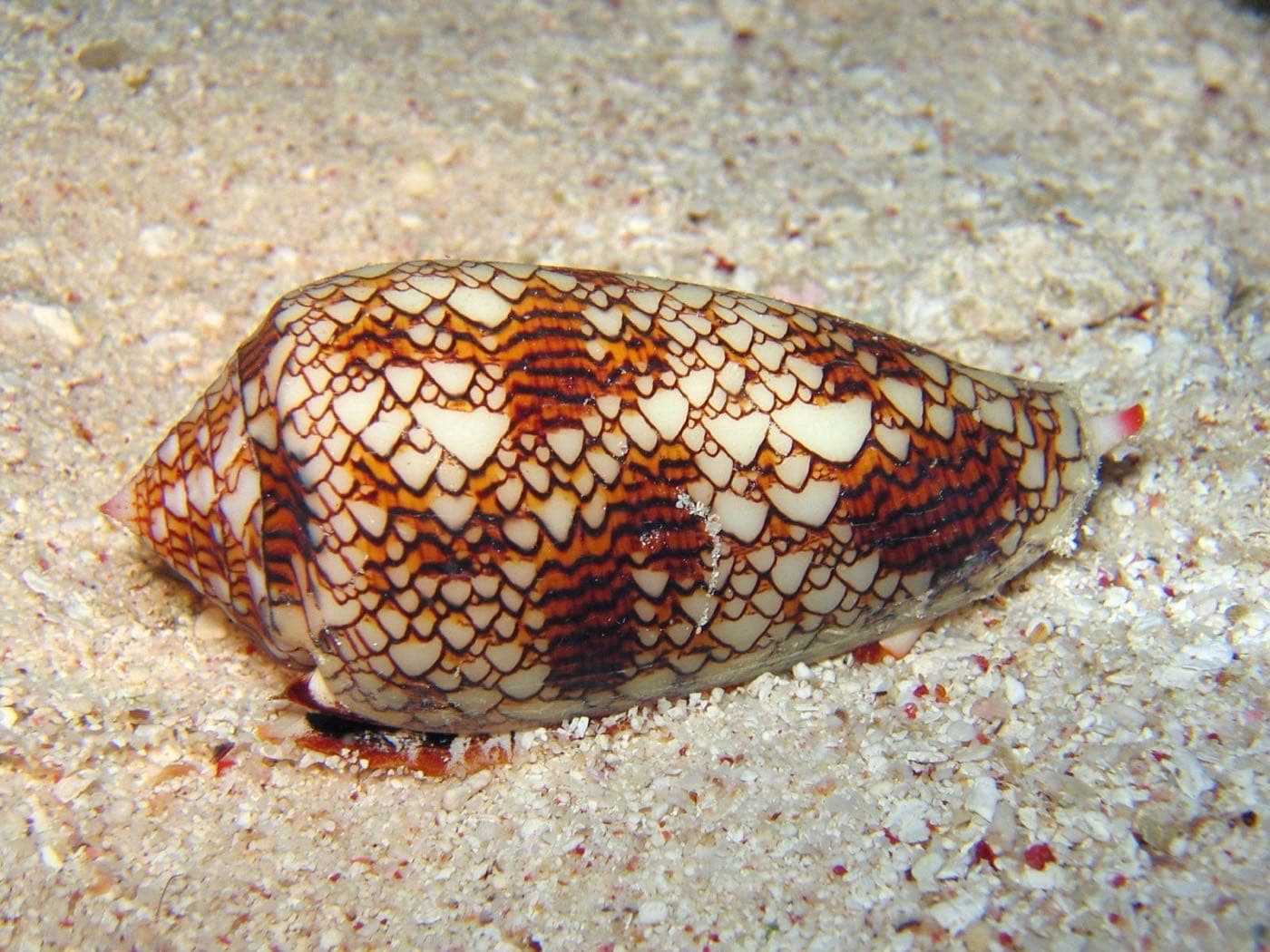
Some venomous animals in Vietnam's shallows look harmless: pretty cone shells and sea snakes. A cone snail can fire a venomous dart if you pick it up, and its sting calls for a pressure bandage on the whole limb.
GBIF has 20 Vietnamese records of the textile cone, Conus textile, including Vung Tau and Nha Trang, and 168 records of Hydrophis sea snakes. Cone snail and blue-ringed octopus venom can paralyse breathing within 30 minutes, and the bite may be nearly painless.
- Cone snail or octopus: pressure bandage on the whole limb, keep still, ambulance. If breathing stops, rescue breathing until medics take over, sometimes for hours. The person may hear what's said around them even when they can't move.
- Sea snake: ANZCOR says treat it like a land snake bite: out of the water, call an ambulance, keep the person still and apply a pressure bandage with immobilisation. More on snakes is in our Vietnam safety guide.
The rule for everything: don't pick up live shells, "rocks" that move or spotted octopuses. That goes double for kids at rock pools at low tide.
Rip currents: how to spot one and get out
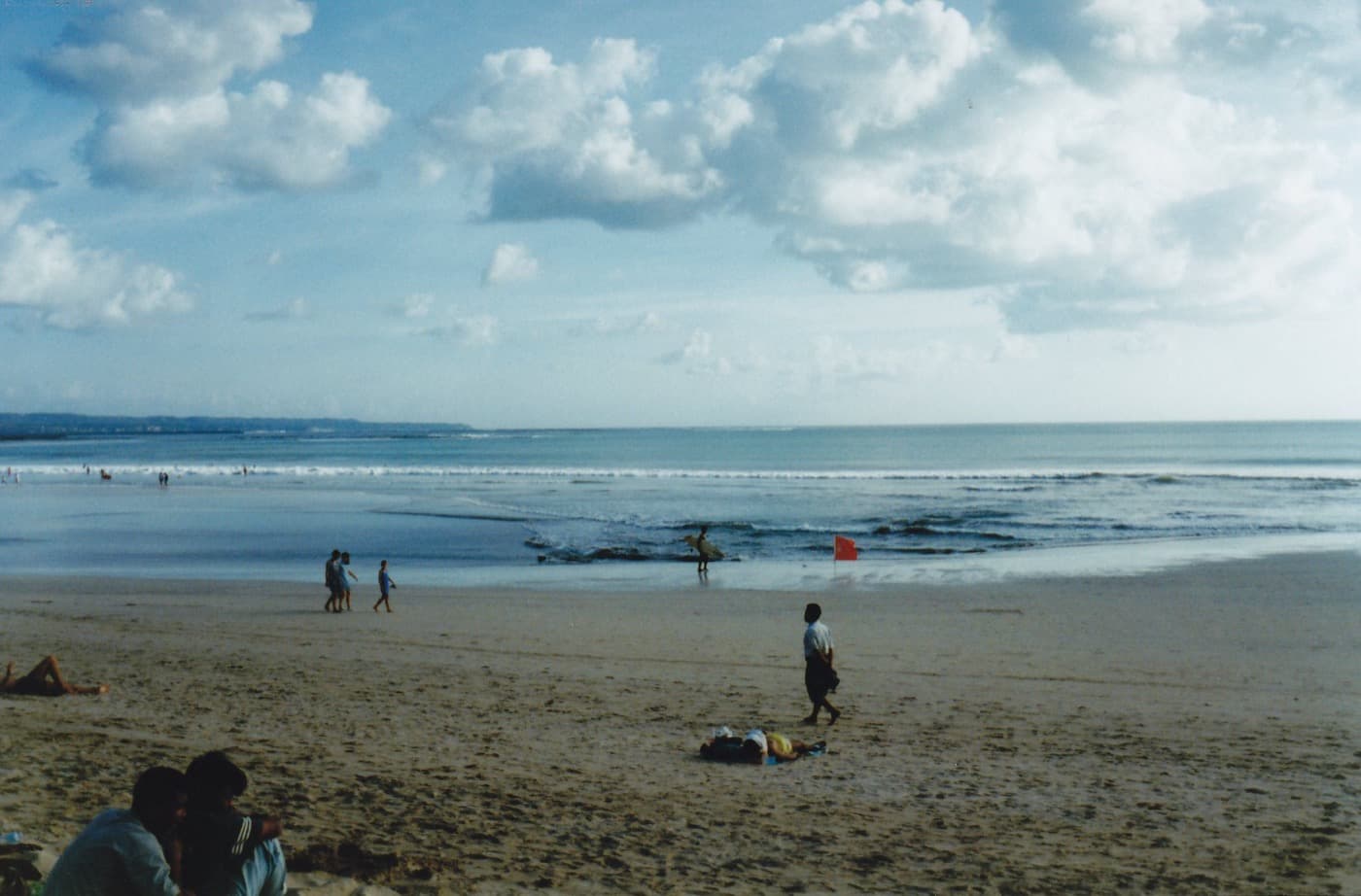
A rip current (dòng chảy xa bờ) is a narrow flow from the beach out to sea. It carries swimmers away from shore but doesn't pull them under. If you're caught, swim parallel to the beach until the pull eases. If you can't, float and wave. Don't fight your way straight back.
Rips usually move at 0.3–0.6 m/s but can reach 2.4 m/s, and they run 5 to 90 metres wide (NWS). Even strong swimmers wear out fighting that. Khanh Hoa police warn that many people panic, swim against the current towards shore and quickly run out of strength. On US surf beaches, rip currents cause 81.9 % of lifeguard rescues (NHESS, 2019).
Spotting one from the beach
From Khanh Hoa provincial police and the US weather service:
- a strip among the white breakers where waves don't break and the water just ripples;
- darker water in that strip, because it's deeper;
- foam, seaweed and debris drifting steadily out to sea;
- a gap in the line of breaking waves;
- rips often sit by groynes, piers, rocks and gaps in sandbars. On beaches with a small tide range they're often stronger an hour or two either side of low tide.
Watch the water for a few minutes before going in. The "calmest" patch between the waves can be the rip.
If you're caught
- Don't panic and don't swim straight for shore. The current pulls out, not down. The danger is exhausting yourself against it.
- Swim along the beach, parallel to the shoreline, until you're out of the flow.
- Once out, head in at an angle and let the waves help.
- If you can't, float, raise an arm and shout. Khanh Hoa police advise not fighting it and letting the current carry you out of the channel.
If someone else is in trouble
Cases on Vietnamese beaches, 2025–2026: rips and waves
| When | Where | What happened | Source |
|---|---|---|---|
| February 2025 | Phan Thiet (now Lam Dong province) | A 25-year-old man died in a rip current; another person was rescued | SGGP |
| 29.05.2025 | Hoa Thang (Lam Dong) | A rip caught eight students; a 17-year-old died | SGGP |
| 16–22.10.2025 | Nha Trang | With waves up to 2 m, several swimmers were rescued, including a Russian man in his 50s | Tuổi Trẻ News |
| 09.01.2026 | Nha Trang, off Tran Phu and Nguyen Chanh streets | Seven tourists rescued, several of them Russian. Northeast wind force 6–7, waves 2.5–3.5 m | DTiNews |
| April 2026 | Da Nang | 5–12 April: 13 tourists got into trouble and were rescued; on 2 and 17 April two people died, at Bai Da and Phuong Tan | CAND |
Two takeaways. First, the dangerous season isn't just winter storms: in Da Nang April is only the start of the hot season, yet lifeguards pulled 13 tourists out in a single week. Second, in Nha Trang and Da Nang many of those in trouble swam outside the permitted zone or past "no swimming" signs. On 27 April 2026, Da Nang lifeguards rescued two tourists from India who had gone in outside the marked area.
Wave seasons by resort are covered in our guides to Da Nang beaches and Phu Quoc beaches. Resort descriptions put rougher water on Phu Quoc's west coast during the southwest monsoon, with the east coast calmer then. No official monthly bans turned up, so check locally. On the north-central coast the season ends as early as October: from 14 October 2026, Xuan Thanh resort in Ha Tinh province pulled its lifeguards and buoys because of high waves, wind and strong currents (Báo Hà Tĩnh).
Beach flags and signs in Vietnam
No national standard for beach-flag colours in Vietnam turned up. In Vung Tau, for example, danger zones were marked with black flags. The more reliable signals are buoys, a lifeguard tower and cấm tắm ("no swimming") signs.
Where the international system is used, flags mean this (International Life Saving Federation):
| Flag | Meaning | What to do |
|---|---|---|
| Red and yellow (red over yellow) | Swimming area supervised by lifeguards | Swim between a pair of these |
| Yellow | Medium hazard | Stay close in, keep kids near the edge |
| Red | High hazard | Stay out |
| Two reds | Water closed | Stay out |
| Purple | Jellyfish or other stinging animals | Wear a rash guard, watch the water, don't touch anything on the sand |
| Orange windsock | Offshore wind | No inflatables: they'll get blown out |
What you'll actually see: Da Nang runs hundreds of signs and flags plus loudspeakers, buoys mark the swimming zone, and lifeguards work 4:30 to 19:00 in high season (CAND). The same report says Nam O beach in Da Nang has no professional lifeguards. In October 2025 Nha Trang put up "No Swimming" signs in Vietnamese and English along the shore (Tuổi Trẻ News). At Vung Tau's Back Beach, dangerous stretches were marked with black flags in 2025 (SGGP). For calmer spots there, see our Vung Tau beaches guide.
No flag doesn't mean safe water. Wild beaches and empty stretches outside hotels often have no flags, and no lifeguards either.
How not to get hurt: common mistakes
Most of the news stories come down to the same few mistakes, and you can avoid each of them before you get wet.
- Swimming outside the buoys or away from a tower. In Da Nang and Nha Trang, most people in trouble were outside the permitted zone.
- Swimming after drinking or alone on an empty beach.
- Jumping in to rescue someone without a board or ring. Lifeguard first, something that floats second.
- Walking barefoot over rocks and reef. Water shoes cut the risk of spine wounds and coral cuts.
- Swimming right after a downpour or at high tide in jellyfish season. Phu Quoc officials warn about both.
- Picking up pretty shells, blue "balloons" on the sand or "rocks" on the bottom.
- Pouring bottled water on a sting and treating it with advice from the next sun lounger.
- Letting kids swim without a rash guard in jellyfish season. Vietnam's National Children's Hospital recommends full-coverage swimwear for children. More on family trips in Vietnam with kids.
FAQ
No confirmed jellyfish death turned up in Vietnamese open sources. The Australian box jellyfish Chironex has no GBIF records for Vietnam, and Phu Quoc officials call box jellyfish rare. Severe reactions do happen, though: in 2023 a child in Nha Trang lost consciousness after a sting. A paediatrician at Khanh Hoa's provincial hospital says anyone can go into anaphylactic shock, so the danger depends on how the body reacts, not just the species
Yes, with precautions. Wear a long-sleeved rash guard, and put kids in full-coverage swimwear. Swim near a lifeguard tower and stay out right after rain or where you see jellyfish or odd foam. In Nha Trang and on Phu Quoc, jellyfish don't show up every day of the season. The lifeguards on duty know conditions better than any table
It depends on the species and the area stung. Per the IFRC, redness and pain should improve over a day or two. Vietnamese dermatologists warn that untreated blisters can get infected and scar. See a doctor if there are blisters, if the sting is on the face or on a child, or if redness spreads and feels hot after a couple of days. Don't scratch
The list is short and cheap
- Tweezers and an old plastic card for tentacles and spines
- A small bottle of household vinegar, for box jellyfish only
- Antihistamines and painkillers (paracetamol or ibuprofen)
- Antiseptic and sterile wipes
- A phone with 115 and 114 saved, plus your hotel address in Vietnamese
The risk is small if you follow two rules: touch nothing and don't stand on the bottom. Vietnamese reefs have urchins, lionfish, cone snails and stonefish, and injuries usually happen when someone steps on an animal or picks it up. Stay with your group and instructor rather than drifting off alone. More in our guide to diving in Vietnam
Antihistamines ease itching and local allergic reactions, and Vietnamese doctors recommend them as tablets or cream. They aren't painkillers: for pain, use heat or cold and paracetamol or ibuprofen, as the NHS advises. They don't treat anaphylaxis either. If lips or throat swell, breathing gets hard, or the person goes weak and clammy, call 115 instead of waiting for a pill to work
Read also: Vietnam safety guide · Hospitals and pharmacies in Vietnam · Health insurance for Vietnam · Vietnam beaches
VietnamSpot on InstagramTips, lifehacks and news for living in VietnamFollow



- Preparation
Scams in Vietnam 2026: Common Tourist Traps and Fixes
Common scams in Vietnam: taxis, change, money exchange, bike rental, tours and online. Real cases 2022–2026, fines and where to report — numbers checked.Scams in Vietnam 2026: Common Tourist Traps and Fixes - Preparation
Bringing Pets to Vietnam 2026: Rules, Costs, Real Life
No quarantine in Vietnam: microchip, rabies shot 30 days out, health certificate. 2026 guide to USDA and DEFRA paperwork, airlines, costs and finding a flat.Bringing Pets to Vietnam 2026: Rules, Costs, Real Life - Preparation
Vietnam Packing List: What to Bring by Season & Region
What to pack for Vietnam by season and region: clothing, a first-aid kit, electronics and plugs, documents — and what to leave at home.Vietnam Packing List: What to Bring by Season & Region