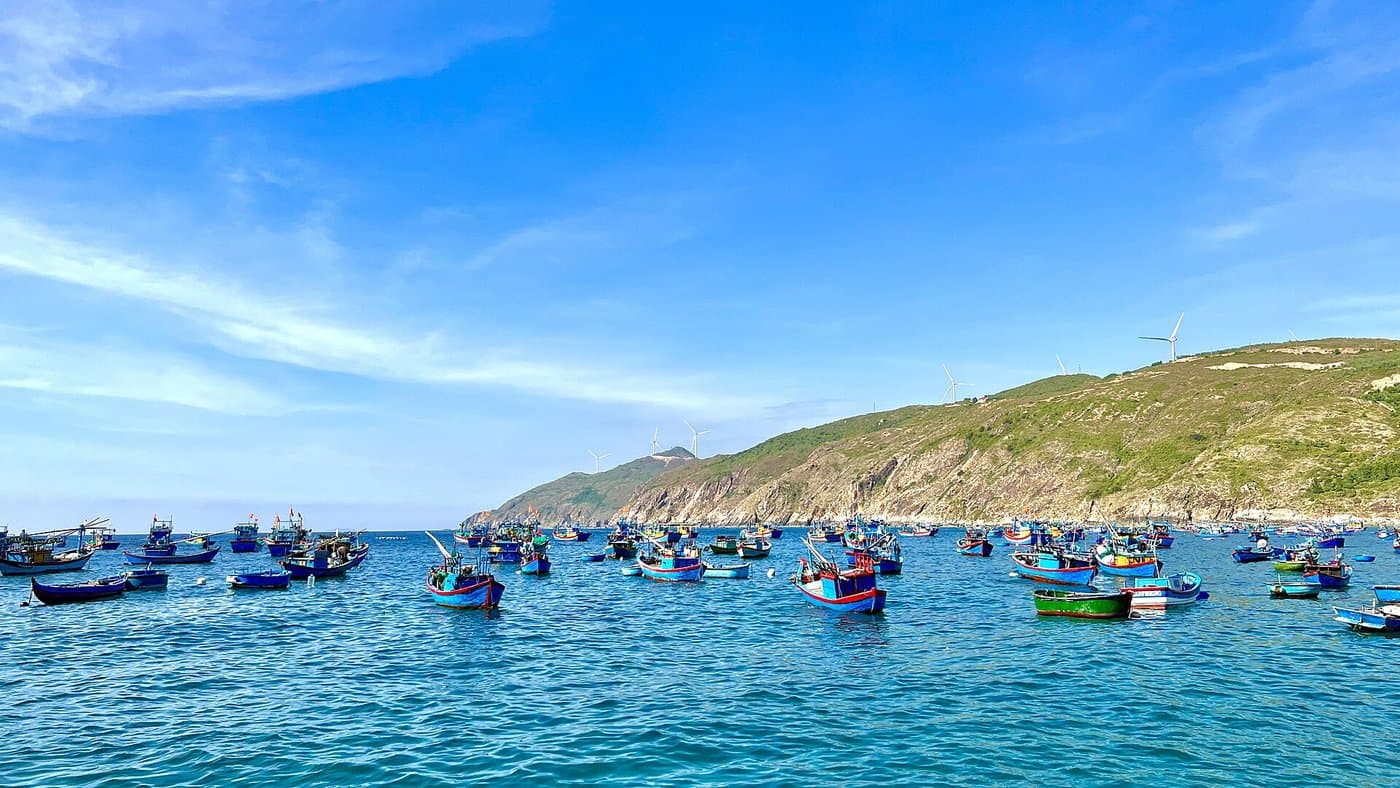
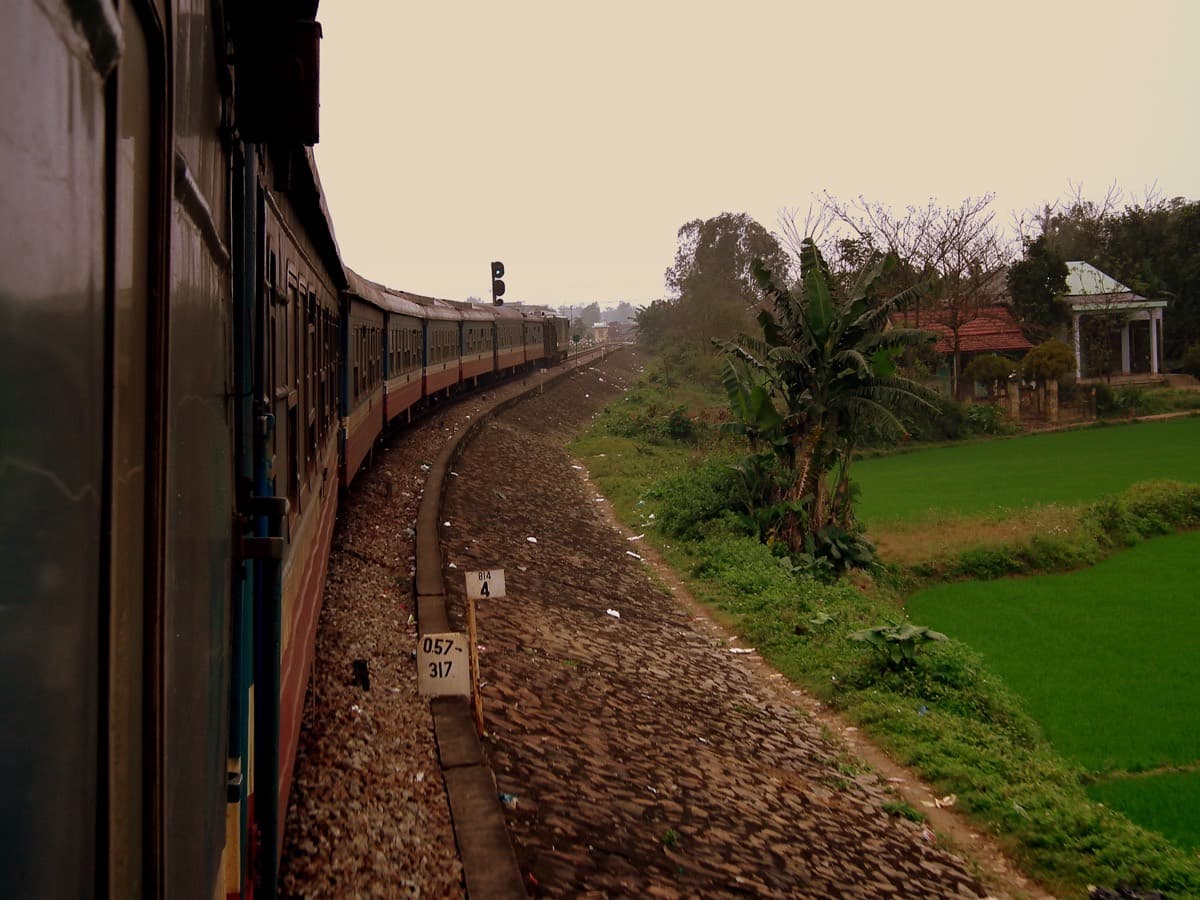
Quy Nhon food guide: what to eat, where, and what it costs
A kilo of live green lobster in a Quy Nhon restaurant runs 1,100,000–1,300,000 VND (~$42–50). The same lobster, cooked the same way, is 2,000,000–3,000,000 VND in Nha Trang. That gap is the whole reason to plan meals here rather than treat them as fuel between beaches.
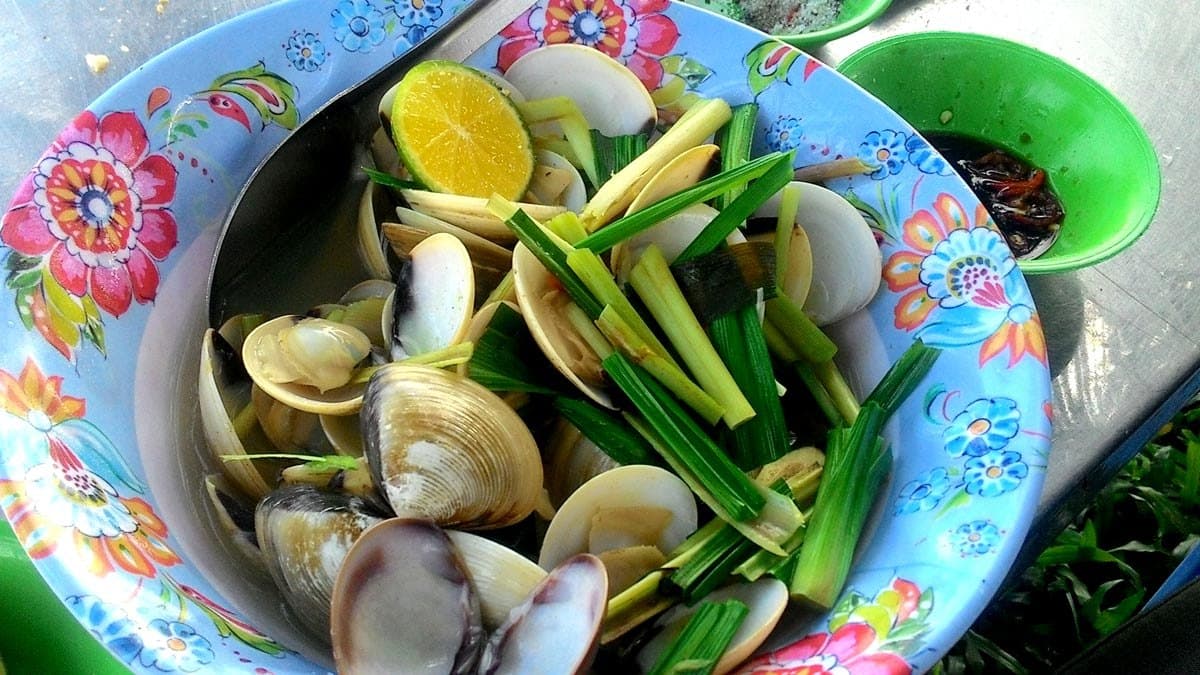
Quy Nhon never became a resort town. It is a working fishing city of about 500,000 people where the boats unload before dawn, the menus are in Vietnamese only, and nobody has bothered to invent a tourist price. It also happens to be the home of bánh xèo tôm nhảy, "jumping shrimp pancakes", a dish you will not find done properly anywhere else in Vietnam.
Below: the dishes that only exist here, where to eat each one, what seafood actually costs, how to order when there is no English menu, and a day that gets you through all of it.
Prices checked August 2026 against Vietnamese listings, restaurant sites and OpenStreetMap. Rate used: 1 USD ≈ 26,000 VND.
Why the food here is cheaper and better
What separates Quy Nhon from Nha Trang, Hoi An and Da Nang comes down to one thing: almost no foreign tourists ever came here.
Prices. Restaurant lobster is 1,100,000–1,300,000 VND a kilo here against 2,000,000–3,000,000 in Nha Trang. Tiger prawns are 350,000–500,000 against 1,450,000 and up. A bowl of noodles is 15,000–40,000 rather than 40,000–60,000. The gap narrows on street food and widens on anything that swims.
Dishes you cannot get elsewhere. Bánh xèo in Saigon is a big folded crêpe. In Quy Nhon it is a palm-sized crisp disc served flat with whole shrimp on top. Same name, different food. The same goes for bánh hỏi cháo lòng and nem Chợ Huyện, both of which are Binh Dinh institutions and neither of which travels well.
No flagship restaurant. There is no famous name here, no Michelin nod, no place with a queue of tour buses. What there is instead: family kitchens that have been doing one dish for twenty or thirty years, which every taxi driver can find and no guidebook lists.
Before you open any menu, ten words carry you a long way: hải sản seafood, tôm shrimp, cua crab, mực squid, cá fish, ốc sea snails, nướng grilled, hấp steamed, rang me in tamarind sauce, tươi sống alive. That vocabulary gets you through almost any board in this city.
The Binh Dinh dishes that exist nowhere else
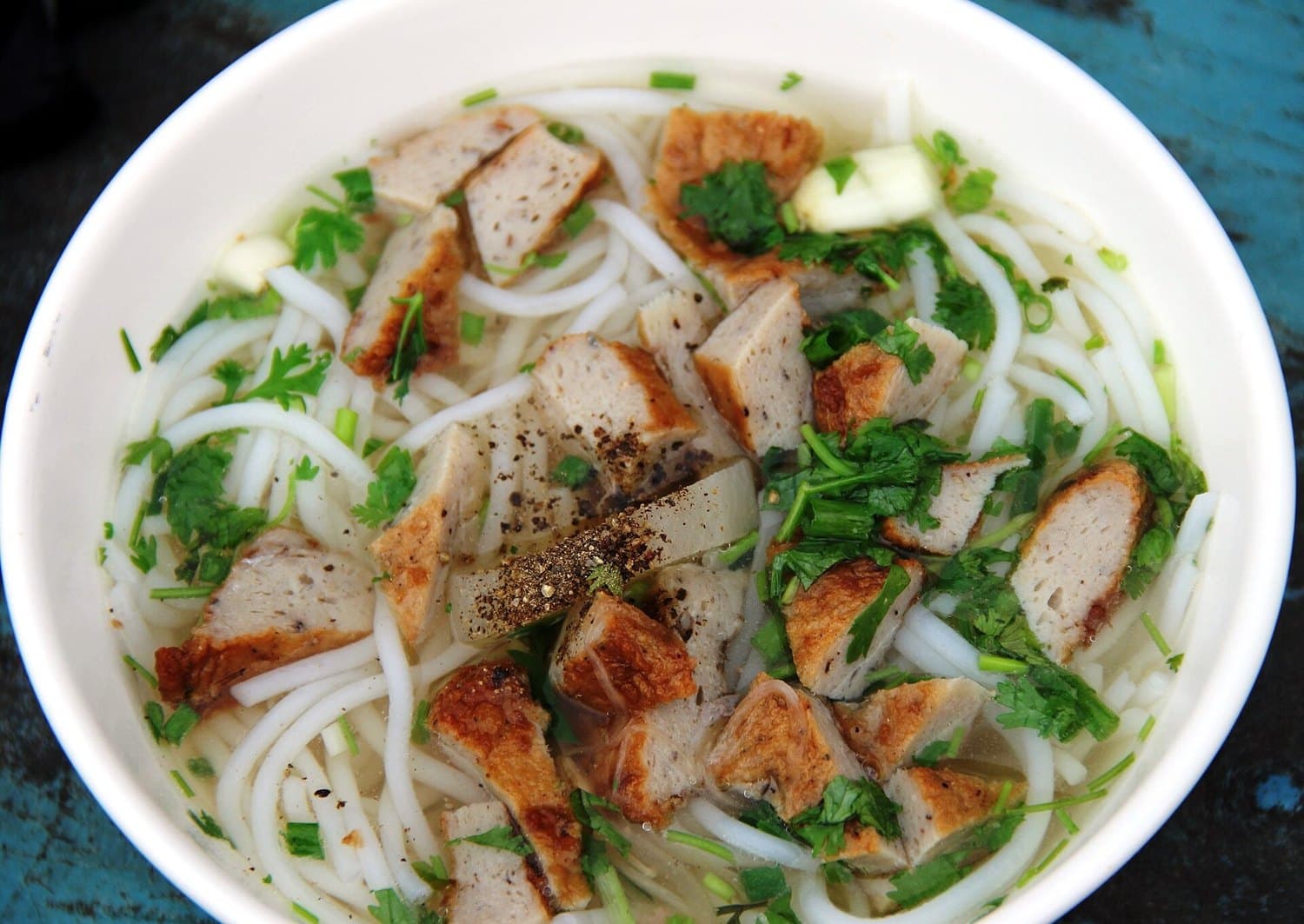
Five dishes carry the day here. Portions run 22,000–80,000 VND (~$0.85–3.10), so you can eat every one of them between breakfast and dinner for less than a single Nha Trang seafood plate.
Banh xeo tom nhay, the jumping shrimp pancake
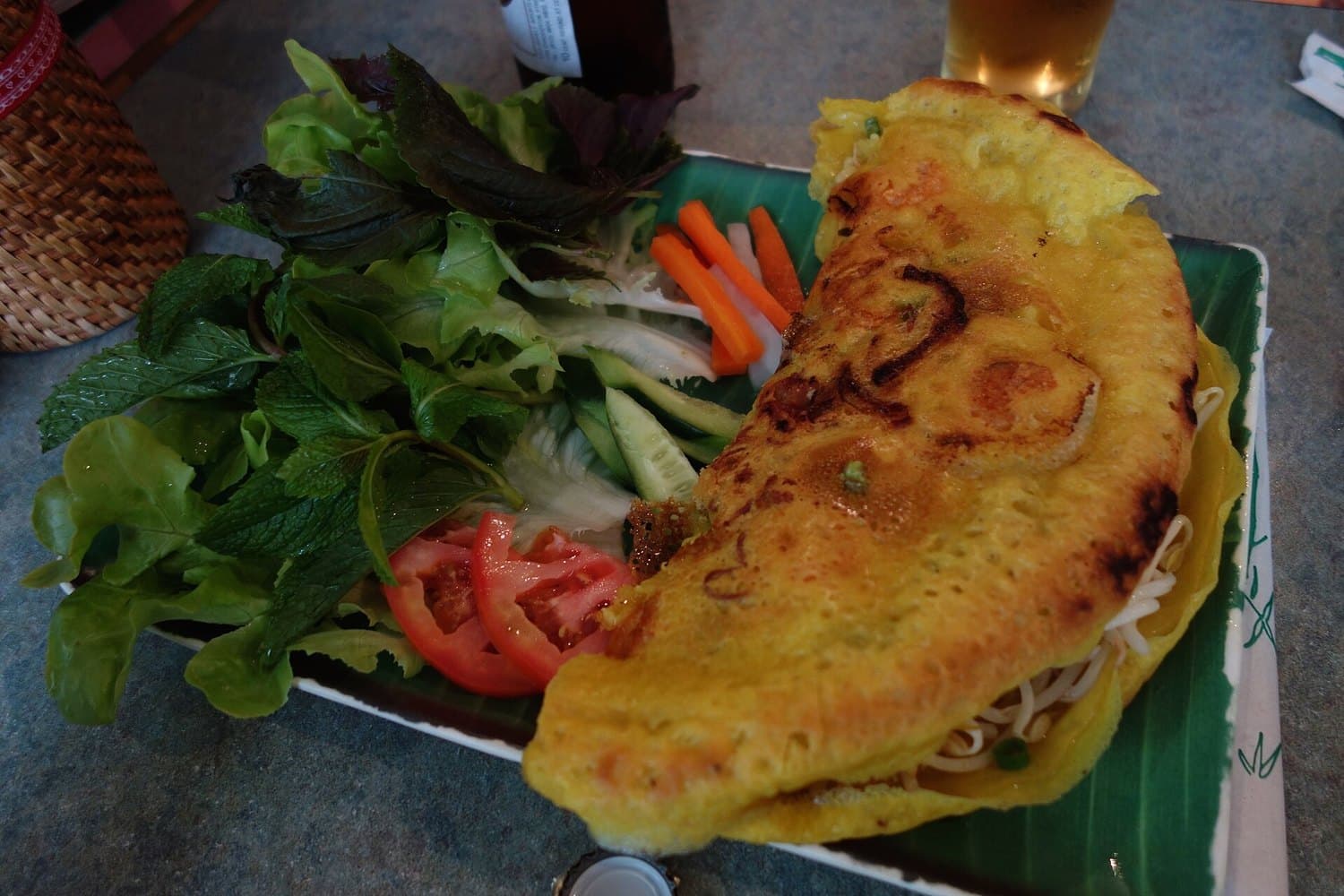
Bánh xèo tôm nhảy is the dish Quy Nhon is known for, and three things make it different from the version you have probably had before.
It is small, the size of your palm rather than a folded half-moon. It is served open, never folded. And the shrimp go into the pan alive, shell on, which is where "jumping" comes from. The batter is rice flour with turmeric, poured thin, and it comes out brittle enough to snap.
How to eat it: take a sheet of rice paper, lay the pancake on it, pile on herbs (mint, basil, lettuce), roll it, and dunk the whole thing in the thick peanut-and-shrimp-paste sauce. The shells crisp up in the oil and you eat them. Nobody picks them out.
Where: Bánh Xèo Gia Vỹ, 14 Diên Hồng. Around twenty years in business. Saigoneer traces the signature version to the owner, Minh, who added beef and squid to the standard shrimp and built up the toppings until other shops started copying him.
Pancakes are 22,000–34,000 VND (~$0.85–1.30) each; sides like tré (shredded pork ear with garlic and galangal) and grilled nem are 35,000–80,000. Order four pancakes between two people. It fills up at lunch and again after five.
Vietnam Coracle lists four more: Bánh Xèo Cây Me at 546 Nguyễn Thái Học, Mộc Miên at 18 Diên Hồng, Bụng Bự at 255 Tăng Bạt Hổ, and the 40-year-old Bánh Xèo Bà Năm out near Cầu Mỹ Cang bridge, still cooking over coals.
Bun cha ca, the local breakfast
If Quy Nhon has one dish it eats every day, this is it. Bún chả cá is rice vermicelli in a clear fish-bone broth with handmade fishcakes of mackerel, barracuda or scad, pounded until they bounce. The broth has a light tomato sourness and almost no fat. It is eaten at breakfast, lunch and dinner, but mostly breakfast.
It comes with a mountain of herbs, bean sprouts, a wedge of lime and a dish of chilli on the side. You build it yourself. Compared with pho, the noodles are thinner, the broth is lighter, and there is no beef anywhere near it. That is roughly the difference between coastal and northern Vietnamese cooking, in one bowl.
Where:
- Bún Cá Hồ Thị, 279 Trần Hưng Đạo — a big room in the centre, open 6:00–22:30. They also do bún sứa (jellyfish noodles) and bánh canh. A bowl is 35,000–40,000 VND (~$1.35–1.55).
- Bún Cá 48 Trần Cao Vân — known by its address, listed on Foody exactly that way. Average spend 15,000–25,000 VND (~$0.60–0.95).
- Bún Cá Thùy, 261 Tăng Bạt Hổ — a family business, and the one Saigoneer picked as the reference version.
- Bún Chả Cá Phượng Tèo, 211 and 415 Nguyễn Huệ — thirty years in, fishcakes still made by hand. Their chả cá was recognised as a traditional-craft food product in 2013.
Banh hoi chao long, rice lace and offal congee
Bánh hỏi is rice vermicelli pressed through a sieve with holes finer than a hair, steamed, layered and cut into squares. It looks like a small white lace mat.
It arrives paired with cháo lòng, thin rice congee with pork offal: liver, heart, tongue, intestine. It reads extreme and eats gentle. The liver is soft without bitterness, the congee is light, and there is shallot oil and spring onion on top.
Take a square of bánh hỏi, drop it in the congee, or eat it separately with herbs and mắm ruốc shrimp paste. If offal is a bridge too far, order the version with grilled pork (thịt nướng) or shrimp instead. Nobody will blink. 25,000–45,000 VND (~$1–1.75).
Where: Quán Bánh Hỏi Cháo Lòng at 20 Diên Hồng, and the family place at 145 Diên Hồng that Saigoneer calls one of the most respected kitchens in the city. Two more: Bánh Hỏi Cháo Mai Tư at 41 Nguyễn Chánh and Bánh Hỏi Lòng Heo Mẫn at 76 Trần Phú. This is breakfast food. It sells out by midday.
Nem Cho Huyen, the pork you take home
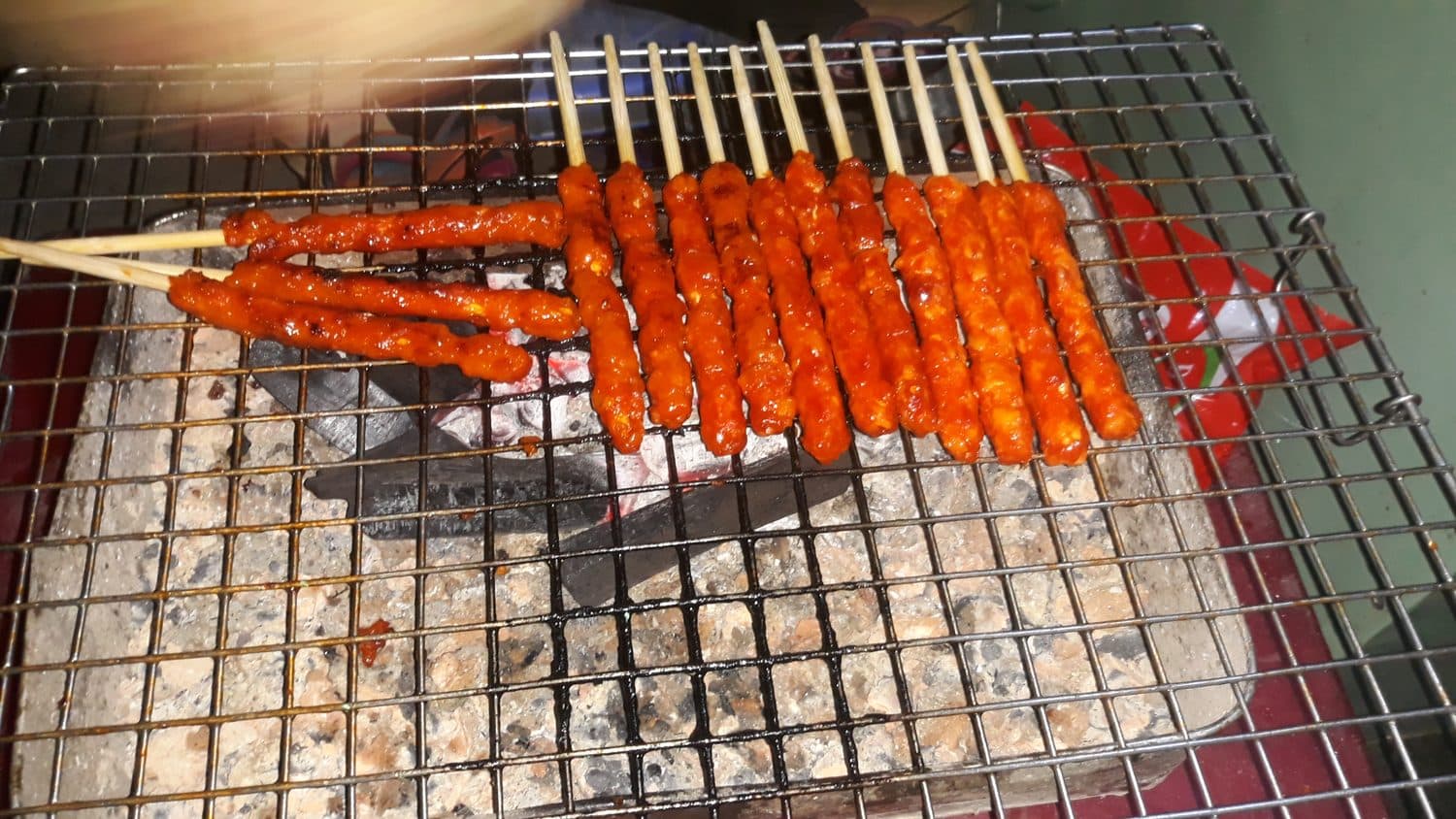
Chợ Huyện is a spot in Hanh Quang hamlet, Phước Lộc commune, on highway QL19 about 20 km from Quy Nhon. It gave its name to one of Vietnam's better-known nem. The local line goes: anyone who visited Binh Dinh and did not eat nem Chợ Huyện did not really visit Binh Dinh.
Unlike the southern versions from Thủ Đức or Lai Vung, the Binh Dinh one is springy, faintly crisp and slightly sour rather than sweet. The method: free-range pork, animals aged six to eight months at around 60 kg, lean meat from the hind legs only, minced with pork skin, garlic, pepper and salt. It gets rolled into balls, skewered on lemongrass or bamboo, and grilled over coals.
Served with rice paper, herbs, cucumber and a sweet peanut sauce. You wrap it yourself. 40,000–80,000 VND (~$1.55–3.10) a portion.
Where: several established shops sell it in Quy Nhon itself: Năm Thu at 113 Hoàng Quốc Việt, plus Tuyển Vân, Thiện Thảo and Tuyết Sang. If you are heading out to the Banh It Cham towers, turn onto QL19 towards Phước Lộc: half the houses there make it, and it is noticeably better at source.
Banh trang dua, the coconut cracker
Bánh tráng dừa is a wide flat cracker of rice flour with grated coconut and sesame, toasted over coals until it blisters. Faintly sweet, heavily coconut, and the standard thing to break over a beer.
It is also the one souvenir here that survives a flight. A pack of ten is 30,000–50,000 VND (~$1.15–1.90), it does not melt, and it keeps for months.
Five more to order
| Dish | What it is | VND | ~USD |
|---|---|---|---|
| Bún sứa | Cold noodles with jellyfish, a summer dish | 30,000–45,000 | $1.15–1.75 |
| Cơm gà | Chicken over rice cooked in the poaching stock | 35,000–60,000 | $1.35–2.30 |
| Bánh bèo | Steamed rice discs with shrimp paste and crackling | 20,000–35,000 | $0.75–1.35 |
| Mì Quảng | Turmeric noodles with shrimp, pork and peanuts | 35,000–55,000 | $1.35–2.10 |
| Bún riêu cua | Tomato broth with crab paste and rice noodles | 35,000–50,000 | $1.35–1.90 |
Seafood: what to order and what it costs
Quy Nhon's seafood argument is freshness against price. The morning catch reaches a plate within four to six hours, and the bill is about half what Nha Trang charges for the same species.
Cua Huynh de, the imperial crab
Cua Huỳnh đế, literally "emperor crab", is the city's culinary emblem. The legend is that it went to the Nguyễn court, which is why it carries the imperial name. It has a bright red shell with a spiked crown along the front edge. Meat is dense and sweet, with none of the muddiness of river crab.
Three standard preparations:
- hấp bia — steamed in beer, the default
- rang me — tamarind sauce, sweet-sour-hot
- nướng muối ớt — grilled with salt and chilli
Usual size is 500–1,000 g; anything over a kilo counts as big. Price is 1,000,000–1,500,000 VND/kg (~$38–58), and one crab of 700–800 g feeds two.
Season runs January to April, lunar months twelve through three. In summer there are still crabs, but smaller and sometimes previously frozen. Ask for tươi sống, alive.
Tom hum, lobster from Xuan Dai Bay
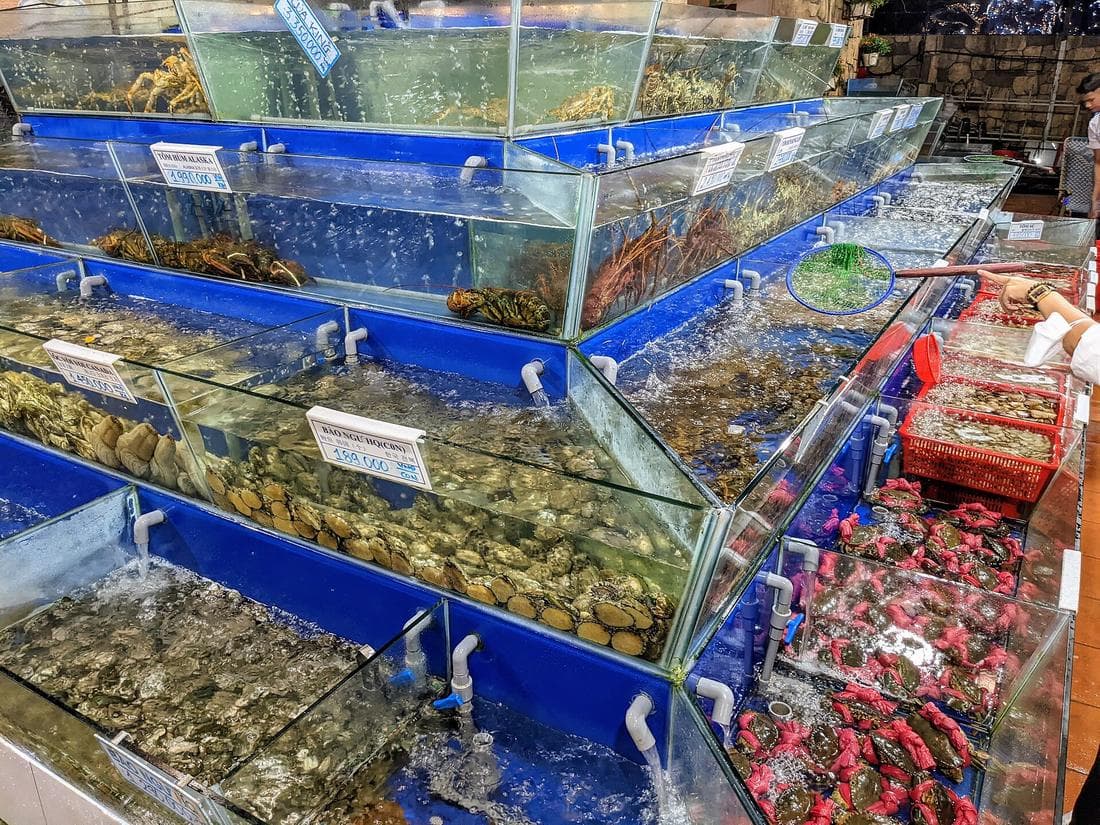
Xuân Đài Bay (Vịnh Xuân Đài) is one of Vietnam's main lobster-farming grounds. It sits south of Quy Nhon, in what was Phú Yên province and is now part of Đắk Lắk. Restaurants keep the lobsters alive in tanks: tôm hùm xanh is the green one, tôm hùm bông the spotted.
Quy Nhon prices: 1,100,000–1,300,000 VND/kg (~$42–50) for green, from 1,800,000 (~$69) for spotted. Nha Trang restaurants charge 2,000,000–3,000,000 for the same thing.
Usually grilled with garlic butter or steamed with spring onion. One lobster of 600–800 g is a portion for two people.
Scallops, squid and sea urchins
Sò điệp nướng mỡ hành, scallops grilled with spring onion oil and crushed peanuts, is the default order in any seafood place. Six run 150,000–200,000 VND (~$5.75–7.70). Shells are 8–10 cm, the meat stays tender, and the oil goes on over the coals.
Mực nướng sa tế, squid grilled in satay, is 150,000–250,000 VND (~$5.75–9.60) a dish. The squid here is big and the texture holds up rather than going rubbery.
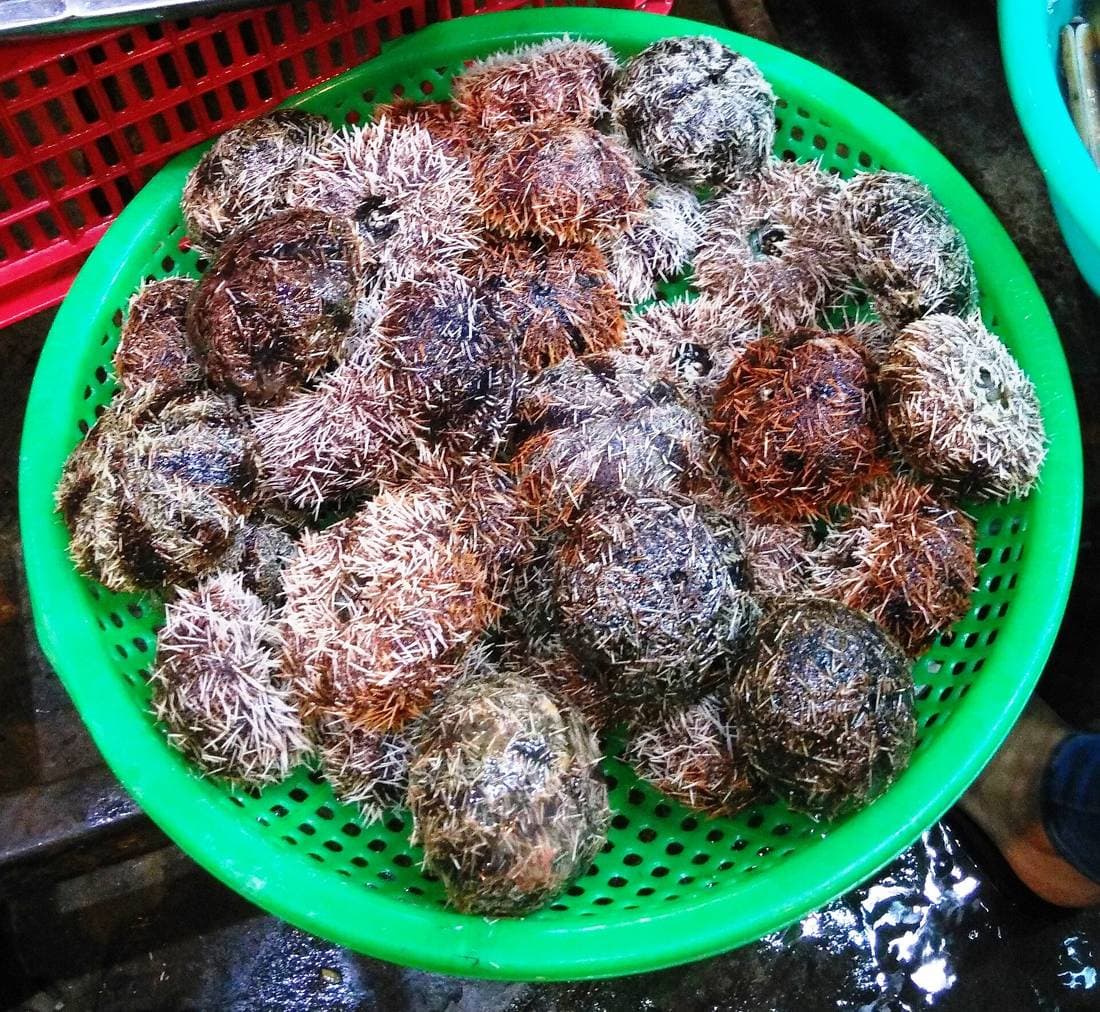
Nhum biển, sea urchin, is a Binh Dinh delicacy done two ways: baked in the shell with egg and spring onion, or eaten raw with lime and wasabi. At the market they are 15,000–25,000 VND each (~$0.60–0.95); grilled in a restaurant, 40,000–70,000 (~$1.55–2.70). Season is March to August, fullest in July and August. If raw shellfish is not something your stomach is used to, take the baked version. This is not the place to test it.
Ốc, sea snails, are a whole evening on their own. A decent place carries fifteen to twenty species: ốc hương (babylon), ốc gai (murex), ốc móng tay (razor clams), ốc mỡ. Grilled, in coconut milk, with garlic, tamarind or lemongrass. 60,000–150,000 VND (~$2.30–5.75) a plate. Order several kinds in small portions rather than one big one.
Quy Nhon seafood prices per kilo
| Item | VND per kg or portion | ~USD |
|---|---|---|
| Imperial crab, live | 1,000,000–1,500,000/kg | $38–58 |
| Green lobster | 1,100,000–1,300,000/kg | $42–50 |
| Spotted lobster | from 1,800,000/kg | from $69 |
| Tiger prawns | 350,000–500,000/kg | $13.50–19 |
| White prawns | 250,000–350,000/kg | $9.60–13.50 |
| Fresh squid | 180,000–250,000/kg | $7–9.60 |
| Scallops, 6 grilled | 150,000–200,000 | $5.75–7.70 |
| Sea urchin at the market | 15,000–25,000 each | $0.60–0.95 |
| Sea urchin grilled | 40,000–70,000 each | $1.55–2.70 |
| Sea snails | 60,000–150,000 a plate | $2.30–5.75 |
| King mackerel (cá thu) | 250,000–400,000/kg | $9.60–15.40 |
Nha Trang food guide · Food in Phan Thiet · Prices in Vietnam
Where to eat seafood
Two options, and they make for very different evenings. Nhơn Lý, 20 km north on the Phương Mai peninsula, is where the sea-view restaurants are: sunset, terraces, a drive each way. The city itself, mostly along Xuân Diệu and Diên Hồng, is where the prices and the locals are.
- Cho Dam market (Chợ Đầm): Main market on Hoàng Hoa Thám — Fish section from 4am, busiest 5:00–9:00
- Banh Xeo Gia Vy (Bánh Xèo Gia Vỹ): 14 Diên Hồng, banh xeo tom nhay — 22,000–34,000 VND (~$0.85–1.30) a pancake
- Bun Ca 48 Tran Cao Van (Bún Cá 48 Trần Cao Vân): Bun cha ca, one dish on the menu — Average spend 15,000–25,000 VND (~$0.60–0.95)
- Bun Ca Ho Thi (Bún Cá Hồ Thị): 279 Trần Hưng Đạo, open 6:00–22:30 — A bowl is 35,000–40,000 VND (~$1.35–1.55)
- Coco Jambo (Coco Jambo Quy Nhơn): Bãi Bấc beach in Nhơn Lý, boats to Kỳ Co — Dinner for two 500,000–900,000 VND (~$19–35)
- Hoang Thao Seaview (Hoàng Thao Seaview): Đường số 4 in Nhơn Lý, 100+ live species — Bookings 093 536 1080
- Bien Ngoc (Nhà hàng Hải sản Biển Ngọc): 210 Xuân Diệu, live tanks — Dinner for two 300,000–600,000 VND (~$11.50–23)
- Hai san Ong Minh (Hải sản Ông Minh): 29 Diên Hồng, cheese-baked oysters — Grilled scallops, bookings 0335 549 959
- Night market (Chợ Đêm Quy Nhơn): 86 Lê Duẩn, 17:00–23:00 — Half the rows are food
- Cho Huyen (Chợ Huyện): Home of nem Chợ Huyện, 20 km along QL19 — Phước Lộc commune
| Place | Where | Dinner for two | Good for |
|---|---|---|---|
| Hoàng Thao Seaview | Đường số 4, Nhơn Lý | 600,000–1,200,000 VND (~$23–46) | 100+ live species, terrace over the water |
| Coco Jambo | Bãi Bấc, Nhơn Lý | 500,000–900,000 VND (~$19–35) | Sunset, and their own boats to Kỳ Co |
| Hải sản Ông Minh | 29 Diên Hồng | 400,000–800,000 VND (~$15–31) | Cheese-baked oysters, sea cicada, scallops |
| Biển Ngọc | 210 Xuân Diệu | 300,000–600,000 VND (~$11.50–23) | Live tanks, on the seafront road |
| Hải sản Dương Râu | 106 Xuân Diệu | 250,000–500,000 VND (~$9.60–19) | Open till 23:00, dishes from 50,000 |
| Hương Việt | 122 Xuân Diệu | 250,000–500,000 VND (~$9.60–19) | Dishes from 30,000 |
| Quán Ốc Cô Xí | 22 Đào Duy Từ | 200,000–400,000 VND (~$7.70–15) | Sea snails and urchins, Vietnam Coracle's pick |
Hoang Thao Seaview, the Nhon Ly flagship
On the beach at Bãi Bấc, address Đường số 4 in Nhơn Lý. The menu runs past a hundred items, everything is alive in tanks, and you pick your own.
Order the steamed lobster, grilled scallops and baked urchins. Two people with beer come to 700,000–1,200,000 VND (~$27–46), cheaper than the equivalent in Nha Trang at the same quality.
Weekend evenings, call ahead: 093 536 1080. Without a booking at peak you can lose half an hour.
Coco Jambo, sunset on Bai Bac
On the same beach, about a kilometre south of the Eo Gió headland. They also run boats to Kỳ Co and Bãi Dứa, so lunch here is often bolted onto an island trip. Call ahead for opening hours.
The strong orders are crab, lobster, urchins and snails over coals. A bottle of Vietnamese beer is around 25,000 VND (~$0.95). Two people with seafood and a couple of beers: 500,000–900,000 VND (~$19–35).
The shape of the evening: reach Eo Gió before 17:00, sunset around six, dinner after. Sort your ride back before you sit down. Grab thins out on the peninsula after dark, and it is 20 km home.
Bien Ngoc and Ong Minh, in town
If you would rather not drive to Nhơn Lý, two places in the city hold up.
Biển Ngọc, 210 Xuân Diệu, sits right on the seafront road. They buy off the city fish markets and keep it all live: crab, ghẹ (blue swimmer), prawns, urchins, oysters, snails, Australian lobster. No English menu, so open a photo on your phone and point.
Ông Minh, 29 Diên Hồng, is a two-floor room closer to the centre. House dishes are oysters baked with cheese, steamed sea cicada, prawns in Thai sauce, and scallops grilled with spring onion. Prices on the menu are often per 100 g and the total gets worked out after weighing. That is standard Vietnamese practice rather than a scam, but ask for the per-kilo figure before you nod. Bookings on 0335 549 959.
Street food and where locals actually eat
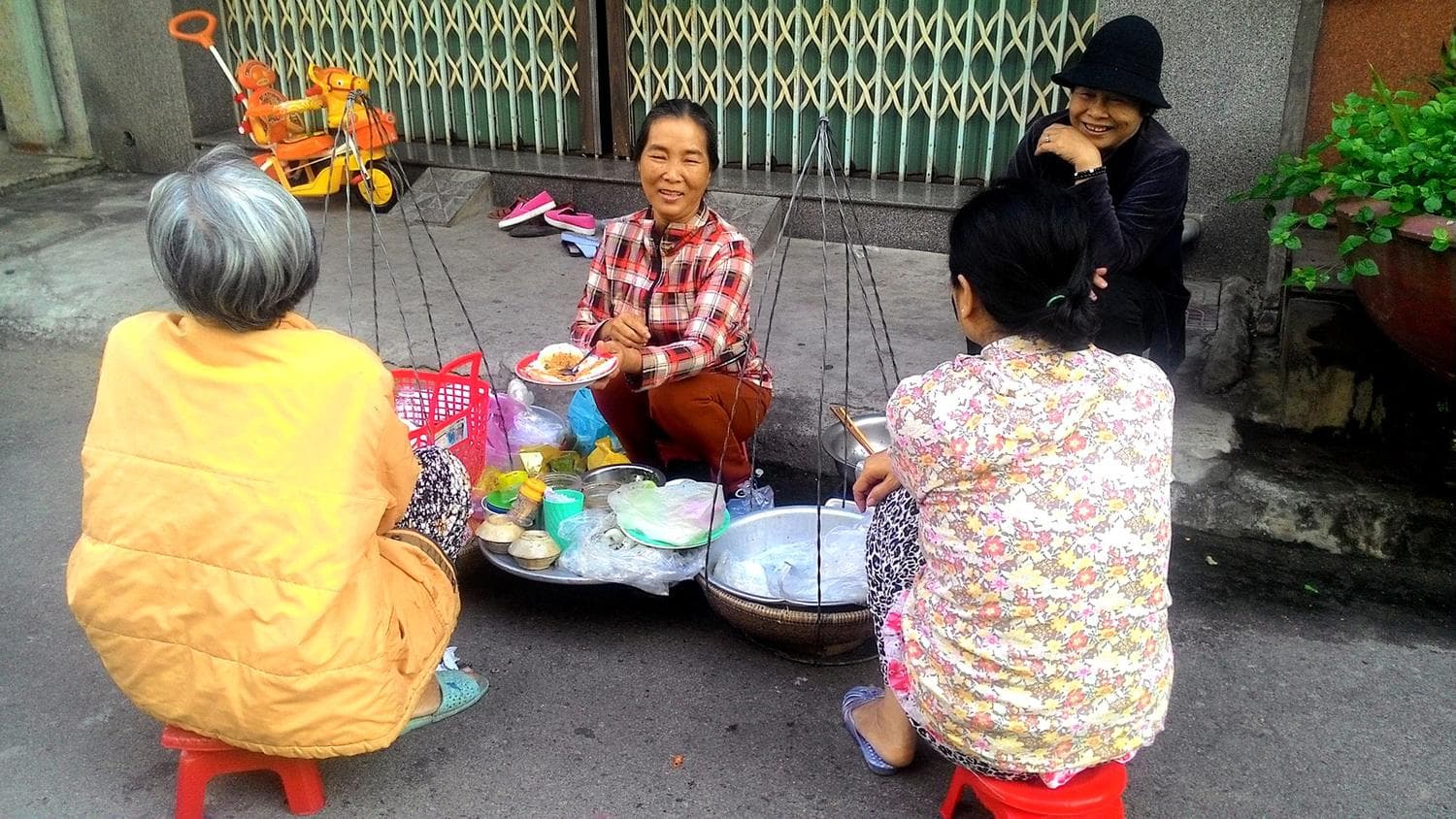
To eat like a resident, leave the seafront. Three areas do the work: the blocks around the central market, Trần Cao Vân street, and the lanes behind Chợ Đầm. Lunch there is 35,000–60,000 VND (~$1.35–2.30) in kitchens with no sign on the door.
Banh Xeo Gia Vy
14 Diên Hồng. Twenty years old, and the place where the tôm nhảy version other shops copy got its shape. Plastic tables, a small room, and the smell of hot turmeric oil.
The order is simple: pancakes at 22,000–34,000 VND each, a bowl of peanut sauce, a basket of herbs and rice paper. Add tré or grilled nem for 35,000–80,000. Bia Sài Gòn is about 15,000 VND (~$0.60) a bottle.
Busiest at lunch and after five. Cash or VietQR only. No cards, and VietQR needs a Vietnamese bank account, so bring notes.
48 Tran Cao Van
The place has no name beyond its address, which is how Foody lists it: "Bún Cá — 48 Trần Cao Vân". Plastic tables on the pavement, a few more inside, one dish on offer. Broth starts early, fishcakes are made on site.
Average spend is 15,000–25,000 VND (~$0.60–0.95), half what the seafront charges. It arrives with a pile of herbs and a dish of chilli.
Three or four neighbouring shops on the same street do the same thing. Everyone here has an opinion about which is best, and none of them agree.
The kitchens around the market
In the lanes behind Chợ Đầm there are dozens of unnamed spots cooking one or two things. The selection rule is the old one: watch where locals go in. A full room of Vietnamese diners is a good sign; an empty room at noon is not.
What to look for:
- Cơm bình dân — "people's rice": a plate of rice plus two or three sides you point at, 30,000–50,000 VND (~$1.15–1.90). Breakfast and lunch.
- Bún bò Huế — the spicy beef noodle soup from Hue, done well here, 35,000–45,000 VND.
- Bánh mì — baguette with pâté, pork and pickled carrot. In Quy Nhon they often slip fishcake into it, which is a local move. 15,000–25,000 VND.
More on the wider picture in our guide to Vietnamese street food.
The night market
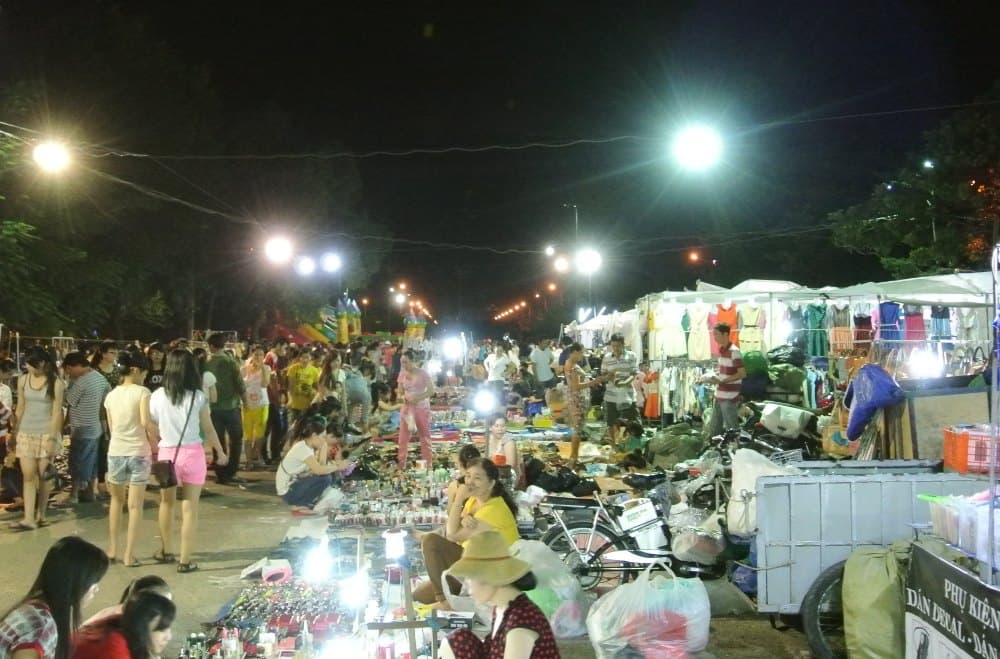
86 Lê Duẩn, opposite the Labour Culture House. Open roughly 17:00–23:00, liveliest between seven and ten. Half of it is clothes and souvenirs; the other half is food.
What to get:
- Seafood over coals — prawns, squid, oysters, clams
- Ốc — boiled and fried sea snails, the local evening habit
- Chè — cold dessert with beans, coconut, jelly and ice, 15,000–25,000 VND, six to ten varieties
- Bánh tráng nướng — "Vietnamese pizza": rice paper grilled with egg and pork, 15,000–20,000 VND
- Fresh coconut — 20,000 VND (~$0.75)
Separate from the market: the phố ẩm thực food street on Ngô Văn Sở, right by the water: grills, bánh xèo, bún cá. Pricier than the market, but you get the sea.
Cho Dam and the other markets
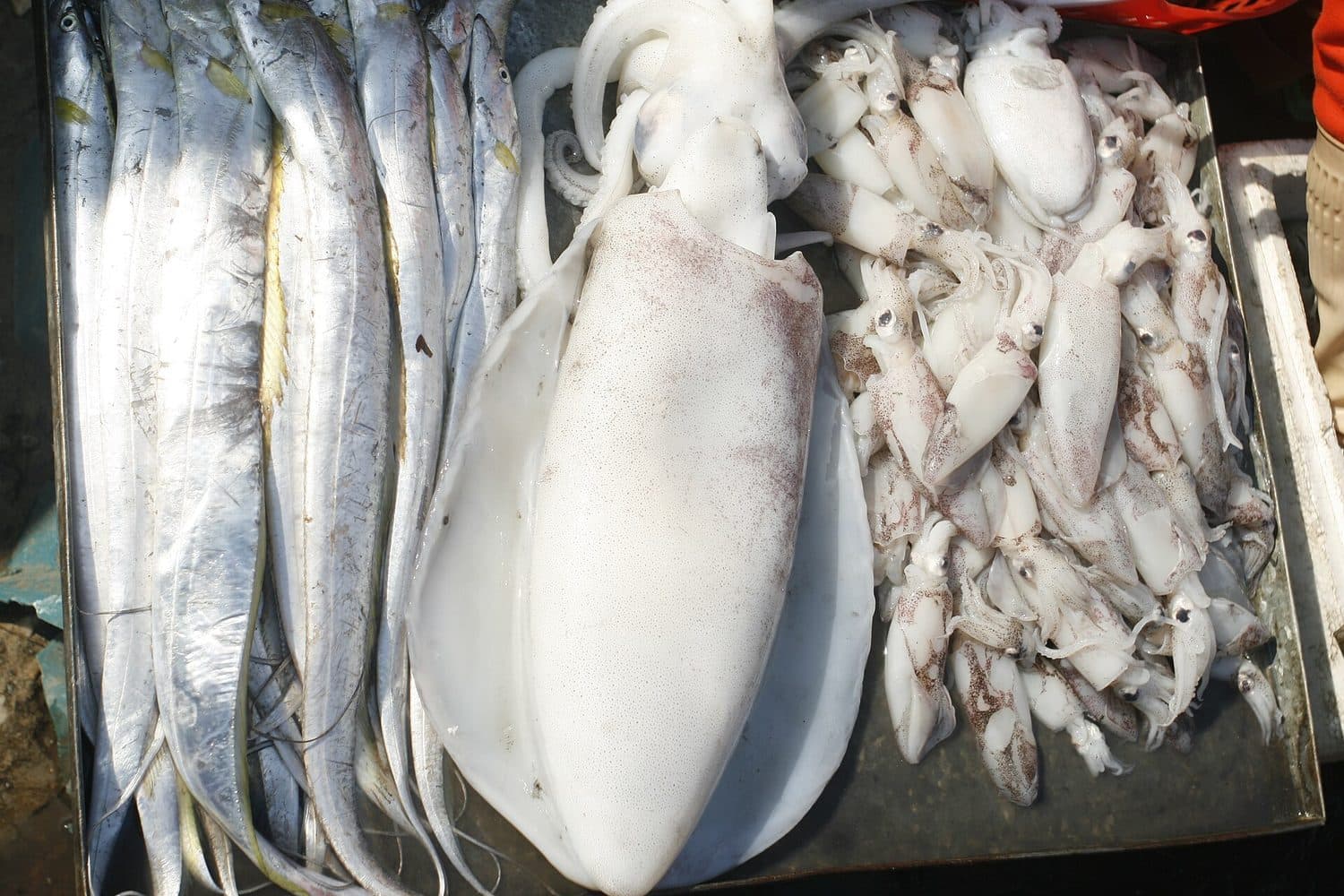
Markets here are not an attraction with a ticket booth. They are where the city wakes up and where every restaurant in town buys its stock.
Cho Dam, the main one
Chợ Đầm, "the lagoon market", is Quy Nhon's biggest, on Hoàng Hoa Thám at 13.7824, 109.2250. Trading starts at four in the morning and peaks between five and nine.
- 5:00–9:00 — the fish section. Boats unload, fish is sold whole. Prawns 250,000–400,000 VND/kg (~$9.60–15.40), squid from 180,000 (~$7). Almost no tourists, wet floors, plenty of noise.
- 9:00–12:00 — vegetables, fruit, meat, cooked food. The ăn vặt section is where locals have breakfast: bánh bèo, bánh canh, bún chả cá.
- Afternoon — dry goods and household rows. The fish end has packed up by then.
The buy-and-cook trick. Buy a kilo of prawns or squid at the market, walk it into one of the kitchens by the exit, and they cook it for 30,000–50,000 VND (~$1.15–1.90) a dish. This is standard along the whole Vietnamese coast and it roughly halves a restaurant bill. The catch is that you need to know what you are looking at and you will be quoted a foreigner price to start with. Counter at 40–50% and settle around 60–70%; our guide to Vietnamese markets and haggling goes further into the etiquette.
What to take home
The dry section of Chợ Đầm and the shops along Trần Hưng Đạo cover the whole souvenir list:
- Fish sauce (nước mắm) — the Binh Dinh stuff has a reputation. 30,000–100,000 VND (~$1.15–3.85) for 500 ml depending on grade. Dark and thick for cooking, light for dipping.
- Shrimp paste (mắm ruốc) — the base of most local sauces, about 50,000 VND a jar. Wrap it well; it is pungent enough to make itself known in a suitcase.
- Bánh tráng dừa — coconut crackers, 30,000–50,000 VND a pack.
- Dried fish and squid — 200,000–400,000 VND/kg (~$7.70–15.40). Chợ Khu 6 specialises in dried goods if you want the proper selection.
Fish sauce is liquid: over 100 ml it goes in checked baggage, and a leaking bottle ruins everything it touches. Double-bag it.
Two more fish addresses
- Cảng cá Hàm Tử — the fishing port inside the city. Come at first light. Cheaper than the market, but they sell in bigger lots.
- Chợ Khu 2 — a market by the sea that comes alive in the afternoon when the boats return. Useful if you slept through Chợ Đầm.
What food costs in Quy Nhon in 2026
Rate used: 1 USD ≈ 26,000 VND.
Currency converter
| Category | VND | ~USD |
|---|---|---|
| Street breakfast (bún, phở, bánh mì) | 15,000–40,000 | $0.60–1.55 |
| Lunch in a local kitchen | 50,000–100,000 | $1.90–3.85 |
| Bánh xèo tôm nhảy, one pancake | 22,000–34,000 | $0.85–1.30 |
| Bún chả cá, a bowl | 15,000–40,000 | $0.60–1.55 |
| Nem Chợ Huyện, a portion | 40,000–80,000 | $1.55–3.10 |
| Seafood dinner for two | 400,000–900,000 | $15–35 |
| Green lobster, 1 kg | 1,100,000–1,300,000 | $42–50 |
| Imperial crab, 1 kg | 1,000,000–1,500,000 | $38–58 |
| Grilled scallops, 6 | 150,000–200,000 | $5.75–7.70 |
| Iced coffee (cà phê sữa đá) | 15,000–30,000 | $0.60–1.15 |
| Fresh juice | 15,000–25,000 | $0.60–0.95 |
| Bia Sài Gòn | 15,000–25,000 | $0.60–0.95 |
| 1.5 l bottled water | 10,000 | $0.40 |
Against Nha Trang
Seafood in Quy Nhon runs about half what comparable Nha Trang restaurants charge; street food is only 10–20% cheaper. Nha Trang figures come from our own Nha Trang food guide.
| Item | Quy Nhon | Nha Trang (restaurant) |
|---|---|---|
| Lobster, 1 kg | 1,100,000–1,300,000 VND | 2,000,000–3,000,000 |
| Tiger prawns, 1 kg | 350,000–500,000 | from 1,450,000 |
| Squid, 1 kg | 180,000–250,000 | from 300,000 |
| Noodle bowl | 15,000–40,000 | 40,000–60,000 |
| Dinner for two | 400,000–900,000 | 600,000–1,500,000 |
The reasons are structural rather than temporary: Quy Nhon has its own fleet, its own market supplying its own restaurants, and no history of foreign tourism to build a markup on. Compare with food in Phan Thiet, and for the wider budget picture see prices in Vietnam.
Fast Track — no queue at the border
5–10 minutes instead of an hour in the immigration queue
from$11per passenger
One day of eating in Quy Nhon
Twelve hours, three meals, a market and a sunset. Distances are short: five to twenty-five minutes between stops on a motorbike or in a Grab.
6:30 — breakfast, bun cha ca at Ho Thi. 279 Trần Hưng Đạo, doors open at six. A bowl and tea: 35,000–40,000 VND (~$1.35–1.55).
8:00 — Cho Dam market. Walk the fish section, photograph the boats and the catch. If you have a kitchen where you are staying, buy now: prawns run about 350,000 VND a kilo (~$13.50).
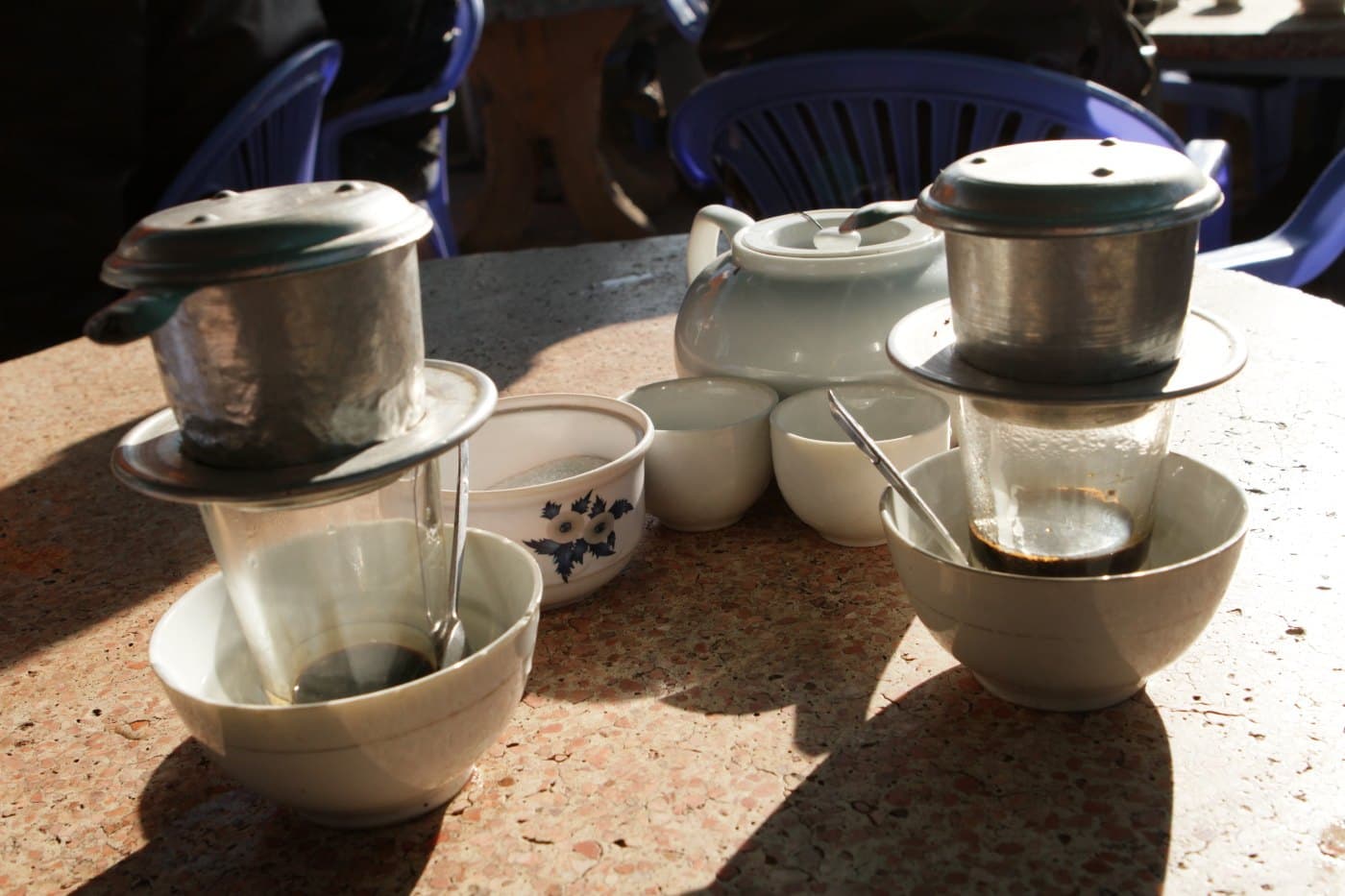
10:00 — coffee on the seafront. Any terrace café along Xuân Diệu. Cà phê sữa đá is 25,000 VND (~$0.95). Our Vietnamese coffee guide explains why the local robusta tastes nothing like home.
11:30 — banh xeo tom nhay at Gia Vy. 14 Diên Hồng. Four pancakes between two: around 120,000 VND (~$4.60). Add tré if you still have room.
13:00 — stop. It is hot, the small kitchens shut, and nothing much happens until three. Go back to the hotel.
16:00 — out to Nhon Ly. About 20 km, 30–40 minutes by bike or car. A Grab runs 200,000–250,000 VND (~$7.70–9.60). The road crosses the Thị Nại lagoon bridge, which justifies the ride on its own. Grab works fine in Vietnam, but book your return before you order dinner.
17:30 — Eo Gio, sunset. Entry 22,000–40,000 VND (~$0.85–1.55). One of the better sunsets on the central coast; the headland walkway is in our Quy Nhon attractions guide.
18:30 — dinner at Coco Jambo or Hoang Thao. Lobster, scallops, urchins. Two people with beer: 700,000–900,000 VND (~$27–35).
21:00 — back into town, night market. If there is any room left: chè or coconut ice cream, and a walk along the rows on Lê Duẩn.
Day total: 1,400,000–1,800,000 VND for two (~$54–69), transport included.
Ordering, paying and not getting caught out
Menus are in Vietnamese. Family kitchens and most local restaurants have nothing in English. What works: Google Lens through the camera translates on the fly, imperfectly and sometimes hilariously, but well enough. Keep a list of ten or fifteen dish names in your phone. Showing a waiter a screenshot is entirely normal here and nobody finds it odd.
Bring cash. Small places take notes or VietQR, and VietQR needs a Vietnamese bank account, which a tourist on an e-visa cannot open. Big seafood restaurants take Visa and Mastercard, sometimes with a surcharge. Ask before you order. ATMs in the centre dispense 2–3 million VND at a time.
Get a SIM before you need one. You want data for two things specifically: calling a Grab back from Nhơn Lý after dark, and pointing a translation app at a menu board. An eSIM is $8–15 for 3–30 GB over 30 days; see our Vietnam SIM and eSIM guide.
Ice is usually safe. City cafés generally use factory ice, and you can recognise it: cylinders with a hole through the middle. Cloudy crushed ice is rare, and you can skip it.
Tipping is not expected. Local cafés do not do it at all. In pricier restaurants people round the bill up 5–10%. Nobody takes offence if you do not. More on the norms in our tipping in Vietnam guide.
Allergies. Peanut allergy: Tôi bị dị ứng đậu phộng. Shellfish: Tôi bị dị ứng hải sản. Show it on the phone rather than attempting the tones.
Heat. Binh Dinh cooking is not the spiciest in Vietnam, the south beats it, and chilli usually arrives on the side so you control it. If you want none: không cay.
Opening hours. Small noodle kitchens run until the broth is gone, so get there before nine in the morning. The larger ones like Hồ Thị hold the room until half ten at night. Seafood restaurants are roughly 8–10am to 21–23:00. Night market 17:00–23:00.
Booking. At peak season, call the popular seafood places ahead: Hoàng Thao 093 536 1080, Coco Jambo 0988 177 709, Ông Minh 0335 549 959. Off-season you can walk in.
Mistakes worth avoiding
- Eating only on the seafront. Xuân Diệu has the view and the markup. Anything interesting is two or three blocks inland, around Chợ Đầm and Trần Cao Vân.
- Skipping bún chả cá at breakfast. It is the city's default first meal and it is better at seven in the morning than at seven at night.
- Ordering both crab and lobster "to try". Each is a dish for two. One 600–800 g lobster is enough; take both and you will not finish either.
- Choosing the restaurant with the English menu on night one. An English menu is a 1.5–2x marker. Eat locally first, splash out later.
- Buying "fresh" at the market after eleven. Fresh means five to nine in the morning. After that you are looking at what did not sell, in the sun.
- Treating raw urchin as a party trick. It is as local as it gets and also completely raw. If your stomach has not had a fortnight to adjust to Vietnam, order it baked.
FAQ
Three dishes, all of them Binh Dinh specialities. Bánh xèo tôm nhảy, the small crisp pancake with whole shrimp, best at Gia Vỹ on 14 Diên Hồng. Bún chả cá, fishcake noodle soup, eaten at breakfast. And cua Huỳnh đế, the imperial crab, which is the city's emblem. Add nem Chợ Huyện and coconut crackers to take home.
Yes, and on seafood by about half. Restaurant lobster is 1,100,000–1,300,000 VND a kilo (~$42–50) here against 2,000,000–3,000,000 in Nha Trang. Tiger prawns are 350,000–500,000 against 1,450,000 and up. Street food is only 10–20% cheaper, so the saving is concentrated entirely in seafood.
- Budget per person200,000–350,000 VND~$7.70–13.50covers a street breakfast, a local lunch and a seafood dinner at Bien Ngoc or Ong Minh
- Mid400,000–700,000 VND~$15–27which adds a Nhon Ly sunset dinner
- High a dayfrom 1,000,000 VND~$38if you want lobster and crab daily with a sea view
Yes, and it is the standard move. Buy prawns, crab or squid at Chợ Đầm in the morning, carry it to one of the kitchens by the exit, and they cook it for 30,000–50,000 VND (~$1.15–1.90) a dish. That is roughly half a restaurant bill. Bargain on the seafood itself: opening prices for foreigners run 1.5–2x over — our guide to markets and haggling covers the etiquette.
Cho Dam, on Hoang Hoa Tham, at 13.7824, 109.2250, about 2–3 km from the centre. Trading starts at four in the morning and the fish section is best between five and nine. Cang ca Ham Tu, the fishing port, is cheaper again but sells in larger lots. Cho Khu 2 by the sea works in the afternoon when boats come back.
No. Since 12 June 2025 Binh Dinh has been merged into an enlarged Gia Lai, and Quy Nhon is now part of the merged province. On 1 July Vietnam also abolished the district tier, so Tuy Phuoc is a commune now. Signs, menus and listings still say Binh Dinh and searching the old name works fine. It now means a cultural region rather than an administrative one.
Less than the south, and less than Hue. In Quy Nhon chilli usually arrives on the side so you add your own. If you want none at all, không cay is understood everywhere. The bigger adjustment for most foreigners is not the heat but the shrimp paste, mắm ruốc, which turns up in a lot of dipping sauces.
You are still fine. Quy Nhon does a full range of land food: cơm gà (chicken rice), bún bò (beef noodle soup), nem Chợ Huyện (grilled pork), mì Quảng (turmeric noodles), bánh hỏi with grilled pork. Vegetarian is đồ chay, and quán chay vegetarian kitchens cluster near the larger pagodas.
Is Quy Nhon worth a trip for the food alone?
If you are already on the central coast, yes without much argument. It is the last stretch of coastline here where seafood is priced for the people who catch it, and where three or four dishes exist that you cannot order anywhere else in the country.
If you are choosing between Quy Nhon, Nha Trang and Hoi An for a first trip, be honest about the trade. Hoi An has the gastronomy scene: cooking classes, tasting tours, restaurants that speak English. Quy Nhon has none of that. What it has is food cooked the way it was fifty years ago for people who live here, at half the price, with no interpretation layer and no English menu to hide behind.
Two days is the sensible minimum: one for the local kitchens in town, one for seafood in Nhơn Lý. From 400,000 VND (~$15) per person per day. The rule that matters more than any address in this guide: walk away from the seafront and eat where the room is full of locals.
Read next: Quy Nhon: everything you need to know · what to see around the city · when to come
Checked August 2026. Confirm opening hours by phone or in Google Maps — Quy Nhon is a small city and kitchens shift their hours with the season.
- Guide
Quy Nhon 2026: Vietnam's Quiet Beach Town Guide
Quy Nhon guide: quiet beaches like Ky Co and Eo Gio, Cham towers, seafood, how to get there and why this town is still off the trail.Quy Nhon 2026: Vietnam's Quiet Beach Town Guide - Guide
Quy Nhon Tours 2026: Islands, Phu Yen, Real Prices
Every day tour from Quy Nhon in 2026 — Ky Co and Hon Kho islands, the Phu Yen day trip, Cham towers. Verified prices in VND and USD, operators, what to skip.Quy Nhon Tours 2026: Islands, Phu Yen, Real Prices - Preparation
How to Get to Quy Nhon 2026: Trains, Phu Cat Airport, Buses
Getting to Quy Nhon in 2026: Phu Cat (UIH) flights and the $1.90 airport bus, Reunification Express times to Dieu Tri, sleeper buses. Fares in VND and USD.How to Get to Quy Nhon 2026: Trains, Phu Cat Airport, Buses