Alcohol in Vietnam: beer, rum, rice wine and what you can carry
A can of Bia Saigon costs 12,000 VND (~$0.46) in the corner shop under your building and 90,000 VND (~$3.50) on a Saigon rooftop. Same aluminium, seven times the price. And if you get on a scooter after that can, the fine starts at 2,000,000 VND (~$77), because Vietnam's legal blood-alcohol limit for drivers is exactly zero.
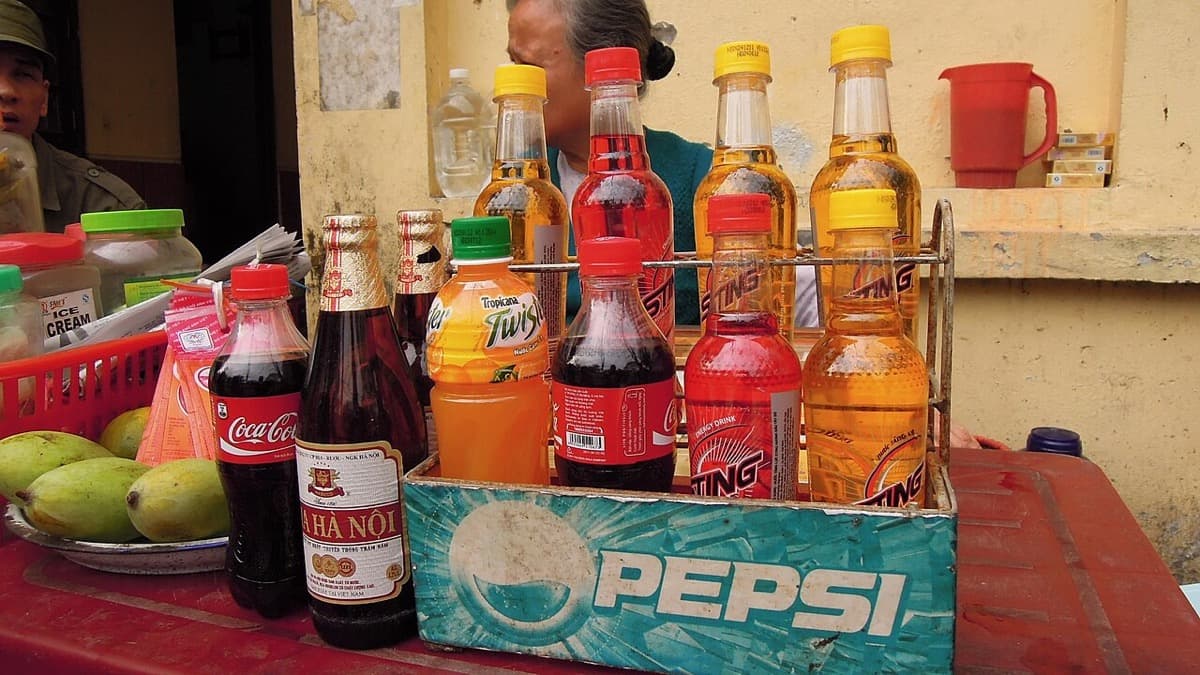
Below: which beer belongs to which region, what separates rượu đế from rượu cần, whether the cobra in the bottle is worth your suitcase space, why imported whisky costs more here than at home, and the exact wording of the customs decrees. Hanoi's fresh draught beer has its own guide, bia hoi, and general spending levels live in our Vietnam price breakdown.
What people actually drink in Vietnam
Beer wins by a distance. The spirit category means rice distillate, rượu. After that come rum from local sugarcane, semi-sweet wine from the Đà Lạt highlands, and expensive imports.
| Category | Vietnamese | ABV | Price range | Who it suits |
|---|---|---|---|---|
| Beer | bia | 3–5.3% | $0.46–1.70 | Everyone. It is 33 °C outside |
| Rice distillate | rượu gạo / rượu đế | 30–40% | $1.75–4.80 | Anyone chasing the local thing |
| Communal rice brew | rượu cần | 15–25% | Served by the jar | Travellers heading to the highlands |
| Rum | rượu rum | 39–64% | $6.70–37 | Anyone taking a bottle home |
| Wine | vang | 11–14% | $3.65–19 | Anyone who does not mind semi-sweet |
Drinking in Vietnam has risen sharply, which is exactly why the state has tightened three separate screws in seven years: the drinking age, the road limit, and the tax rate.
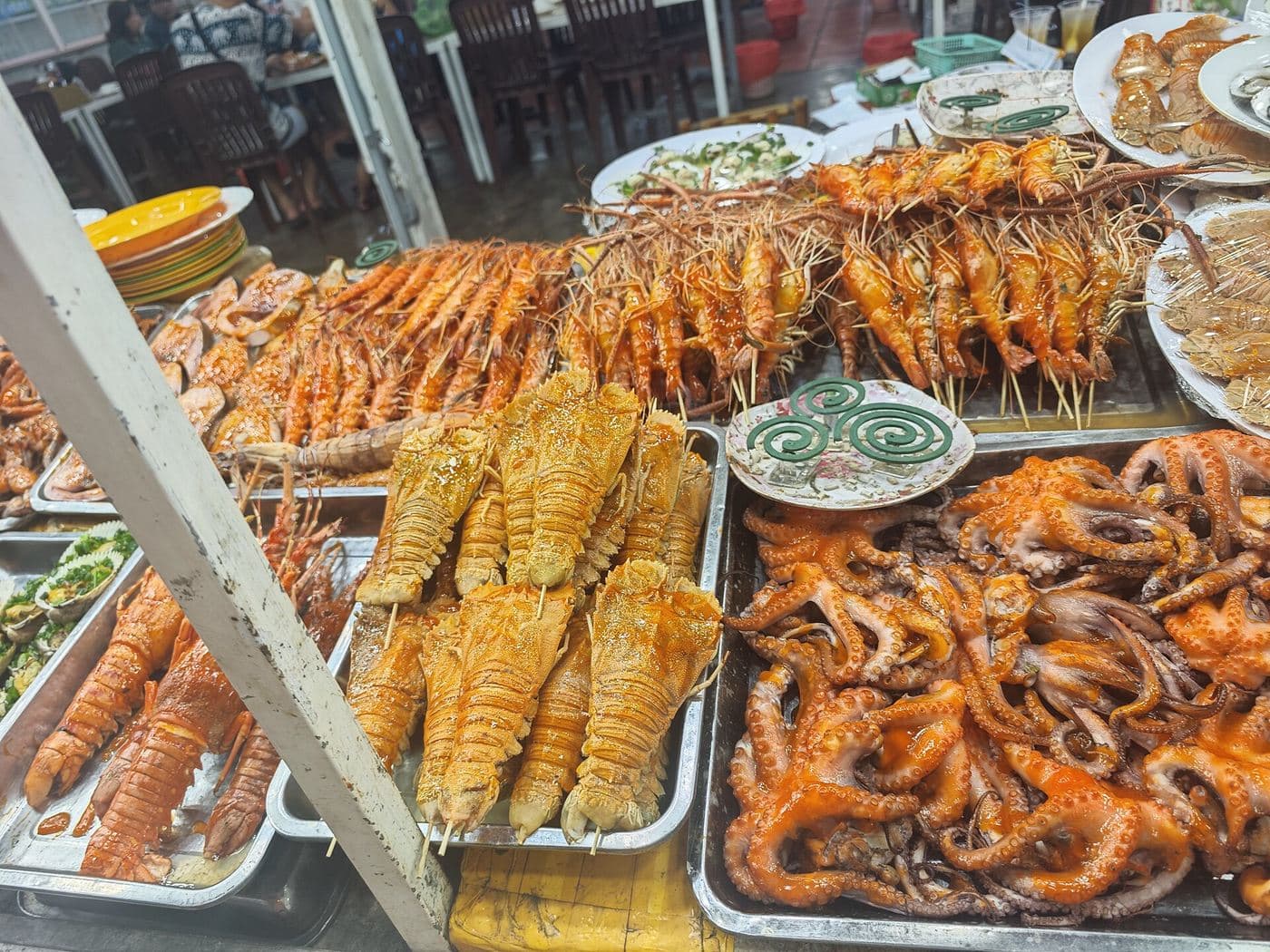
A note on how drinking works socially. Alcohol here arrives with food, not instead of it. Beer comes with ice, spirits come in small glasses with a shared toast of Một, hai, ba, dô! (one, two, three, drink). Ordering a spirit with nothing to eat reads as odd. What to order alongside is covered in our guide to Vietnamese cuisine, and the most reliable beer snack in the country is nem, the Vietnamese spring roll.
Beer: Bia Saigon, 333, Hanoi, Huda, Larue
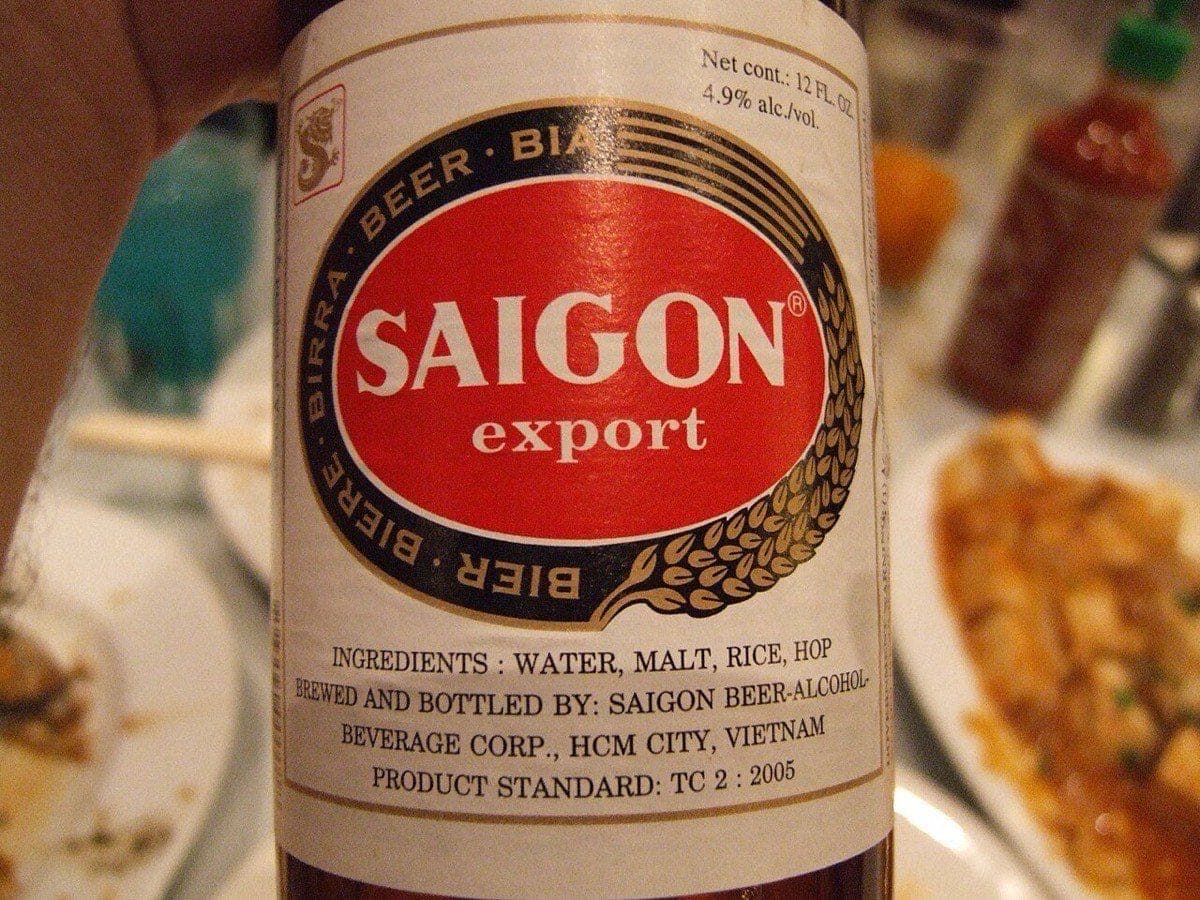
Four companies own the market: Heineken, Sabeco, Habeco and Carlsberg Vietnam.
| Brand | Owner | Home turf | ABV | Character |
|---|---|---|---|---|
| Bia Saigon (Lager, Export, Special, Chill) | Sabeco | The south, sold nationwide | 4.3–4.9% | The default lager. Export wears red, Special green |
| 333 (Ba Ba Ba) | Sabeco | The south and everywhere | 5.3% | The export can. Slightly fuller than the Saigon lagers |
| Bia Hà Nội, Trúc Bạch | Habeco | The north | 4.2–5.3% | More bitter and more traditional than southern beer |
| Huda | Carlsberg Vietnam | Huế and the centre | 4.7% | Brewed in Huế since 1990 with Danish technology |
| Larue, Larue Special | Heineken Vietnam | Centre and south | 4.2–4.6% | A leftover of the French brewing era |
| Bia Việt | Heineken Vietnam | Nationwide | 4.5% | Budget mass-market lager |
| Tiger, Heineken | Heineken Vietnam | Nationwide | 4.6–5% | The premium-mainstream tier |
Two of these have stories worth knowing. 333 began life with a German-influenced recipe, became a favourite of American servicemen during the war, and was renamed in 1975 to shed its colonial-era branding. Huda is a portmanteau: Huế plus Danish, after the brewing technology it launched with.
The taste gap between these lagers is narrower than the labels suggest. They are all light, pale, lightly hopped and built for heat. Trúc Bạch is the one that stands apart, being noticeably fuller and maltier.
One habit surprises every newcomer: ice goes straight into the glass. Bottles often arrive from a crate rather than a fridge, so the ice is the cooling system. Diluted beer sounds wrong exactly once, which is until you try it at 34 °C.
North versus south
The north drinks Bia Hà Nội, the south drinks Bia Saigon and 333, Huế and the surrounding provinces drink Huda, and Larue still holds ground in the centre. This is not tradition so much as logistics. Each brewery has a delivery radius, and the fridge in any given shop holds whatever travels the shortest distance.
The north has one format of its own: bia hơi, fresh draught beer at 3–4.3% that is brewed in the morning and finished the same night. A 500 ml glass costs 10,000–20,000 VND ($0.40–0.80). It is not a brand, it is a system: steel kegs, plastic stools on the pavement, no preservatives. Addresses and toasting etiquette are in our guide to bia hoi in Hanoi.
The craft scene
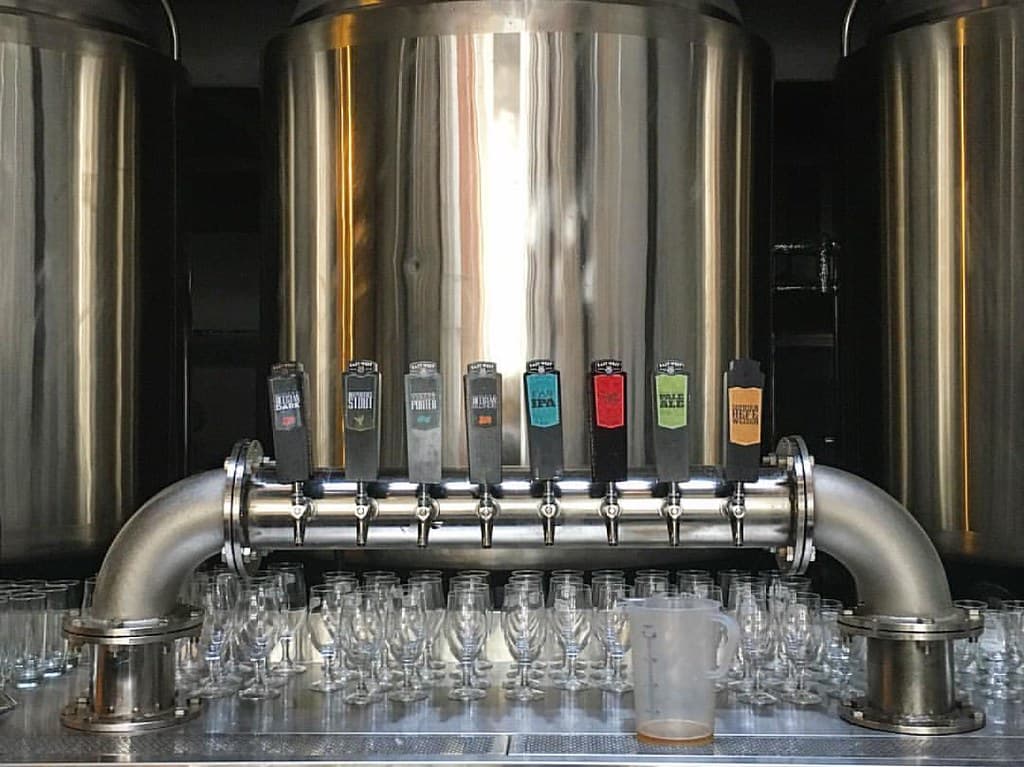
Craft is concentrated in Ho Chi Minh City, Hanoi and Da Nang. Pasteur Street Brewing got there first and now runs 15 taprooms nationally. Heart of Darkness has been going since 2016 and has brewed over 300 styles, releasing around a hundred new beers a year. Da Nang has 7 Bridges, Saigon has East West Brewing.
By local standards it is not cheap:
- taproom pour: 27,000–45,000 VND ($1.10–1.80);
- craft bottle in a bar: 60,000–120,000 VND ($2.30–4.60);
- pint in an expat neighbourhood: $5–10.
So one craft pour costs about what four supermarket cans of Bia Saigon cost. City-level bar recommendations are in our guides to Ho Chi Minh City nightlife and eating in Da Nang.
Alcohol-free
It exists, but you will have to look. Heineken 0.0 and the Sagota range sit in large supermarkets and chain convenience stores, and almost never in street stalls or family-run cafés. Pricing matches regular Heineken, so there is no saving in it.
Rượu: the rice spirit locals actually drink
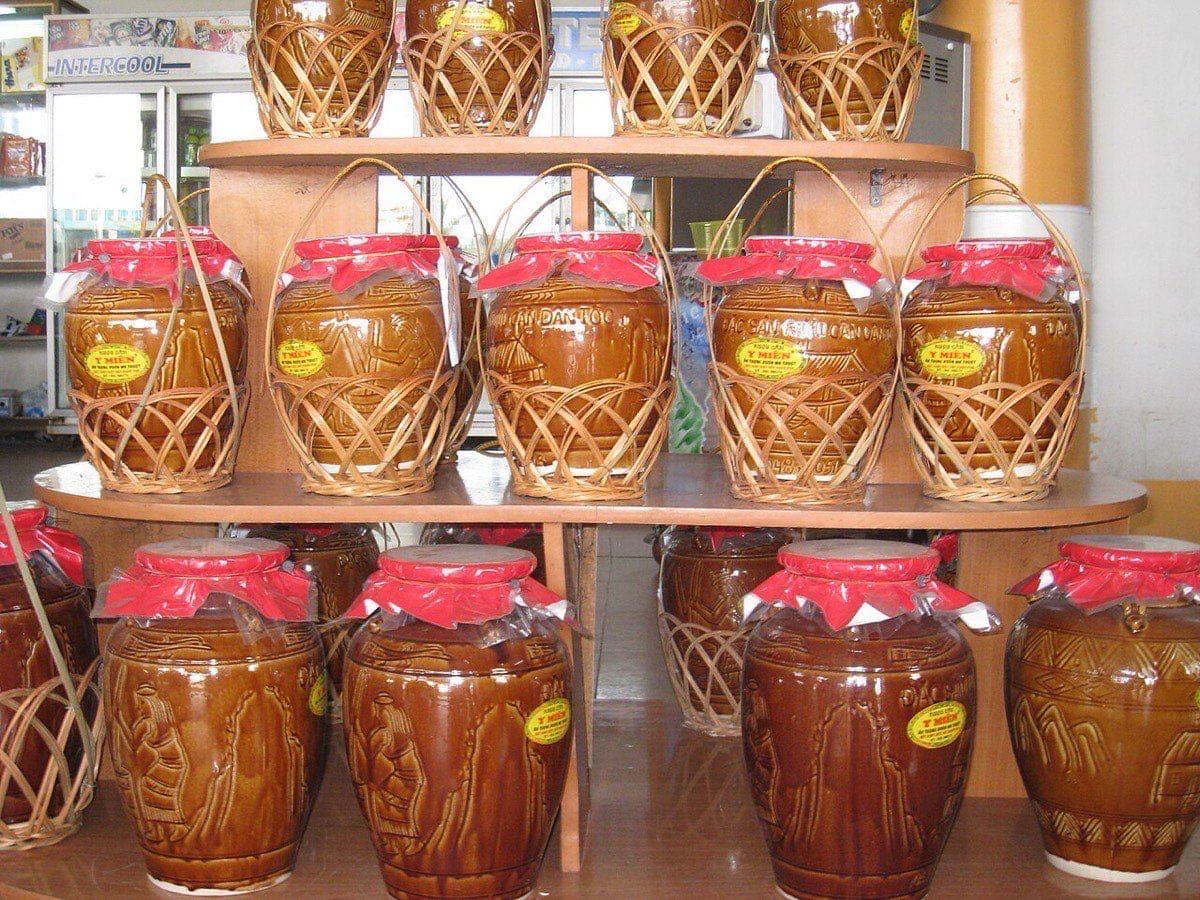
Rượu gạo is a distilled rice spirit at 30–40% ABV, not a wine. The English label "rice wine" has misled generations of visitors who expect something like sake, get moonshine instead, and find their evening ends earlier than planned.
| Name | What it is | ABV | Where you meet it |
|---|---|---|---|
| rượu gạo | The base rice distillate, northern name | 30–40% | Nationwide |
| rượu đế | The same thing, southern name | 30–40% | The Mekong Delta and the south |
| rượu nếp | From glutinous rice; also exists as a fermented dessert in a banana leaf | Mild to 40% | The north |
| rượu cần | Communal, fermented, drunk through long bamboo straws from a shared jar | 15–25% | Tây Nguyên, Tây Bắc, highland communities |
| rượu thuốc | Infused with herbs, roots or animals | 30–40% | Markets, villages, souvenir shops |
Of everything on that list, rượu cần gives the most interesting experience. The jar goes in the middle, several bamboo straws come out of it, and everyone drinks at once. Strength is moderate, flavour is sour-sweet and yeasty. It is a hospitality ritual among highland communities, and you will meet it on trips through Tây Nguyên or the northern mountains.
Ordinary rượu đế in the south is a different animal. It gets poured from five-litre plastic jerrycans into small glasses, and it gets poured generously. Declining after the third toast is socially awkward. Sometimes you should anyway, and the methanol section explains why.
The factory option: Halico
If you want to try rice spirits without gambling, buy factory-made. The biggest producer is HALICO in Hanoi, with more than 70 labels.
| Product | Size and ABV | VND | ~USD |
|---|---|---|---|
| Lúa Mới | 250 ml, 40% | 46,000 | $1.75 |
| Nếp Mới Vodka | 500 ml, 30% | 79,000 | $3.00 |
| Vodka Hà Nội | 700 ml, 33% | 125,000 | $4.80 |
For $4.80 you get a sealed bottle with an excise stamp and predictable contents. Nobody will call it a revelation — the flavour is neutral with a faint sweet rice note. It is, however, safe and cheap.
Snake wine and the rest of the rượu thuốc family
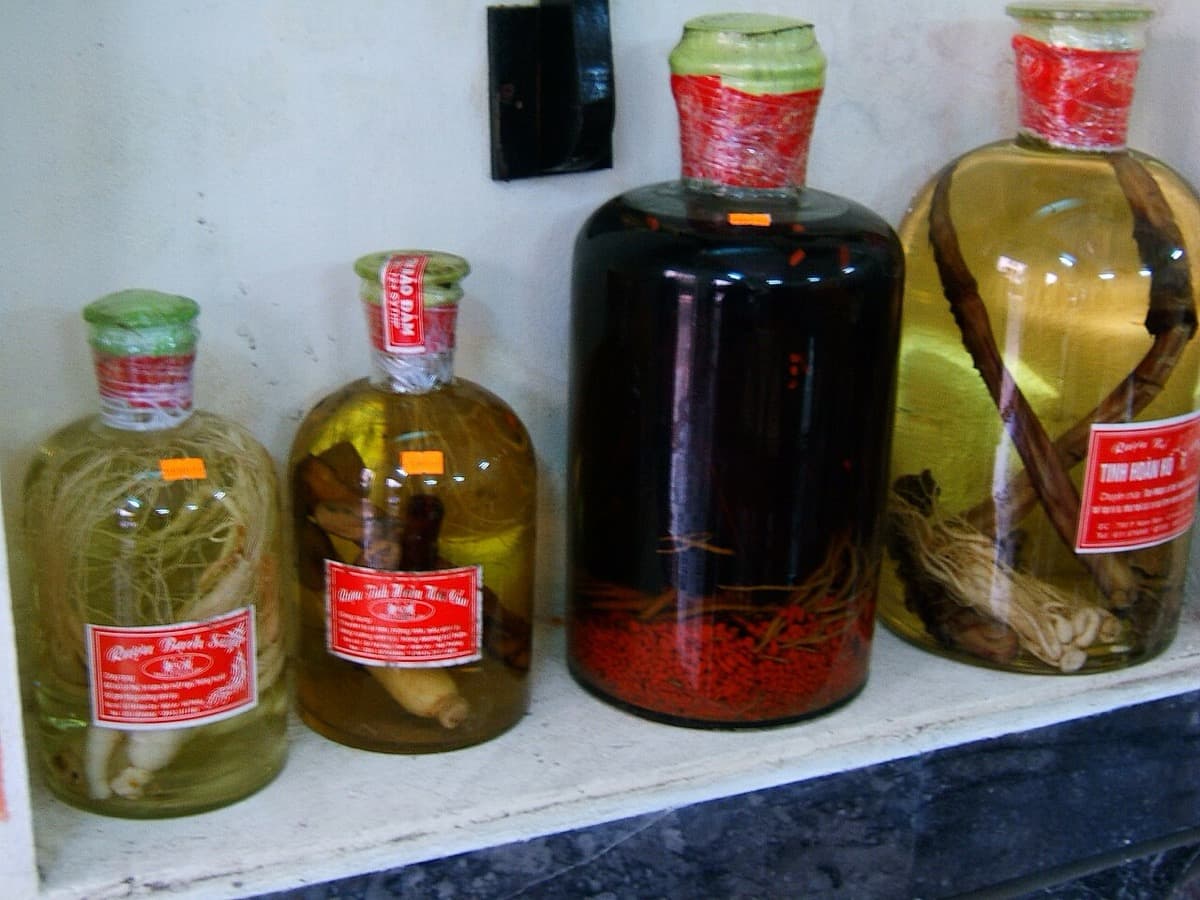
Rượu thuốc is a genuine folk-medicine tradition. Rice spirit gets infused with ginseng, roots and berries, and less often with animals: geckos, seahorses, snakes. Vietnamese people really do drink the herbal versions, usually a small glass at a time and framed as a health thing.
The cobra coiled in a clear bottle on a souvenir shelf is a different product. That one is mostly theatre for visitors, and the sellers are honest about who buys it.
Two practical points.
First, the venom. Ethanol denatures it, so the drink itself is not poisonous. The real risk is parasites if the snake was badly gutted.
Second, the law, which matters more. Several cobra species are CITES-listed: of the seven snake species in Vietnam's Red Data Book, five fall under the convention. Vietnam does not ban production or sale, but the customs service at your destination can seize the bottle and fine you. You will be finding out which species is in your jar at a border desk, without a translator and without leverage.
Fast Track — no queue at the border
5–10 minutes instead of an hour in the immigration queue
from$11per passenger
Rum: Chauvet, Sampan and Belami
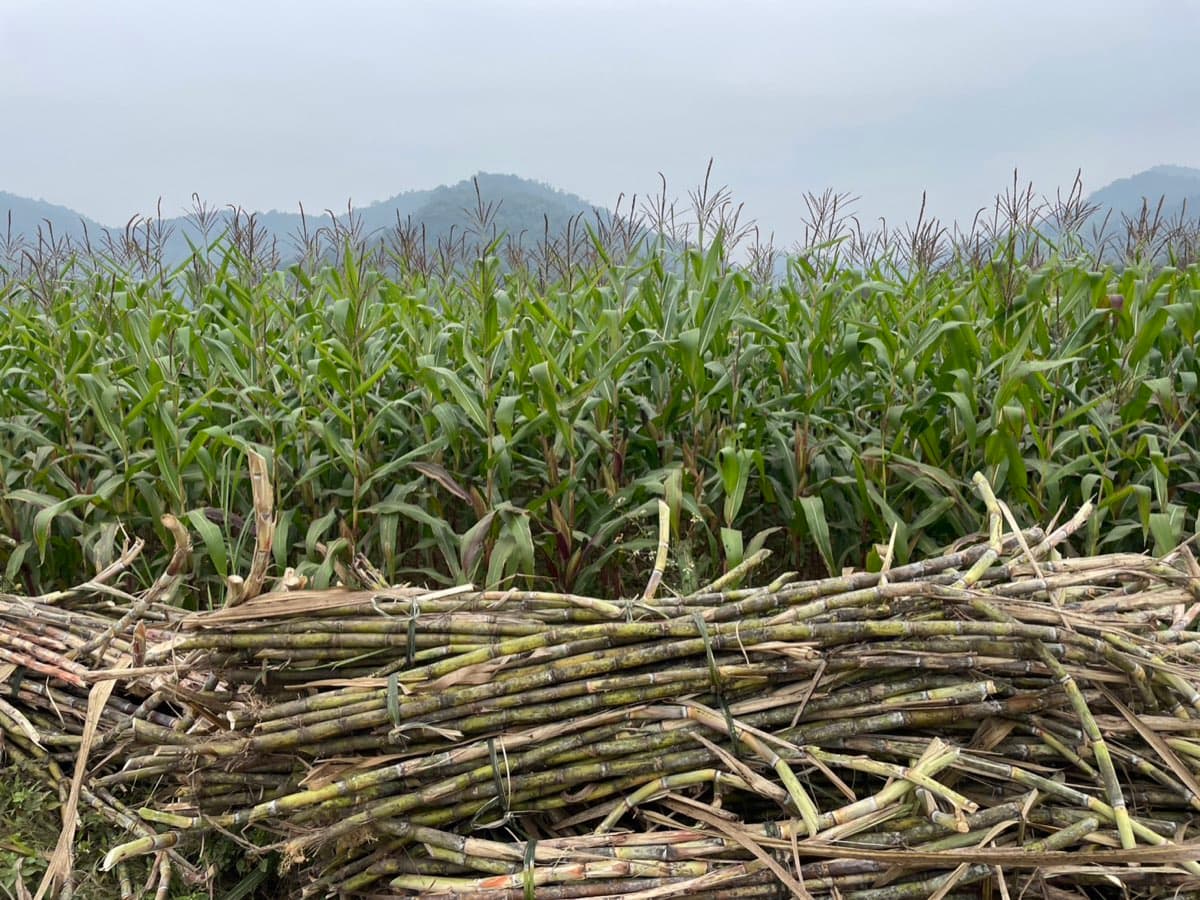
Sugarcane grows everywhere here, so rum is local and cheap. Chauvet owns the mass souvenir end, Sampan and Belami the craft end. The gap between them is roughly the gap between instant coffee and a micro-roastery.
| Brand | Who makes it | What matters | Price |
|---|---|---|---|
| Chauvet | A mass-market souvenir brand | White, gold and dark at 39%. Soft and sweetish | From a few dollars for 175 ml |
| Sampan Rhum | Distillerie d'Indochine, south of Hội An | Rhum agricole from fresh yellow cane juice; four white rums at 43–64% | 345,000–975,000 VND ($13–37) |
| Belami | A craft label | Premium Dark at 55%, five years in an oak cask pre-filled with roasted coffee and cocoa beans | Premium tier |
| Mia Distillery | Vietnamese craft distillery | Small batches, artisan approach | Mid to upper |
Chauvet deserves a paragraph because it is the bottle most people carry out of Nha Trang and Mũi Né. At 39% it is soft and faintly sweet: excellent as a cocktail base or for soaking dried fruit, unconvincing as something you would sip slowly.
Sampan sits at the opposite pole. Distillerie d'Indochine near Hội An makes rhum agricole from fresh-pressed yellow cane juice rather than molasses. That school is rare in Asia, and the result is grassy, sharp and characterful, running as high as 64%. The international competition medals on the label are real ones.
Belami took a third route: five years in oak that had first been filled with Vietnamese roasted coffee and cocoa beans. You get it on the nose immediately.
A word on the flavoured lines — coconut, mango, chocolate, coffee. Tourist shops are full of them, they are cheap, and they are a souvenir category rather than a drinking one. The sugar load makes for a cloying cocktail. Buy them for colleagues, not for yourself.
Wine: Đà Lạt, and why imports hurt
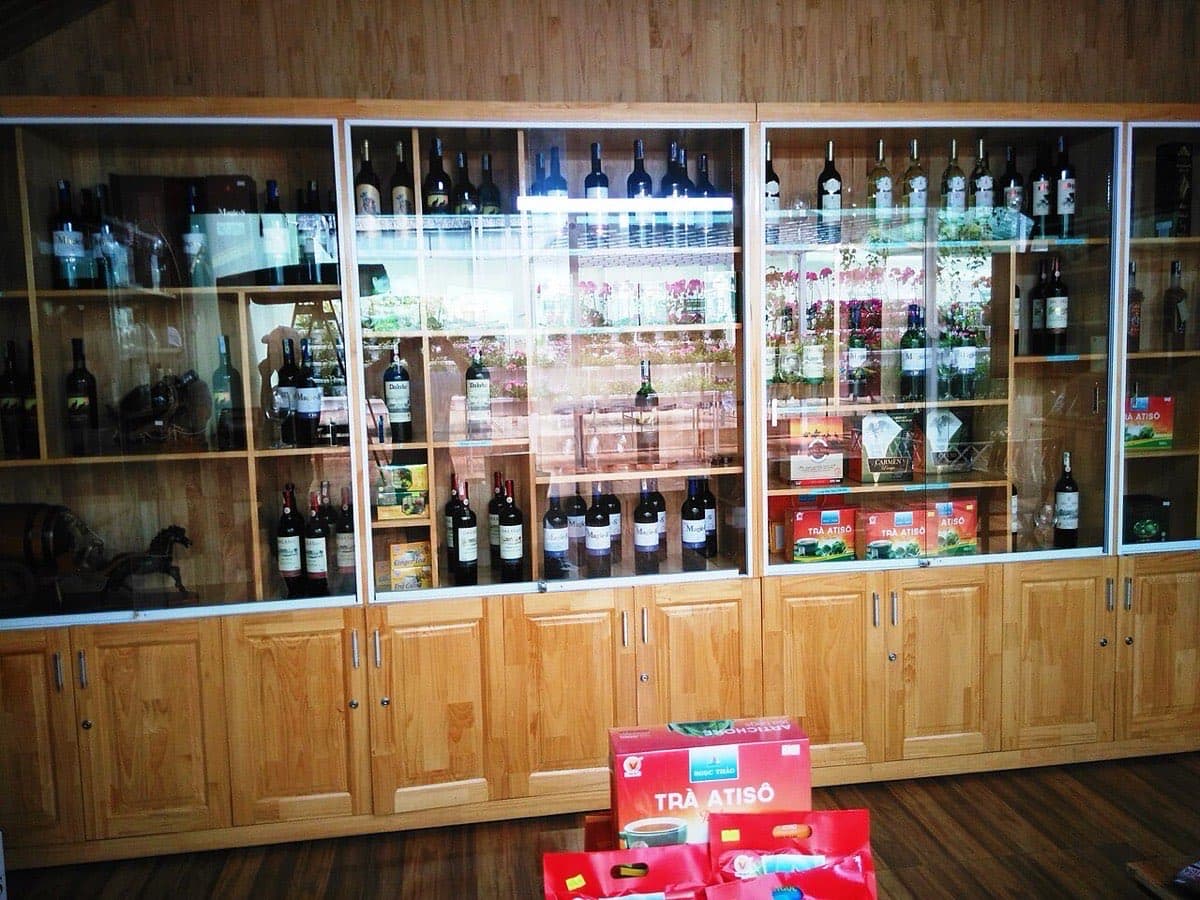
The only local wine worth naming is Vang Đà Lạt from Ladofoods, at 95,000–490,000 VND ($3.65–19) depending on the line and the bottle size. Everything else on the shelf is imported and carries a double markup.
The winery's history is French: built in Đà Lạtand later merged with a local food plant to become Ladofoods. The grapes come mostly from the former Ninh Thuận province (part of Khánh Hòa since 2025), the driest corner of the country.
| Line | Size | VND | ~USD |
|---|---|---|---|
| Dankia Red | 750 ml | ~95,000 | $3.65 |
| Classic | 750 ml | ~100,000 | $3.85 |
| Superior | 750 ml | ~135,000 | $5.20 |
| Classic | 3 L | ~300,000 | $11.50 |
| Strong Wine | 3 L | ~330,000 | $12.70 |
| Premium | 3 L | ~490,000 | $18.85 |
The honest drawback: almost the entire range is semi-sweet. If you drink dry wine at home, Vang Đà Lạt will taste like fruit compote to you. Opinions split hard on this one, so order a glass in a café before you commit to a three-litre bottle.
Imported wine starts around 300,000 VND (~$11.50) for something that costs five or six euros in Europe. That is not shop greed, it is tax, and the next section explains it.
If Đà Lạt is on your route, the Ladofoods wine tunnel runs tastings — details in our guide to Da Lat coffee and wine, with the rest of the town's menu in eating in Da Lat.
What it costs and where it is cheapest
The same can of local beer costs 12,000 VND in a family shop and 90,000 VND on a rooftop. That is seven times the price for identical contents, and the variable is the address, not the quality.
| Channel | What people buy there | Markup vs supermarket |
|---|---|---|
| Supermarket (Co.opmart, Bách Hóa Xanh, WinMart, AEON) | Beer by the case, Vang Đà Lạt, Halico | Baseline |
| Corner shop tạp hóa | Single cans, warm | ×0.9–1.0 |
| Circle K, GS25, Family Mart | Cold beer around the clock | ×1.5–2 |
| Restaurant or café | Local beer with food | ×2–3 |
| Beach bar, rooftop | Beer and cocktails | ×4–6 |
| Hotel minibar | Anything at all | ×5–8 |
Item by item, at roughly 26,000 VND to the dollar as of September 2026:
| Item | VND | ~USD |
|---|---|---|
| Bia Saigon Lager, 330 ml can, supermarket | From 11,500 | $0.44 |
| Case of 24 cans, Saigon Lager | 285,000 | $11 |
| Saigon Special can | From 13,500 | $0.52 |
| Saigon Chill can | From 15,500 | $0.60 |
| 333 in a corner shop | From 12,000 | $0.46 |
| Can in Circle K | 20,000–30,000 | $0.80–1.20 |
| Local beer in a café | 25,000–45,000 | $1.00–1.70 |
| Imported Heineken can | From 35,000 | $1.35 |
| Craft bottle in a bar | 60,000–120,000 | $2.30–4.60 |
| Bia hơi glass, 500 ml | 10,000–20,000 | $0.40–0.80 |
Currency converter
Hotels deserve their own warning. The minibar and the beach bar are the most expensive way to drink in this country. A case of beer bought on the way in from the airport pays for itself in two evenings, and nearly every room has a fridge. Resorts sometimes ban outside drinks at the bar or on the sand, but not in your room.
Payment habits matter too. Supermarkets take cards; corner shops and street bars are cash, and they appreciate small notes.
Prices collected in September 2026 from Vietnamese retail chains and aggregators. Check before you budget — the dong moves.
Why imports are expensive: 65% tax, rising to 90%
Spirits above 20 degrees and beer carry a Special Consumption Tax of 65%. From 2027 that rate climbs in annual steps and reaches 90% in 2031. The National Assembly passed the law on 14 June 2025, and it took effect on 1 January 2026. The year-by-year rates below follow PwC Vietnam's July 2025 briefing.
| Category | Now | 2027 | 2028 | 2029 | 2030 | 2031+ |
|---|---|---|---|---|---|---|
| Spirits over 20% and beer | 65% | 70% | 75% | 80% | 85% | 90% |
| Drinks under 20% | 35% | 40% | 45% | 50% | 55% | 60% |
This kills a myth that circulates in travel writing: that Vietnam has no alcohol excise and therefore sells spirits 20–25% below European prices. It has one of the higher rates in the region, and it is going up.
What stays cheap is what is made here: beer, rice spirits, rum from Vietnamese cane, Đà Lạt wine. Anything that crossed a border in a bottle pays excise plus import duty, and a bottle of whisky, gin or tequila in a Nha Trang supermarket can easily cost more than the same bottle in your departure airport's duty free.
Practical conclusion: bring your own preferred spirit within the arrival allowance rather than buying it here.
The law: 18+, no closing time, but not everywhere
Selling alcohol to anyone under 18 is prohibited outright by Law 44/2019/QH14, adopted on 14 June 2019 and in force since 1 January 2020. There is no nationwide time restriction on sales: unlike Thailand, Vietnam will sell you beer in a 24-hour convenience store at three in the morning.
ID checks at the till are rare, though shop staff are entitled to ask and chain stores sometimes do.
Penalties sit in Decree 117/2020/ND-CP:
| Offence | Who pays | VND |
|---|---|---|
| Drinking by a minor | The minor | Warning or 200,000–500,000 |
| Selling to someone under 18 | Individual seller | 1,000,000–3,000,000 |
| Same offence | Company or organisation | Up to 6,000,000 |
| Vending machine sales or sales in banned locations | The outlet | 3,000,000–5,000,000 |
| Drinking in a banned location | The drinker | 500,000–1,000,000 |
Banned locations means hospitals and clinics, schools and universities, facilities for minors, and government buildings. The street is not on the list. Plastic stools on the pavement with beer on the table is normal, legal, everyday life here rather than a grey area anyone will fine you for.
Advertising is restricted too: drinks above 15% ABV cannot be advertised at all, and weaker ones face broadcast-time limits. It does not affect your day, but it explains why there are far fewer beer billboards than in neighbouring Thailand.
Zero tolerance on the road
Vietnam's legal blood-alcohol limit for drivers is 0.00. Any detectable reading is an offence, and there is no "one beer is fine" tier. The rule comes from Law 44/2019/QH14, effective 1 January 2020, and the fines were raised by Decree 168/2024/ND-CP, effective 1 January 2025.
| Tier | Blood / breath | Motorbike | Car |
|---|---|---|---|
| Tier 1 | Up to 50 mg/100 ml or 0.25 mg/L | 2–3 million VND ($77–115) | 6–8 million VND ($230–308) |
| Tier 2 | 50–80 mg/100 ml or 0.25–0.4 mg/L | 6–8 million VND ($230–308) | 18–20 million VND ($692–769) |
| Tier 3 | Over 80 mg/100 ml or over 0.4 mg/L | 8–10 million VND ($308–385) | 30–40 million VND ($1,150–1,540) |
On top of the fine come licence point deductions of 4 or 10 points, and at the top tier a licence suspension of 22–24 months.
The policy is working: alcohol-related crashes fell by a quarter in 2023, deaths halved and injuries dropped 22% year on year. The flip side for visitors is enforcement density. Evening and weekend breathalyser checkpoints are routine, and they stop everyone rather than sampling.
Two consequences that rarely make it into travel content. Travel insurance voids cover for accidents where the rider was under the influence, medical cover included. And the rental deposit on your scooter, typically 2–5 million VND, disappears entirely if the bike ends up impounded.
The arithmetic is blunt. Two weeks of casual beer costs maybe $60. One ride home after that beer starts at $77 and climbs fast. Rental terms and what else can go wrong are covered in our guide to renting a motorbike in Vietnam, with wider road realities in is Vietnam safe.
How much alcohol you can bring into Vietnam
The duty-free arrival allowance sits in Decree 134/2016/ND-CP, Article 6: 1.5 litres of spirits at 20 degrees or above, or 2 litres of drinks below 20 degrees, or 3 litres of beer and other alcoholic beverages. The Vietnamese text uses hoặc, meaning "or". These are alternatives, not things you add together.
| Category | Allowance per adult, per entry | Note |
|---|---|---|
| Rượu at 20 degrees or above | 1.5 L | Whisky, rum, vodka, gin |
| or rượu below 20 degrees | 2.0 L | Wine, liqueurs, fortified drinks |
| or beer and other alcoholic drinks | 3.0 L | About nine 330 ml cans |
| Tobacco | 200 cigarettes, or 250 g of tobacco, or 20 cigars | Also alternatives |
| Other goods | Up to 10,000,000 VND in customs value | ~$385 |
Worth noting: several English-language sites quote 22% for the threshold. The decree says 20 degrees. Use the lower figure and you cannot be wrong.
Three details that cause most of the arguments at the customs desk.
A single bottle over the limit. If you are carrying one unopened bottle whose volume exceeds the allowance by no more than 1 litre, the whole bottle passes duty-free. Exceed by more than a litre and the excess becomes dutiable.
Age. The alcohol and tobacco allowances do not apply to anyone under 18. A child does not add a spare litre and a half to the family total.
Pooling. Allowances cannot be combined between family members. Each adult is counted separately, so "there are four of us and six litres between us" is not an argument that works.
Since 21 August 2026, Decree 273/2026/ND-CP governs duty-free retail. For arriving passengers it preserves the same 134/2016 quantities: you can buy exactly that much on the way in. For departing passengers there are no quantity or value limits at all — but responsibility for your destination's rules is yours.
How much you can take home
Vietnam places no limit on taking alcohol out for personal use. Your own country does, and the numbers are much smaller than most people assume: one litre in several major jurisdictions.
| Destination | Spirits over 22% | Alcohol up to 22% | Wine | Beer | Age |
|---|---|---|---|---|---|
| European Union | 1 L | 2 L | 4 L still wine | 16 L | 17+ |
| United Kingdom | 4 L | 9 L | 18 L still wine | 42 L | 17+ |
| United States | Set by the state you arrive in | The same state rule | The same state rule | The same state rule | State law |
| Australia | 2.25 L of any alcoholic beverages combined | The same 2.25 L | The same 2.25 L | The same 2.25 L | 18+ |
Four things to take from that table.
The EU runs on Council Directive 2007/74/EC. The two spirit lines can be split proportionally as long as the percentages you use add up to 100% — half your spirits allowance plus half your under-22% allowance, for instance. Individual member states set their own guideline values, so check the country you actually land in. Under-17s get no allowance at all.
The UK is unusually generous at 4 litres of spirits, but carries a nasty rule: go over a limit and duty applies to the entire category, not just the excess. Nineteen litres of wine means duty on all nineteen.
The US leaves the amount to the state where you first arrive, according to CBP: its laws decide how much alcohol you can bring and whether you need a licence. Contact that state's alcoholic beverage control board before you fly.
Australia allows 2.25 litres of alcoholic beverages of any type for travellers 18 and over. Everything in accompanied baggage counts, no matter where it was bought — including the bottle you picked up in Hanoi's duty free.
On the flight itself: anything over 100 ml goes in checked baggage, not the cabin. Duty-free bottles travel in a sealed STEB bag with the receipt inside, and if your route has a connection with a second security screening, do not open the bag — it will be confiscated at transit.
And the obvious thing people still forget: pack the glass properly. Bubble wrap, clothes around it, bottle towards the centre of the case. Rum leaking through a suitcase ruins a trip more reliably than any customs charge.
Methanol: how not to get poisoned
The danger does not come from traditional distilling. It comes from bulk spirit that traders cut with industrial methanol to widen their margin. That is the stated position of the Vietnam Food Administration under the Ministry of Health: the poisonings trace to small sellers adulterating product, not to village stills.
The scale, in numbers:
- according to Vietnam Food Administration figures published in 2022, 382 people were poisoned by unsafe alcohol over ten years, 98 of them fatally;
- the same report: more than 60 cases in a single year, against a handful in previous years;
- industry estimates put roughly 63% of all pure alcohol consumed in Vietnam outside the formal system;
- Ministry of Industry and Trade figures had industrial rượu at just 23% of production, with the other 77% home-distilled and unregulated.
Methanol is dangerous at volumes that barely register as drinks:
| Pure methanol dose | Effect | Roughly |
|---|---|---|
| 5–15 ml | Severe poisoning | Less than one shot |
| 15 ml or more | Blindness, often permanent | About one shot |
| 30 ml | Fatal | Two shots |
These are volumes of pure methanol, not of the drink. You cannot tell by taste or smell how much of it a home-made bottle holds: samples from the Vũng Tàu case below had 300 to 2,353 times the permitted level.
The cruel part is the delay. Symptoms usually appear 12–24 hours later, by which point the person is convinced they simply drank too much the night before. Nausea, stomach pain, headache, dizziness, blurred vision, blue lips and nails, breathing difficulty. Then blindness, seizures, coma.
That is exactly how it played out in practice. In December 2024 in Vũng Tàu, six people ate at a restaurant and drank four 500 ml bottles of white rượu bought from a small shop. All six went home feeling increasingly tired, though nobody vomited. The next day four of them felt weak but went to work, and a day later, on 21 December, all four were in emergency care, one with seizures and cardiac arrest. The Ho Chi Minh City Institute of Public Health found methanol above 200 µg/ml in all four.
The UK Foreign Office's travel advice for Vietnam (gov.uk, September 2026) warns that methanol cases have come from drinks bought in licensed bars, shops and hotels in tourist areas. You cannot detect methanol by taste or smell, and even a small amount can kill.
Signs that should make you decline:
- spirits poured from an unlabelled jerrycan or plastic bottle, "homemade, from the owner's friend";
- a strong cocktail priced below beer — at parties, hostel bars, bucket deals;
- a bottle with no excise stamp, a crooked label, or glue residue around the cap;
- a bottle brought to your table already open rather than cracked in front of you;
- a free welcome shot in a heavily touristed area.
If you feel wrong after local spirits: do not sleep it off, go to a hospital and say the word methanol to the doctor. An antidote exists and it works, but timing decides the outcome. Where to go and how the system works is in our guide to hospitals and pharmacies in Vietnam.
Smartraveller also flags drink spiking separately: do not accept drinks from strangers and do not leave a glass unattended.
A fair caveat so this does not read as panic. Factory beer, factory rum, Ladofoods wine and Halico spirits have nothing to do with any of the above — excise stamps, lab testing and criminal liability for the producer all apply. The risk lives in unbranded bulk spirit, not on a supermarket shelf. The same logic that governs street food applies here: choose the vendor rather than avoiding the category.
What is worth the checked-bag space
A sensible Vietnamese set fits comfortably inside most home allowances: one bottle of craft rum, one of Vang Đà Lạt, and something from Halico. If your allowance is one litre, pick one of the three.
| What | Why | Price | Volume |
|---|---|---|---|
| Sampan Rhum, 0.7 L | Genuine rhum agricole you will not find at home | $13–37 | 0.7 L |
| Vang Đà Lạt Superior, 0.75 L | Local wine with a real winery behind it | $5.20 | 0.75 L |
| Vodka Hà Nội, 0.7 L | Rice spirits, the safe way | $4.80 | 0.7 L |
| Chauvet, 0.7 L | Cheap gift bottle for the office | A few dollars | 0.7 L |
| Craft beer cans | To finish what you started | $1.50–2.30 each | 0.33 L each |
What to skip. Snake and herbal animal infusions, because of CITES. Bia hơi, which physically cannot survive the trip — it lives one day. And mass-market beer cans, which burn allowance you could spend on something you cannot buy at home.
Coffee, tea and spices do not count against any alcohol allowance and beat bottles on the impression-per-kilo ratio. What to look for is in our guides to Vietnamese coffee and shopping in Vietnam.
FAQ
It depends entirely on where you are going. Four standard 750 ml bottles equal 3 litres, which fits inside the EU 4-litre still wine line and the UK 18-litre one, but blows past the Australian 2.25 litres, and in the US the arrival state sets the limit. Vietnam itself imposes no export limit for personal use, so the only number that matters is your destination one.
Eighteen. Selling, supplying or promoting alcohol to anyone under 18 is prohibited by Law 44/2019/QH14, in force since 1 January 2020. An individual seller faces a fine of 1–3 million VND and a company up to 6 million. In practice ID is rarely requested, but chain supermarkets and convenience stores sometimes do ask, so keep something with you.
Yes. The street is not on the banned list, which covers hospitals and clinics, schools and universities, facilities for minors, and government buildings — drinking in those carries a 500,000–1,000,000 VND fine under Decree 117/2020/ND-CP. Plastic stools on the pavement with beer on the table are a completely ordinary, completely legal part of daily life here. What that looks like in Hanoi is in our guide to bia hoi.
No. The allowance is calculated per adult traveller and cannot be combined between family members. Minors get no alcohol allowance at all, so a child does not add anything to the family total. The rule works the same way in both directions: on arrival in Vietnam, and on arrival back home. Splitting bottles between suitcases changes nothing.
Sampan Rhum in its base 43% expression. It fits the budget and delivers the grassy rhum agricole character made from fresh-pressed cane juice rather than molasses, which is genuinely hard to find elsewhere in Asia. Chauvet is cheaper but soft and sweetish, better as a mixer. Skip the coconut, mango and chocolate lines unless they are gifts for other people.
No, that is a myth repeated across travel blogs. Special Consumption Tax on spirits above 20 degrees and on beer is 65%, and the law passed on 14 June 2025 (as summarised by PwC Vietnam) raises it to 90% by 2031. What is cheap is what is made locally: beer, rice spirits, Vietnamese cane rum, Da Lat wine. Imported whisky and gin cost more here than in European duty free.
Go to a hospital rather than waiting for morning, and tell the doctor you suspect methanol. Symptoms surface 12–24 hours after drinking and look exactly like a bad hangover: blurred vision, headache, breathlessness, blue-tinged lips and nails. An antidote exists and works well, but the later treatment starts, the higher the risk of permanent blindness. Where to go is in our guide to hospitals and pharmacies in Vietnam.
Accurate as of September 2026. Prices, tax rates and customs allowances change — check official sources before you travel.
Read next: Bia hoi in Hanoi · Vietnam prices · Markets and customs · Vietnamese cuisine
- Food
Saigon Food Tour 2026 with a Private Local Guide
Saigon food tour 2026 with local guide Denny: 11 or 8 tastings from ~$39. Book a vetted English-speaking private guide through VietnamSpot.Saigon Food Tour 2026 with a Private Local Guide - Food
Banh Cuon: Hanoi's Steamed Rice Rolls — Where to Eat It
Banh cuon is Hanoi's steamed rice-roll breakfast. How it's made on cloth, what's inside, where to eat it in Hanoi, a home recipe, and is it gluten-free.Banh Cuon: Hanoi's Steamed Rice Rolls — Where to Eat It - Food
Cam Ranh Food 2026: Where to Eat, Seafood and Prices
Where to eat in Cam Ranh: resort restaurants on Bai Dai, lagoon seafood, local cafes and markets. Real 2026 prices in VND and USD, plus a map of 10 spots.Cam Ranh Food 2026: Where to Eat, Seafood and Prices