Vietnamese language: what travellers need to know, plus a phrasebook that works
Vietnamese is written in the Latin alphabet. Not characters: 29 letters you already recognise, plus marks above and below the vowels. A street name, a hotel address or a dish can be copied letter by letter and shown to someone, and that will get you further than any attempt to pronounce it.
What follows is not another alphabetical word list. A city-by-city map of where English actually carries you and where it stops dead. Six tones explained with everyday sounds instead of phonetic charts. Thirty phrases sorted by situation. And a breakdown of why your camera translator confidently lies to you about Vietnamese menus.
What language is spoken in Vietnam, and why it looks worse than it is
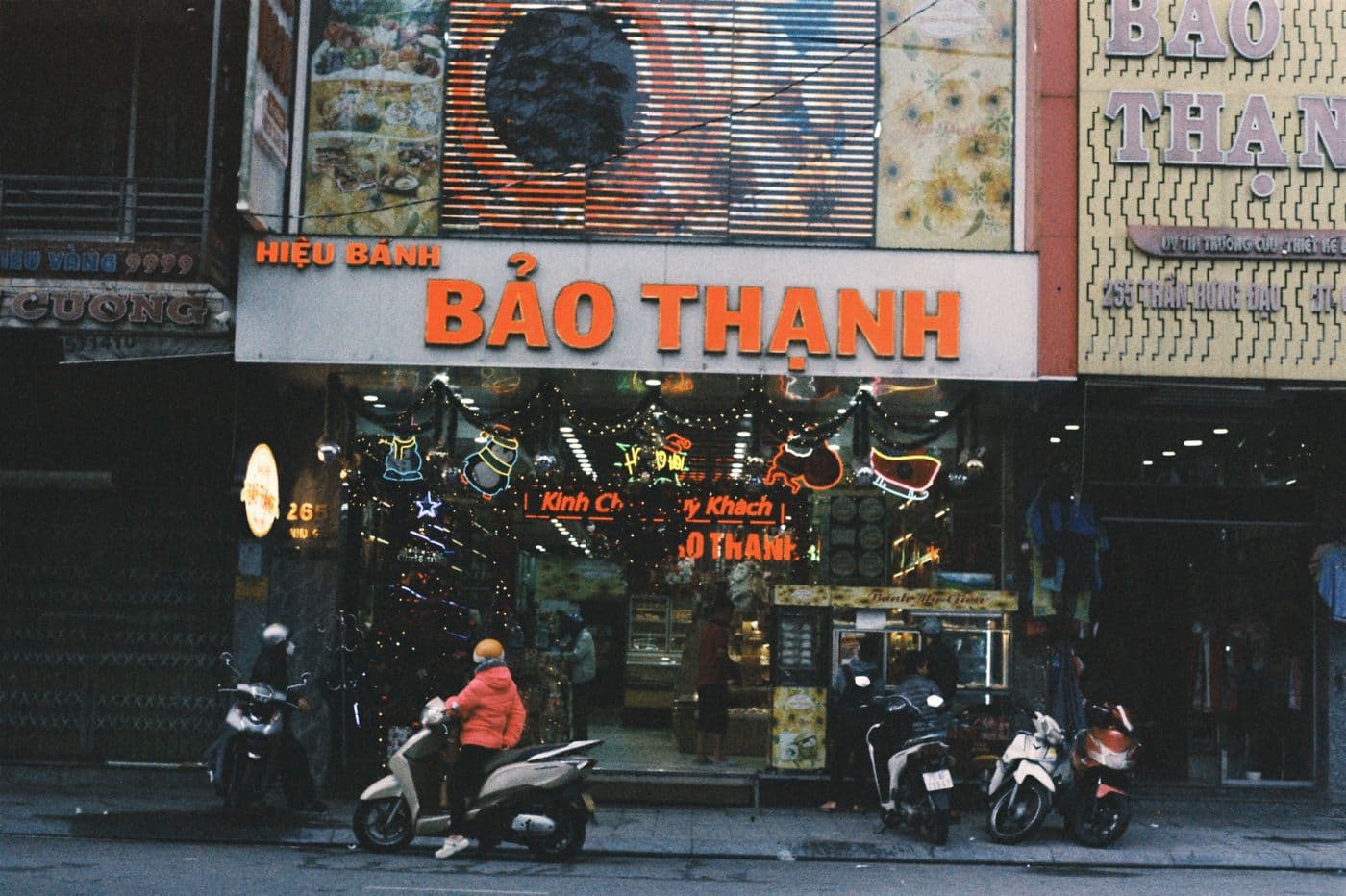
There is one official language, Vietnamese, or tiếng Việt. Most of the population speaks it natively, and it runs everything: government, schools, television, signage. The writing system is Latin-based and called chữ Quốc ngữ, "script of the national language." Vietnam did use Chinese characters once, but they have long since dropped out of everyday use.
The alphabet has 29 letters. Four familiar ones are missing entirely: F, J, W and Z show up only in loanwords and brand names. In exchange you get seven letters English does not have: ă â ê ô ơ ư đ. The first six are vowels with a modified sound. The last is a consonant pronounced like an English "d", while the bare d sounds nothing like it.
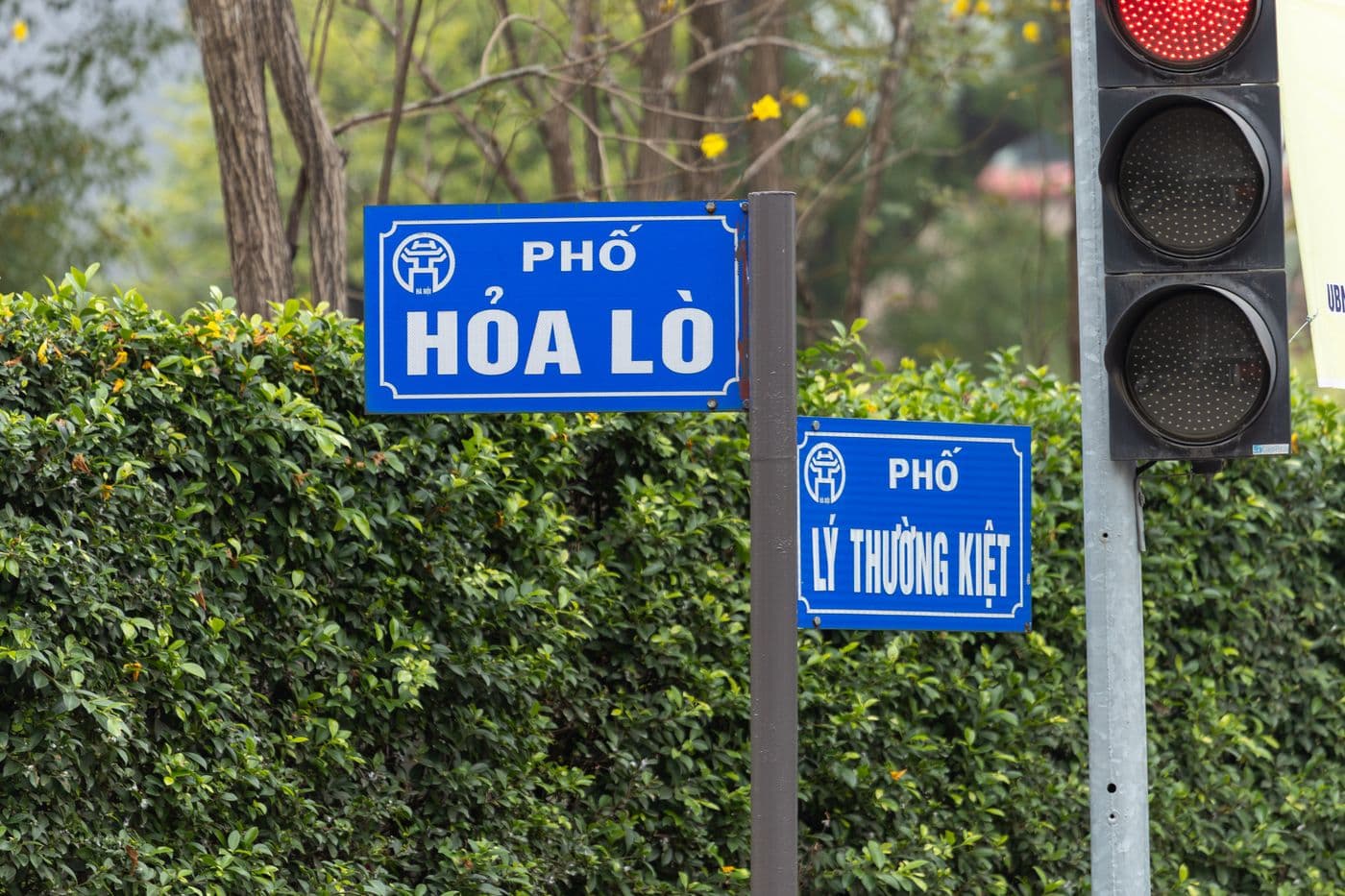
The marks stack in two separate layers, and mixing them up matters. One layer changes the vowel itself: ơ is not o, it is a different sound entirely. The second layer carries the tone: à á ả ã ạ. Both can sit on a single letter at once, which is how you get ế, ộ and ữ, and why Vietnamese text looks intimidating in photographs.
One practical conclusion outweighs all the theory. A Vietnamese word can be copied. Hotel address, dish name, street, bus stop: type it into your phone, point at the screen, and the other person reads it without you pronouncing anything. In a character-based country that trick does not exist.
Here is how the places travellers actually go are written:
| In English | How it is written | Worth knowing |
|---|---|---|
| Hanoi | Hà Nội | Capital, north |
| Ho Chi Minh City | TP. Hồ Chí Minh | Everyone says Sài Gòn, and that is what stations and tickets use |
| Da Nang | Đà Nẵng | Starts with that đ |
| Nha Trang | Nha Trang | The one major name with no diacritics |
| Hoi An | Hội An | Two words |
| Phu Quoc | Phú Quốc | Island |
| Mui Ne | Mũi Né | The everyday name of the resort; Phan Thiết has not been an administrative unit since the 2025 reform |
| Da Lat | Đà Lạt | Mountains |
A ticket booked to "Nha Trang" and one booked to "Nhà Trang" are not the same string; the second literally means "Trang's house." Diacritics are not decoration.
The honest downside is worth stating early. Words are short, often single-syllable, and in speech they blur into a stream where you cannot tell where one ends and the next begins. Reading is far easier than listening. That does not change after a month in the country.
Where English actually works in Vietnam, and where it stops
Vietnam scored 500 on the EF English Proficiency Index 2025, placing 64th out of 123 countries and sitting in the "moderate proficiency" band. That is above the global average of 488, and one band up from the previous year's 498. Within Asia the country ranks 7th of 25, ahead of Indonesia, China, Laos and Cambodia.
The city breakdown is more useful than the national number:
| City | EF EPI 2025 score | Rank in Vietnam |
|---|---|---|
| Hanoi | 532 | 1 |
| Nha Trang | 517 | 2 |
| Da Nang | 509 | 3 |
| Ho Chi Minh City | 508 | 4 |
| Hai Phong | 506 | 5 |
Scores tell you the average, not your experience. What determines whether English works is the situation, not the city.
Where English reliably works:
- airports, check-in desks, immigration
- chain hotels rated 4–5 stars and hostels aimed at foreigners
- Grab, where the entire transaction happens in the app and you never speak at all
- banks and exchange counters in tourist districts
- the tourist quarters of Hoi An, Ho Chi Minh City and Hanoi
- dive centres, tour desks, international clinics
- anything with a QR-code menu, which is increasingly everything in cities
Where it does not:
- markets outside the tourist strip
- bus stations and train ticket windows
- a neighbourhood pharmacy, nhà thuốc, away from the seafront
- police stations and any government office
- the shop that fixes your scooter
- street food stalls with no written menu
- anywhere in the mountains, the Mekong Delta villages, or a provincial town nobody flies to
The pattern is straightforward: English follows tourist money. One turn off the main strip and it evaporates. That is not a complaint about Vietnam, it is how second languages work everywhere, but it catches out travellers who spent three days in Hoi An and assumed the whole country runs that way.
Transport is the easiest problem to solve: with Grab the destination and the fare are fixed in the app before the driver arrives, so no shared language is required in either direction.
One piece of trivia that confuses first-time visitors. In Nha Trang and Mui Ne you will see menus, shopfronts and tour boards in Russian, sometimes more of them than in English. Those two towns built their tourism on charter flights from Russia in the 2010s, and the language stuck to the service industry there. It has no bearing on your trip, but it explains the Cyrillic.
Six tones without the linguistics
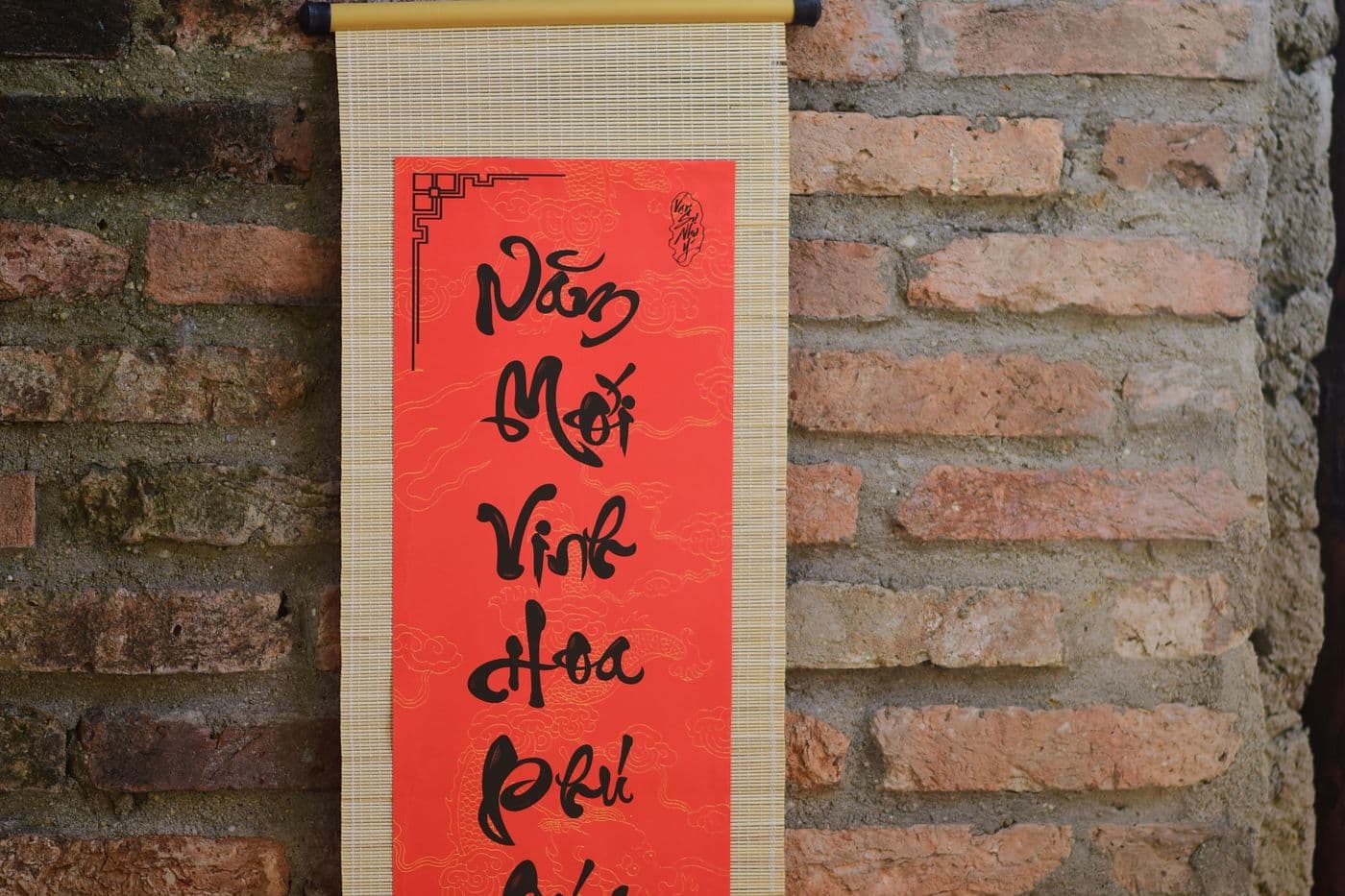
A tone in Vietnamese changes the word itself, not the mood of the sentence. The same string of letters said six different ways gives six unrelated words. The north uses six tones; the south uses five, because two of them merged.
The classic demonstration is the syllable ma:
| Written | What your voice does | Everyday equivalent | Meaning |
|---|---|---|---|
| ma | Flat, mid-pitch | A steady dial tone | Ghost |
| mà | Falls smoothly | A tired "hmm" | But, yet |
| má | Rises sharply | A surprised "huh?" | Mother, cheek |
| mả | Dips then rises | A doubtful "weeell…" | Grave |
| mã | Rises with a break in the middle | A hiccup mid-word | Horse |
| mạ | Drops short and hard | A clipped "stop" | Rice seedling |
Read the third column out loud. That is roughly the tone system: not musical intervals, but familiar intonations that in English carry emotion and in Vietnamese carry meaning.
Now the honest part. Your tones will not be right after a week, or two. The ear takes months and the muscles take longer. That is not a reason to skip trying.
A Vietnamese listener reconstructs meaning from context exactly the way you decode someone with a heavy accent. In a café with the menu in front of you and your finger on a line, tone is irrelevant. At a market stall with the item in your hand, likewise.
Where there is no context, tone decides:
- An address spoken to a driver. Street names are distinguished by tone alone. Show the map instead.
- Numbers. Getting a tone wrong on a number costs money. Use the calculator app.
- Names. A Vietnamese name without tones is just noise. Ask people to write it down.
The famous case is phở. English speakers say "fuh" or "foe", flat and short. The original has the vowel ơ, which does not exist in English, plus the hỏi tone that dips and climbs. The result lands somewhere between "fuh" and "fur" with a falling-rising curve. You will still get your soup, because nobody orders anything else at seven in the morning, but "pho" and the written word only partly overlap. More on the dish itself in our pho bo guide.
The takeaway for a two-week trip: the goal is not to sound correct, it is to be understood. A badly pronounced cảm ơn beats silence. A perfect one changes nothing else about your day.
Fast Track — no queue at the border
5–10 minutes instead of an hour in the immigration queue
from$11per passenger
30 phrases that actually get used

Sorted by situation rather than alphabetically, in roughly the order you will need them. Three columns: English, the Vietnamese with full diacritics, and an approximate respelling.
The Vietnamese column is the one that matters. You can show it from your screen and it will be read correctly without your pronunciation involved at all.
Hello and thank you
| English | Vietnamese | Say it like |
|---|---|---|
| Hello (works anywhere) | Xin chào | sin chow |
| Hi, to a man 25–50 | Chào anh | chow ang |
| Hi, to a woman 25–45 | Chào chị | chow chee |
| Hi, to someone younger | Chào em | chow em |
| Thank you | Cảm ơn | gahm uhn |
| Thanks a lot | Cảm ơn nhiều | gahm uhn nyew |
| Sorry, excuse me | Xin lỗi | sin loy |
| Please | Làm ơn | lahm uhn |
| Yes | Vâng (north) / Dạ (south) | vung / yah |
| No | Không | khome |
| Goodbye | Tạm biệt | tahm bee-yet |
Xin chào is polite and slightly formal, the phrasebook standard. In real life people mostly drop the xin and attach an address term: chào anh, chào chị. The difference is roughly "good afternoon" versus "hey, Tom" — the second is warmer.
Không will be the word you hear most. It means "no", it means "not", and stuck on the end of a sentence it turns the sentence into a question. Cay không? means "spicy?"
Market and haggling
| English | Vietnamese | Say it like |
|---|---|---|
| How much? | Bao nhiêu tiền? | bow nyew tee-en |
| Too expensive | Đắt quá (north) / Mắc quá (south) | dat kwah / mak kwah |
| Can you go lower? | Giảm giá được không? | zam zah duhk khome |
| I'll take this one | Tôi lấy cái này | toy lay kai nai |
| No thanks | Không, cảm ơn | khome, gahm uhn |
A word about numbers. Prices are quoted out loud in thousands: "one twenty" means 120,000 VND (~$4.60). Nobody says the zeros. When in doubt, ask them to type it on a calculator; every stallholder keeps one within reach for exactly this reason.
Opening prices at tourist markets typically run two to three times the real one. A T-shirt quoted at 300,000 VND (~$11.50) settles at 120,000–150,000 VND (~$4.60–5.80). Saying Đắt quá with a straight face and taking one step away from the stall moves the price faster than any argument.
Ten digits deserve their own table, because half of all everyday exchanges rest on them:
| Digit | Vietnamese | Say it like |
|---|---|---|
| 1 | một | moht |
| 2 | hai | hai |
| 3 | ba | bah |
| 4 | bốn | bohn |
| 5 | năm | nahm |
| 6 | sáu | sow |
| 7 | bảy | bye |
| 8 | tám | tahm |
| 9 | chín | cheen |
| 10 | mười | muh-ee |
Three more words cover the units: trăm (hundred), nghìn (thousand, ngàn in the south) and triệu (million). "One hundred and twenty thousand" is formally một trăm hai mươi nghìn, but everyone shortens it to trăm hai. If you hear hai trăm, someone is asking for 200,000 VND (~$7.70), not two hundred dong.
Café and food
| English | Vietnamese | Say it like |
|---|---|---|
| Menu, please | Cho tôi xem thực đơn | cho toy sem thuck duhn |
| This one, please | Cho tôi cái này | cho toy kai nai |
| I'm vegetarian | Tôi ăn chay | toy ahn chai |
| No meat | Không thịt | khome thit |
| Not spicy | Không cay | khome kai |
| No coriander | Không rau mùi / Không ngò | khome zau mooy / khome ngaw |
| No ice | Không đá | khome dah |
| The bill, please | Tính tiền | ting tee-en |
| Delicious | Ngon quá | ngon kwah |
The four không phrases in that block are worth more than everything else combined. Không cay saves anyone who cannot handle chilli. Không rau mùi saves the people to whom coriander tastes like soap, which is genetics rather than fussiness. Không thịt matters because "vegetarian" in Vietnam often still includes fish sauce, so name the thing you are avoiding.
One note on Tính tiền. Change comes back down to the last thousand and leaving it on the table is not expected: tipping is not customary at cafés and street stalls, while restaurants often add a service line (S/C) to the bill, so check the receipt.
Ngon quá is worth learning for the reaction rather than the meaning. Said at the counter of a street kitchen it often earns a smile from the cook. What to order without regret is covered in our street food guide.
Taxi, Grab, getting around
| English | Vietnamese | Say it like |
|---|---|---|
| Take me here (show the address) | Cho tôi đến đây | cho toy den day |
| Turn on the meter | Bật đồng hồ | but dong ho |
| Stop here | Dừng ở đây | zung uh day |
| Where is the toilet? | Nhà vệ sinh ở đâu? | nya veh sing uh dow |
Bật đồng hồ only applies to street taxis flagged down by hand. Grab has no meter; the price is locked before you get in. If a metered taxi driver refuses to switch it on and quotes a flat fare instead, that is either reasonable (airport run, late night) or a setup. Sensible fare benchmarks are in our taxi and Grab breakdown.
Pharmacy, doctor, police
| English | Vietnamese | Say it like |
|---|---|---|
| I'm sick | Tôi bị ốm / Tôi bị bệnh | toy bee ohm / toy bee benh |
| My stomach hurts | Tôi đau bụng | toy dow boong |
| Pharmacy | Nhà thuốc | nya thuok |
| Help! | Cứu tôi! | koo toy |
| Call the police | Gọi công an | goy kong an |
| I don't understand | Tôi không hiểu | toy khome hyew |
| Do you speak English? | Bạn có nói tiếng Anh không? | ban ko noy tee-eng ang khome |
Learn nhà thuốc by sight rather than by sound: that is the green lettering on pharmacy signs nationwide. Vietnamese pharmacies dispense almost anything without a prescription, antibiotics included, even though by law they need one, and that is a risk rather than a convenience. What to do about food poisoning, bites and road accidents sits in our safety guide.
That is thirty-six lines in total. You do not need all of them. Six do the real work: chào anh/chị, cảm ơn, bao nhiêu tiền, đắt quá, không cay and tính tiền. Screenshot the rest.
Who is "you"? Addressing people by age
Vietnamese has no neutral "you". Instead it uses kinship terms chosen by the age and gender of the person in front of you: older brother, older sister, aunt, uncle. The same word also stands in for "I".
| Term | Who it is for | Literally |
|---|---|---|
| anh | A man slightly older, or your age | Older brother |
| chị | A woman up to about 45 | Older sister |
| em | Anyone clearly younger than you | Younger sibling |
| cô | A woman around your mother's age | Aunt |
| chú | A man around your father's age | Uncle |
| bạn | A peer, neutral | Friend |
Plurals take the particle các: chào các anh means "hello, all of you."
For a trip, two words are enough. Anh and chị cover waiters, drivers, vendors and receptionists. Em fits the obviously young: students, twenty-year-old servers.
The rule when you cannot judge: erring older is polite, erring younger is not. Calling a forty-year-old woman chị is normal. Calling her em stings.
This matters more than tones, and here is why. A wrong tone makes you unintelligible, so the other person just asks again. A wrong address term makes you rude, and nobody asks again; the conversation simply cools and you never learn why.
North and south speak differently
Vietnam has three dialect zones: northern around Hanoi, central around Hue, southern around Saigon. The difference is audible immediately, and it goes past accent into vocabulary.
Sounds:
| Letter | North (Hanoi) | South (Saigon) |
|---|---|---|
| v | [v] | [y]: vào sounds like "yao" |
| d, gi | [z] | [y]: dạ is "yah", not "zah" |
| r | [z] | Rolled [r] |
| s | [s] | [sh] |
| tr | [ch] | [tr] |
| Tones | Six | Five: hỏi and ngã merged |
Words:
| What it is | North | South |
|---|---|---|
| Bowl | bát | chén |
| Spoon | thìa | muỗng |
| Glass | cốc | ly |
| Pork | thịt lợn | thịt heo |
| Pineapple | dứa | thơm |
| Corn | ngô | bắp |
| Coriander | rau mùi | ngò |
| Plastic bag | túi ni lông | bịch ni lông |
| Expensive | đắt quá | mắc quá |
| Dad | bố | ba |
Now the trap that catches anyone who prepared before flying. Most language apps teach the northern variety. Duolingo, the majority of audio courses, most phrasebooks with recordings: all Hanoi, because the north is treated as the literary standard. The English Wikivoyage phrasebook is a notable exception and uses southern pronunciation throughout, which is worth knowing before you cross-reference two sources and conclude one of them is wrong.
The fix is not to relearn anything. Keep both versions of four high-traffic words: expensive, spoon, pork, coriander. That is enough to be understood in Hanoi, Nha Trang and Phu Quoc alike.
There is a useful side effect. The north-south split also explains the food: one dish carries two names and two recipes depending on latitude, which is exactly what we unpack in the Vietnamese cuisine guide and in the piece on nem and spring rolls, where northern nem rán and southern chả giò are effectively the same thing under different names.
Translation apps: what to install before you fly
Google Translate with the Vietnamese offline pack covers the overwhelming majority of situations. The operative word is offline: download the pack before you fly, on decent wifi, not at the arrivals hall on 3% battery.
| Tool | Does well | Where it breaks |
|---|---|---|
| Google Translate + offline pack | Text, camera, voice, conversation mode | Camera cannot read handwriting; voice degrades noticeably without a connection |
| Google Lens in Maps | Signs, labels, notices | Needs internet |
| Zalo | Messaging hotels, delivery riders, mechanics | Not a translator at all |
| Papago / DeepL | Cleaner text output on longer passages | No camera mode for Vietnamese worth relying on |
Zalo deserves more attention than it gets from arrivals. It is Vietnam's dominant messenger. Your hotel, the food delivery rider, the mechanic fixing your scooter and the private clinic will all message you on Zalo. It is free, signup is by phone number, and the interface is available in English. How to get a working number in the first place is covered in our guide to SIM cards and mobile internet.
The pre-departure checklist runs to four items and takes five minutes:
- Vietnamese offline pack in your translator. Verify it: switch on airplane mode and translate a word.
- Your hotel address in Vietnamese, not transliterated and not in English. 123 Nguyễn Thiện Thuật, Nha Trang, saved as a screenshot so it works with no signal.
- Zalo, installed and tied to a number.
- A screenshot of five to seven phrases from this page. When the battery dies and nothing loads, an image in your gallery is what saves you.
A note on voice mode. In a quiet café it performs well. On a roadside with a hundred scooters going past, the microphone picks up traffic and returns nonsense. Type instead when you are outdoors.
Everything else worth sorting before departure is in the first trip checklist and the packing list.



Why camera translation lies to you on menus

The camera is fine for working out the category of a dish and the price. It is useless for deciding whether to eat something. Vietnamese menus break optical translation in five separate ways, and half the failures look plausible, which is worse than obvious gibberish.
One: menus are written without diacritics. Signs and handwritten boards routinely say PHO BO, COM TAM, BUN CHA in capitals with no marks at all. Stripped of diacritics, a word loses its tone and part of its vowel quality. Nothing can reconstruct it unambiguously outside context.
Two: two marks on one vowel. In ế or ữ the marks stack, and fonts disagree about how. Some print them one above the other, others shift the tone mark sideways. Optical recognition handles those pairs unreliably even in clean print.
Three: chalk and script fonts. Camera translation is built for printed text. A hand-lettered board outside a street kitchen does not resolve at all.
Four: prices are abbreviated. "45" on a menu means 45,000 VND (~$1.70). Sometimes it is written "45k", sometimes "4.5" meaning forty-five thousand. Translating the words does nothing to explain the convention, and travellers hand over the wrong note.
Five, and most important: dish names are proper nouns. The machine takes them apart and translates the pieces. Sometimes that is funny. Sometimes it is dangerous.
| On the menu | What the camera says | What it actually is | How much it matters |
|---|---|---|---|
| tiết canh | "Soup", "pudding" | Raw pig or duck blood with minced meat | Critical |
| trứng vịt lộn | "Duck eggs" | Balut: an egg with a developed embryo | High |
| nem chua | "Sour spring rolls" | Fermented raw pork | Medium |
| bò tái | "Beef" | Raw beef, cooked by the hot broth | Medium |
| lòng lợn, lòng heo | "Pork heart", "pig gut" | Mixed offal platter | Medium |
| óc heo | "Brain" | Pig brain, often in soup | Medium |
| mắm tôm | "Shrimp sauce" | Fermented shrimp paste, extremely pungent | Medium |
| chân gà | "Chicken legs" | Chicken feet | Low |
| thịt chó, thịt cầy | "Dog meat", or nothing | Dog meat; the second name usually goes untranslated | High |
| cơm tấm | "Bran rice", "broken rice" | Rice from fractured grains, a staple southern lunch | False alarm |
| bò né | "Beef dodges" | Beef on a sizzling skillet, so you dodge the splatter | Nonsense |
| gà ta | "Our chicken" | Free-range local breed, pricier than battery chicken | Nonsense |
Read the table again and you will spot two opposite failures. At the bottom the camera frightens you where there is nothing to fear: cơm tấm and its "bran rice" is a plate of rice with a grilled pork chop, the most ordinary lunch in southern Vietnam. At the top it reassures you exactly where it should not.
Nem chua needs a word of its own. It is raw pork, fermented but never cooked. A hygiene study of Hanoi producers found that natural fermentation does little to suppress pathogens, so treat it like any raw meat.
The second technique is to stop asking "what is this" and start pointing at the next table. Vietnamese people eat in the open, and pointing at someone's bowl with a questioning face is entirely functional communication.
Should you learn Vietnamese?

For a two-week trip, no. Thirty phrases and a phone will carry you, and the hours are better spent on the itinerary. For living here a year or more, yes, but for daily life rather than work: the market, the doctor, the neighbours, renting a scooter. Offices and clients will still run on English.
What is unexpectedly easy:
- no cases, no grammatical gender
- no verb conjugation whatsoever
- no tenses in the European sense; time is carried by words like "yesterday", "already", "soon"
- no articles
- Latin script, so you can read from day one
What is hard:
- tones, which are roughly half of the total difficulty
- listening, because single-syllable words run together
- the address system, which requires guessing ages on sight
On language families: Vietnamese is Austroasiatic, in the Vietic branch. Chinese is Sino-Tibetan. They are not related, despite an estimated third to 60% of Vietnamese vocabulary being Chinese loanwords accumulated over a thousand years of proximity. The relationship resembles English and French: heavy borrowing, different languages. Thai is not a relative either; both are tonal, and that is the whole overlap.
Realistic timelines. Conversational survival (buy things, ask directions, describe a symptom, negotiate a rental) takes three to six months with a teacher twice a week. Fluency takes years, and the bottleneck is listening rather than grammar, of which there is almost none. Apps give you vocabulary and a northern accent but do not train your ear; a tutor from the city you actually live in beats any course.
The honest downside nobody puts in the brochure: English pays off faster in Vietnam than Vietnamese does. It opens jobs, international clinics, agency rentals and the expat network. Vietnamese opens warmth from your neighbours and a better price at the market. Both are worth something; do not confuse them.
Five mistakes almost everyone makes
Learning "hello" and not learning "how much". You will say a greeting once per encounter and bao nhiêu tiền twenty times a day. Start with money and pick up the manners later.
Assuming an English menu means an English-speaking server. Menus get printed once and kept for years; staff turn over every season. Point at the line, do not read it aloud.
Installing the translator after landing. Arrivals halls have queues, not bandwidth. Download the offline pack at home.
Speaking an address out loud. Vietnamese addresses do not survive being said without tones. Show the written string: on screen, on the hotel card, in a screenshot.
Trusting camera translation on a menu. Category and price, yes. Ingredients and "is this safe", no.
FAQ
No, they belong to different families: Vietnamese is Austroasiatic, Chinese is Sino-Tibetan. The confusion has two sources. By various estimates, between a third and 60% of Vietnamese vocabulary consists of Chinese loanwords absorbed over a millennium of contact, and both languages are tonal. Grammar, script and sound are otherwise unrelated: Vietnamese uses the Latin alphabet, Chinese uses characters.
Six in the north, five in the south, where the hỏi and ngã tones merged. Travellers do not need to master them. In cafés, shops and markets the listener reconstructs meaning from context the way you understand a heavy accent. Tones become critical only without context: an address spoken aloud, a number, a name. In those cases show the written form instead.
The grammar is genuinely easy: no cases, no genders, no conjugation, no tenses in the European sense, and a Latin alphabet you can read on day one. The difficulty is concentrated in tones and in listening comprehension, where short syllables blur together. Expect three to six months of twice-weekly lessons to reach survival level, and years for fluency.
Yes, comfortably, in the main destinations. Grab handles transport entirely in-app, hotels and tourist-district restaurants operate in English, and QR-code menus translate reliably. Difficulty appears in provincial towns, at bus stations, in neighbourhood pharmacies and at markets away from the tourist strip. An offline translation pack plus thirty phrases closes most of that gap.
Barely, despite the colonial history. French survives in the architecture, the coffee culture and a handful of loanwords such as ga (station, from gare) and bơ (butter, from beurre). Speakers are mostly over eighty or graduates of the French lycées in Hanoi and Ho Chi Minh City. English is more useful in every practical situation.
Chúc mừng năm mới, roughly "chook mung nahm moy", works for both the Gregorian and the lunar new year. The second matters far more: Tet is the country's biggest holiday and most of the economy closes for it. People usually add wishes for health and prosperity, but the one phrase alone earns a genuine smile.
Yes, provided you download the language pack in advance. Google Translate and most alternatives translate text without a connection, and Google additionally supports offline camera mode. Accuracy drops compared with online, but it holds up for menus and signs. Download before departure: roaming and hotel wifi make the process slow and unreliable.
Data current as of September 2026. Rankings, prices and app feature sets change — check the official sources before you travel.
Read also: First trip checklist · SIM and internet · Street food · Grab and taxis
- Preparation
Healthcare in Vietnam for Expats 2026: Insurance and Costs
What health costs an expat in Vietnam per year: BHYT at 4.5% of salary, private plans $200-1,500, check-ups from $100, evacuation up to $50,000.Healthcare in Vietnam for Expats 2026: Insurance and Costs - Preparation
Vietnam Residence Card (TRC): Who Can Get One & How
Vietnam's temporary residence card (TRC): who qualifies via work, marriage or investment, the 1–10 year terms, the process, documents and cost.Vietnam Residence Card (TRC): Who Can Get One & How - Preparation
Travel Insurance for Vietnam: What to Cover & Where
Travel insurance for Vietnam: why you need it, what to cover (medical evacuation, motorbikes), where to buy, how much and how to make a claim.Travel Insurance for Vietnam: What to Cover & Where