
Ho Chi Minh City vs Hanoi for living in 2026
Hanoi is Vietnam's capital, but Ho Chi Minh City produces almost a quarter of the country's GDP. Since it absorbed two neighbouring provinces in 2025, Saigon is a city of about 14 million people, roughly eight million motorbikes and a brand-new metro line that took 12 years to build and opened on 22 December 2024. Hanoi runs on a different clock. Winter nights drop to 10 °C, Hoan Kiem Lake fills with tai chi at dawn, and most of the city is asleep by 10pm. Same country, two different planets.
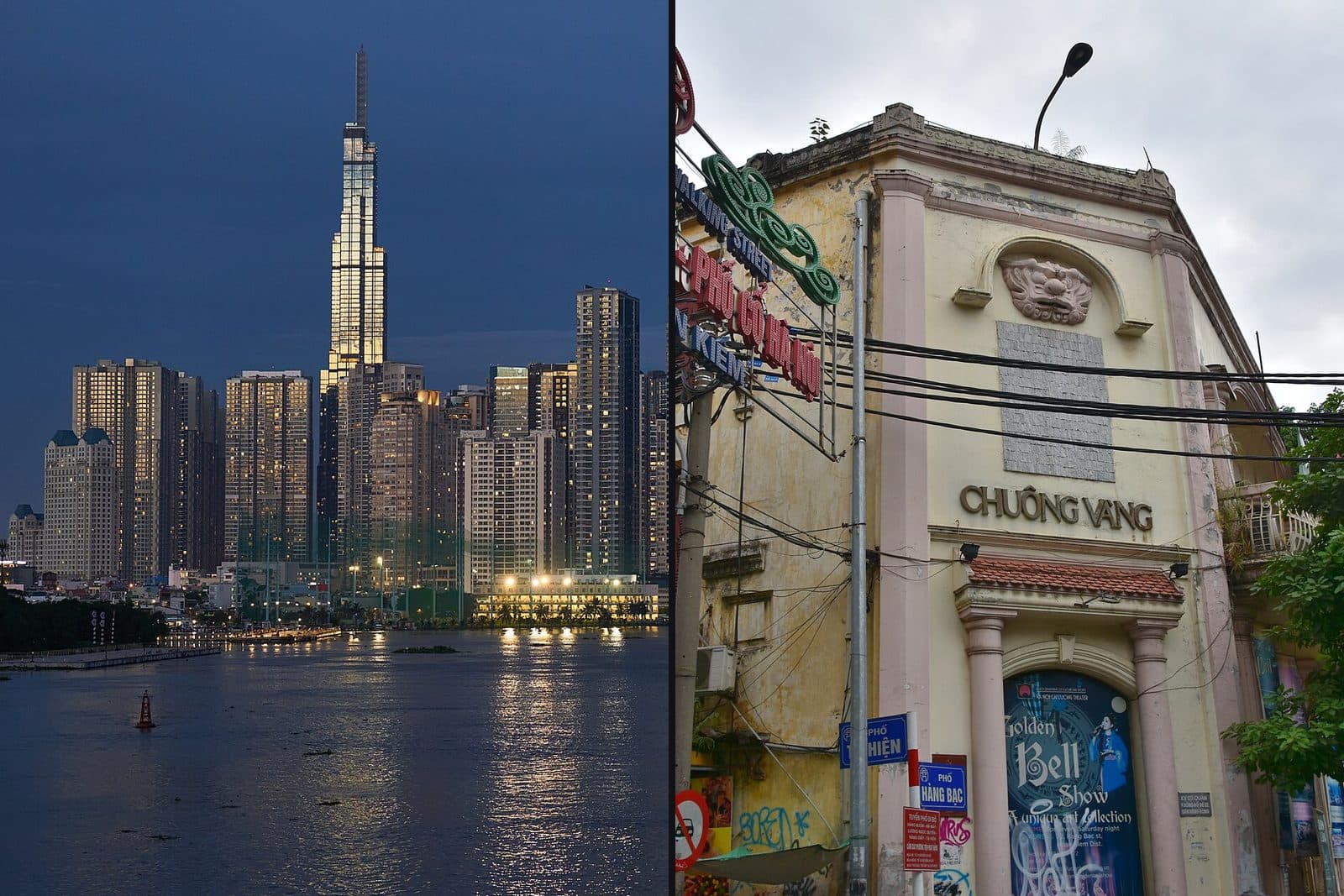
If you're choosing where to fly for two weeks, where to spend a winter working remotely, or where to base yourself for a longer stay, this comparison is built to settle it. Prices are in dong with dollar equivalents at about 25,000 VND to $1, drawn from Numbeo, Vietnam's statistics office, current airfares and our own time in both cities. If you need the city itself rather than the comparison, start with our Ho Chi Minh City guide.
A note before the tables. On 1 July 2025 Vietnam abolished its city districts. Ho Chi Minh City also merged with Binh Duong and Ba Ria–Vung Tau provinces. Everyone still says "District 1" or "D2", and so do rental listings and Grab drivers, but official addresses now use new wards. We use the familiar names because that's what people search for, and give the new ones where they help.
"The abolition of the district system means that familiar names and places in HCMC – think bustling central 'District 1' and 'District 3' – no longer exist on paper." post-merger guide to Ho Chi Minh City, Vietcetera, 2025
Ho Chi Minh City vs Hanoi in one table
In short: Ho Chi Minh City is the economic engine, tropical all year, with the new metro. Hanoi is the historic and political capital, with four seasons and lower prices. Here's the split across 13 points.
| Point | Hồ Chí Minh (HCMC, Saigon) | Hà Nội (Hanoi) |
|---|---|---|
| Location | South, Mekong Delta edge | North, Red River Delta |
| Population | ~14 million (after the 2025 merger) | ~8.7 million |
| Area | 6,772 km² (since 2025) | 3,359 km² |
| Climate | Tropical, two seasons | Subtropical, four seasons |
| Winter (Dec–Feb) | 25–30 °C, dry | 10–18 °C, drizzle |
| Share of national GDP | ~23% (merged city) | ~13% |
| Airport to centre | Tân Sơn Nhất (SGN), 6 km | Nội Bài (HAN), 30 km |
| Passengers, 2024 | ~42 million (No. 1 in Vietnam) | ~30 million |
| Metro | Line 1, opened 22 Dec 2024 | 2 lines, since 2021 and 2024 |
| Landmark tower | Landmark 81, 461 m | Lotte Center, 272 m |
| Central studio rent | $400–700 a month | $300–500 a month |
| Style | Megacity, business, nightlife | History, food, slower pace |
| Nearest sea | Vung Tau, inside city limits since 2025, ~2 h | Ha Long Bay, 2.5–3.5 h |
The one-line version: for energy, 28 °C all year and business infrastructure, pick Ho Chi Minh City. For a thousand years of history, lower costs and real seasons, pick Hanoi. The details follow section by section, with a verdict for 14 kinds of traveller at the end.
Getting there: flights, airports and moving between them
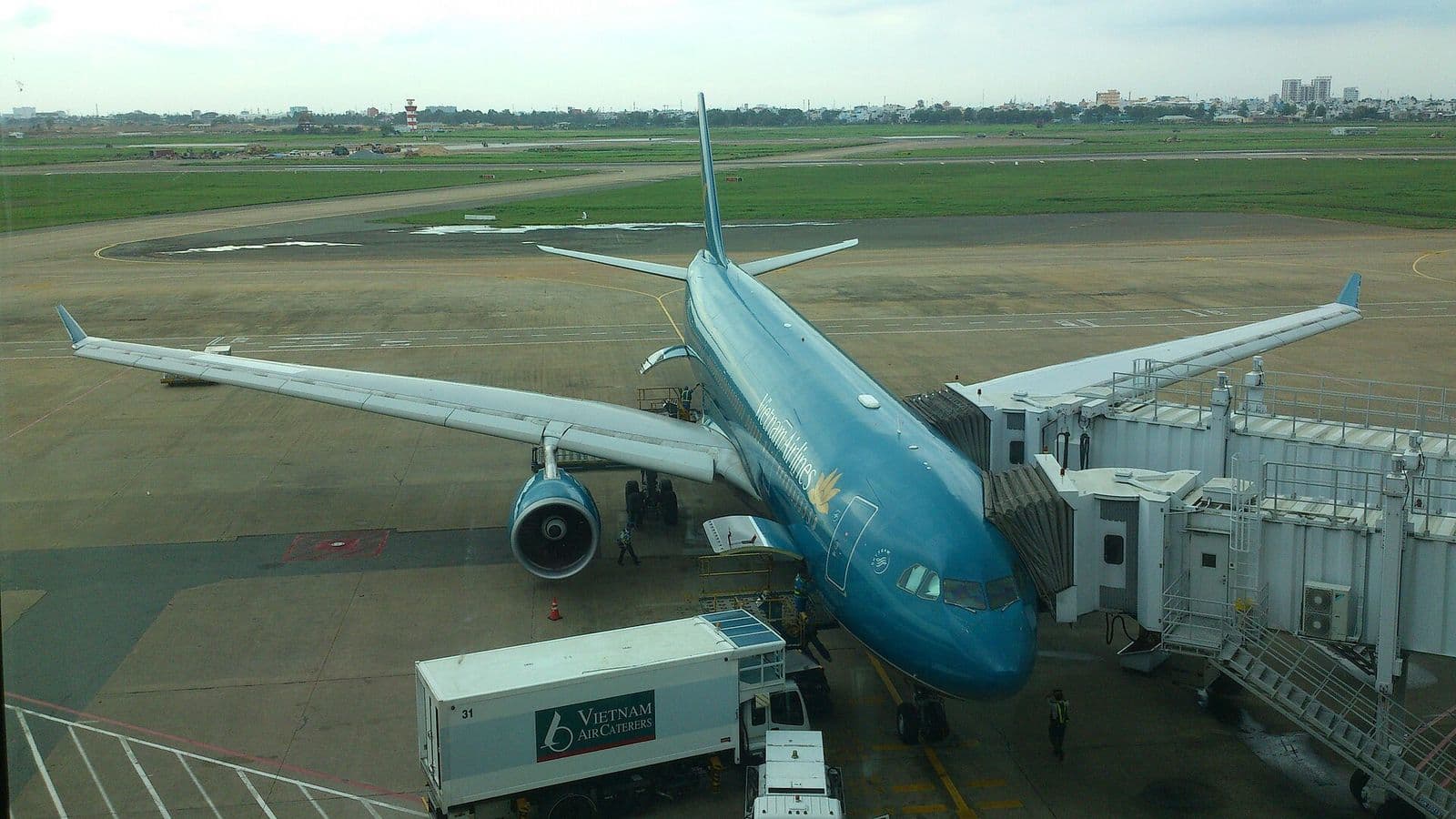
Both cities are major international gateways. Ho Chi Minh City has more long-haul and regional connections; Hanoi is the better entry point for the north and for flights from China and Korea. Between the two, a flight takes about 2 hours and a train about a day and a half. Routes and airlines into the south are in our Ho Chi Minh City flights guide.
Flying in from abroad
| Point | Ho Chi Minh City (SGN) | Hanoi (HAN) |
|---|---|---|
| Typical hubs | Bangkok, Singapore, Kuala Lumpur, Seoul, Doha, Dubai, Istanbul | Bangkok, Seoul, Tokyo, Doha, Dubai, Istanbul |
| Direct long-haul | Europe, Australia, the Gulf | Europe, the Gulf |
| Airport to centre | 6 km | 30 km |
| Grab car to centre | 15–25 min, 150,000–250,000 VND (~$6–10) | 45–60 min, 300,000–400,000 VND (~$12–16) |
| Time zone | UTC+7 | UTC+7 |
The big advantage of Saigon for an arriving long-haul passenger is the transfer. Tân Sơn Nhất is about six kilometres from the old District 1, which makes it one of those rare megacity airports that is effectively inside the city. You walk out, get a Grab and are at the hotel desk twenty minutes later. From Nội Bài to Hanoi's Old Quarter, rush hour can stretch the ride to an hour and a half.
Between the two cities: plane, train or bus
Three options for three kinds of trip.
- Plane. Vietnam Airlines, VietJet and Bamboo fly the route roughly every hour. About 2 hours in the air, one way from 1,200,000 VND (~$48). The obvious choice if you just want to tick off both cities.
- The Reunification Express train. The classic run down the length of the country, 32–37 hours, sleeper berths from 1,200,000 VND (~$48). Central-coast beaches out of the window, noodle carts at every long stop. Booking and which berth to pick are in our Reunification Express guide.
- Sleeper bus. 38–42 hours, from 600,000 VND (~$24). Cheapest, most tiring, for backpackers with time to burn.
Climate: why Saigon wins the winter
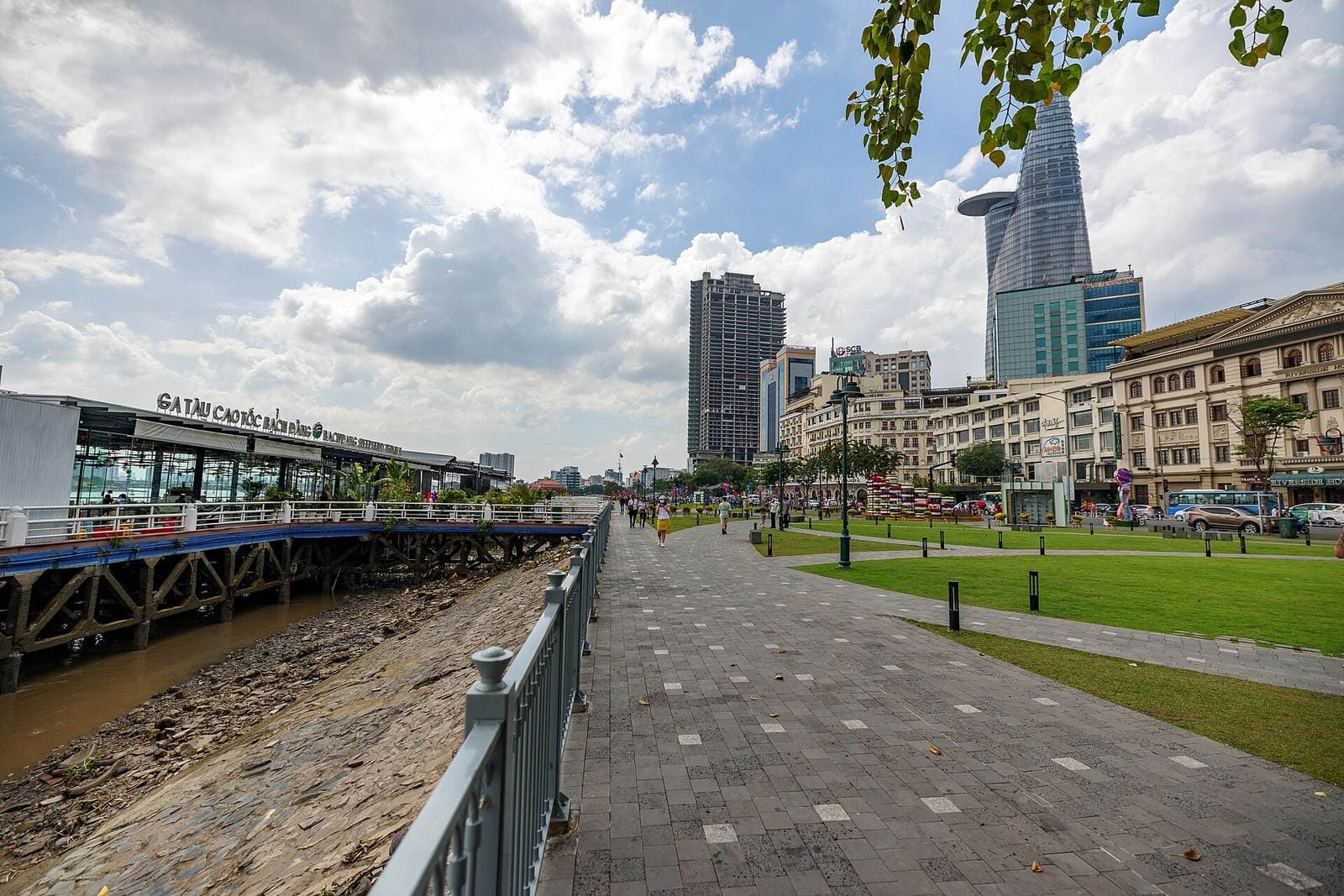
Ho Chi Minh City averages about 27.5 °C year round and has two seasons, dry and wet. Hanoi has four, and in winter it can sit at 10 °C in grey drizzle. If you're escaping a northern winter the answer is simple: November to March, go south. October to April, Hanoi works too. In high summer, both are hard work.
Month by month
| Month | HCMC, °C | Hanoi, °C | HCMC rain | Hanoi rain | Better choice |
|---|---|---|---|---|---|
| January | 27 | 16 | dry | dry, cool | HCMC |
| February | 28 | 18 | dry | drizzle | HCMC |
| March | 29 | 21 | dry | fog | either |
| April | 30 | 25 | dry | dry, warm | either |
| May | 29 | 28 | evening storms | showers | tricky |
| June | 28 | 30 | storms | storms, heat | off season |
| July | 28 | 30 | storms | peak heat | off season |
| August | 28 | 29 | storms | showers | off season |
| September | 28 | 28 | wettest | showers | off season |
| October | 28 | 25 | rain | dry | Hanoi |
| November | 28 | 21 | dry | dry | either |
| December | 27 | 18 | dry | dry, cool | HCMC |
Saigon's wet season is not the grey-all-day kind. It's usually a hard downpour around 4pm that washes the heat out of the air, and two hours later the streets are dry. Plenty of long-stayers find May and June in Saigon perfectly comfortable.
For a winter base, Saigon is the easy call
The gap between Ho Chi Minh City's coolest and hottest months is about 4 °C, one of the steadiest climates you'll find. For remote workers, families or retirees trying to dodge winter, that means a reliable 28 °C with no surprises.
Hanoi in January can have nights at 5 °C with a damp that gets into your bones faster than dry cold. Locals wear puffer jackets. Many Old Quarter hotels have no real heating, only an air-con unit on heat mode that dries your throat. Photos from Hanoi never show this, and people underestimate it every year.
That's why a February family trip to Hanoi so often ends in Saigon: people come for warmth, get 12 °C and drizzle, and fly south to finish the holiday. If your winter route isn't booked yet, start in the south.
Month by month in more detail: Ho Chi Minh City weather · Hanoi weather
Vibe: megacity versus slow capital
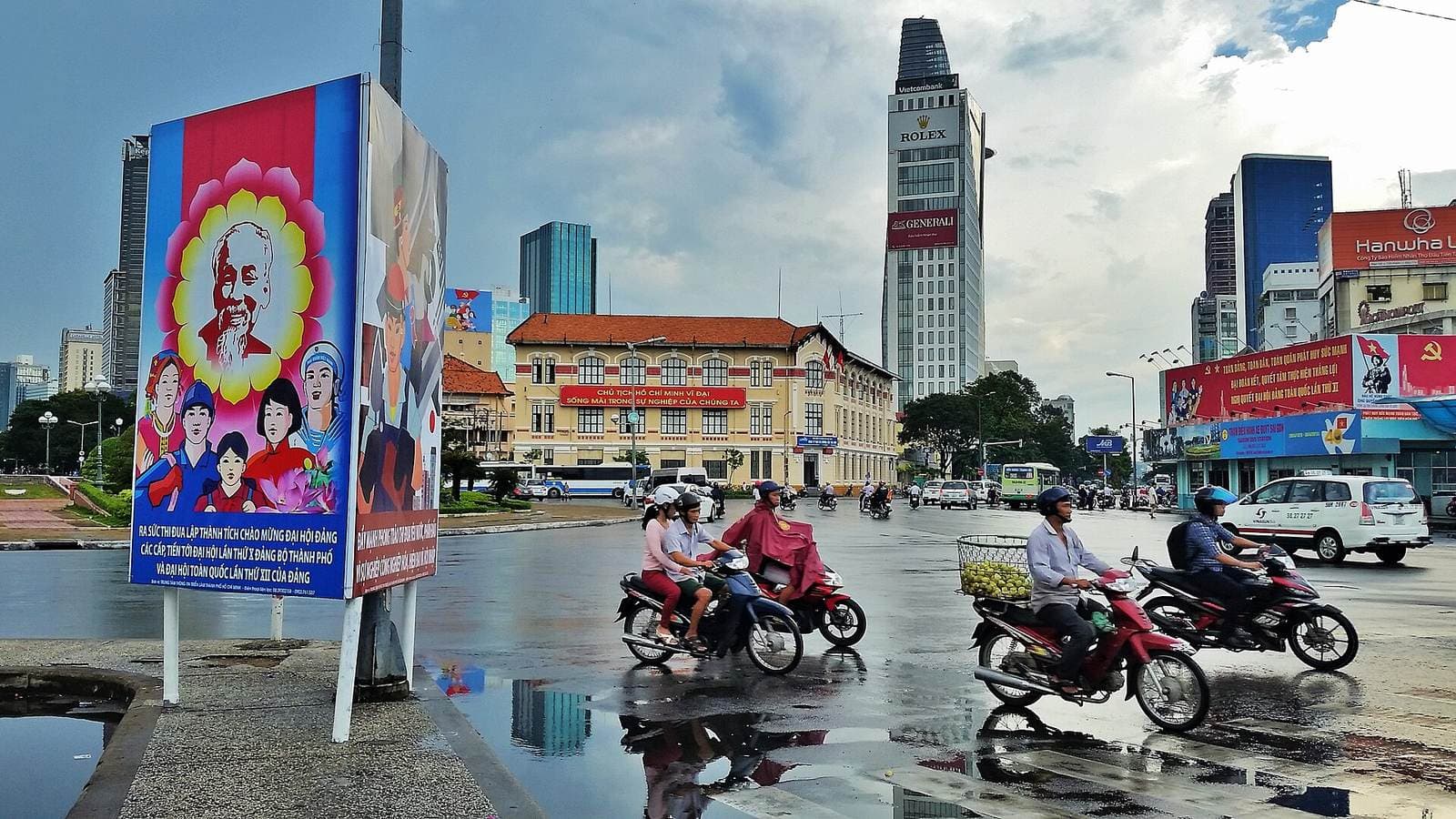
Ho Chi Minh City doesn't sleep. At midnight the Bến Thành roundabout is still a river of motorbikes, the old District 1 has all-night cafés and night markets, cocktails flow on the 49th floor of Bitexco, and on Saturday Bùi Viện turns into a 300-metre open-air club. Hanoi winds down around 10pm: the Old Quarter goes quiet and Hoan Kiem Lake is left to joggers and older couples doing tai chi. Neither is better. They're different ways to live.
Saigon's rhythm: 24/7 in three neighbourhoods
The old District 1 is pure global megacity: glass office towers, Korean baristas, engineers on laptops in chain coffee shops, digital nomads with oat-milk lattes. Bui Vien draws backpackers from everywhere, beer at 25,000 VND (~$1) and tourists dancing to whatever the bar next door is playing. Thảo Điền (old District 2, now the An Khánh ward) is the calmer side: Western cafés, yoga studios, international schools, and still ten minutes from the centre.
Rooftop bars are their own chapter. Chill Skybar on AB Tower, Social Club at Hotel des Arts, Saigon Saigon at the Caravelle (where war correspondents drank in the 1960s), EON Heli Bar at the top of Bitexco. Cocktails cost 250,000–400,000 VND (~$10–16); the skyline is free. Bars, clubs and opening hours are in our Ho Chi Minh City nightlife guide.
Hanoi's rhythm: tai chi, tea, long conversations
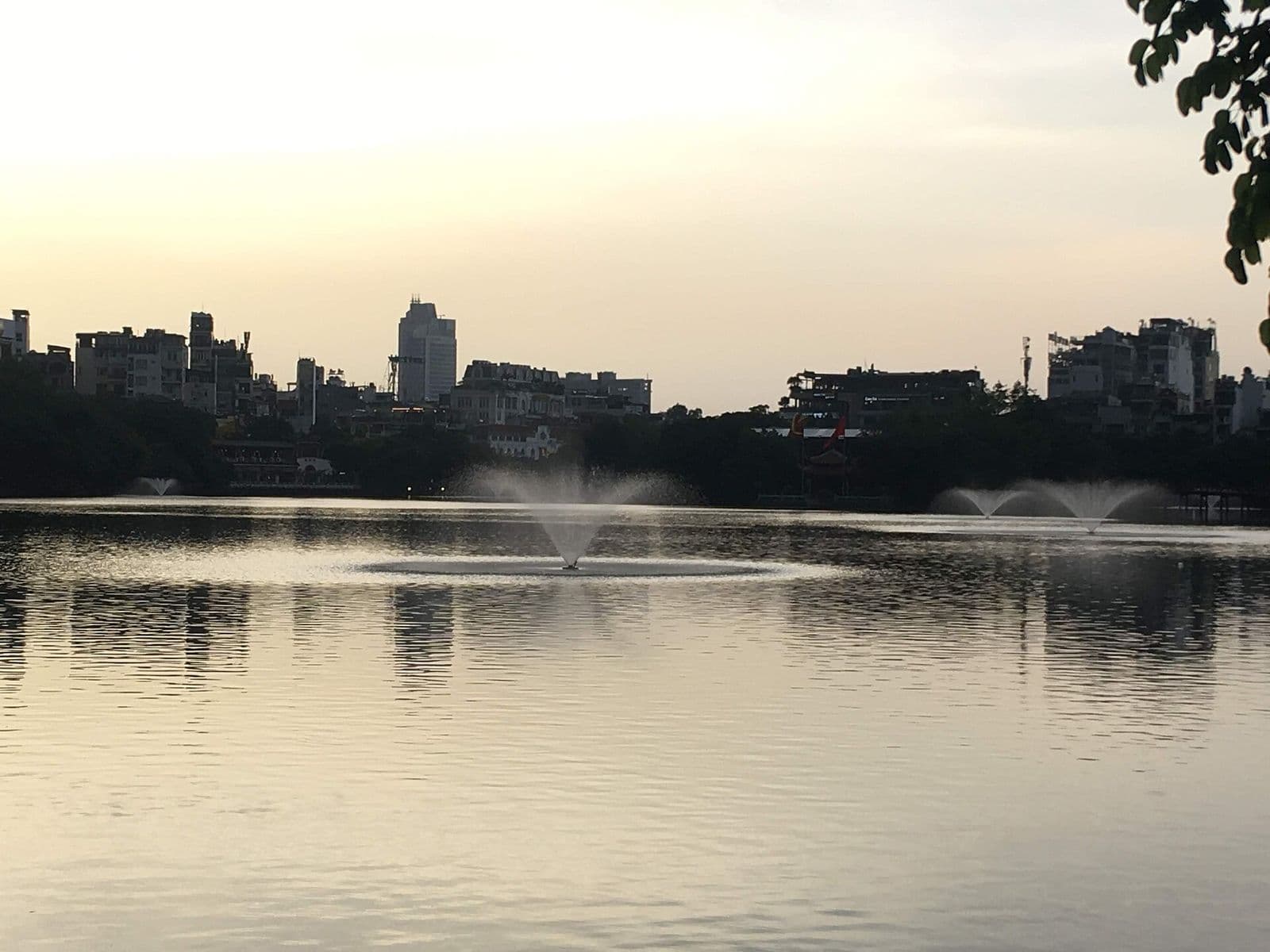
Hanoi's main stage is Hoan Kiem Lake. By 5:30am thousands of people are already out running, doing qigong and playing badminton. The Old Quarter's "36 streets" still carry the names of the trades that once filled them: silver, paper lanterns, shoes. It's touristy, but in a different key, less Bangkok and more tea houses and silk shops.
There is nightlife, but it's local. Tạ Hiện in the Old Quarter is the beer street, with draught beer from 10,000–15,000 VND (under a dollar). By midnight most of it closes. If you're after clubs and afterparties, that's Saigon.
What to see: sights and day trips
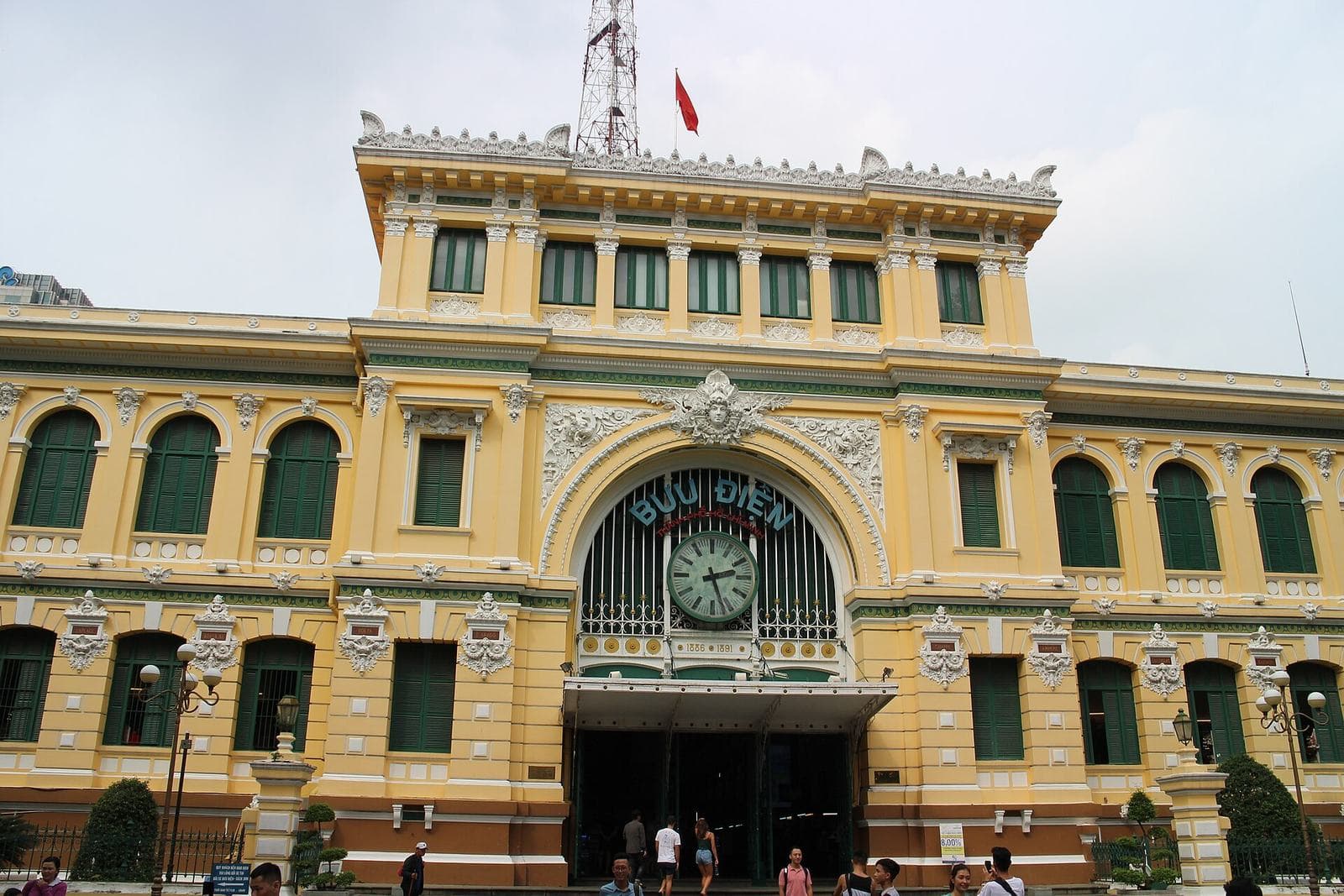
You can cover Ho Chi Minh City's main sights in two or three days: the 19th-century colonial core, two powerful war museums, two observation towers and a walking street. After that come the day trips: the Mekong Delta, the Cu Chi tunnels, Vung Tau, Can Tho. Hanoi has more to see on foot in the Old Quarter, while its headline trips go further: Ha Long Bay, Sapa and Ninh Binh.
Ho Chi Minh City top 10, with prices
| Place | Vietnamese name | Entry | Why go |
|---|---|---|---|
| Independence Palace | Dinh Độc Lập | 65,000 VND (~$2.60) | Tank No. 843, 30 April 1975, the bunkers |
| War Remnants Museum | Bảo tàng Chứng tích Chiến tranh | 40,000 VND (~$1.60) | One of the strongest anti-war museums anywhere |
| Notre-Dame Cathedral | Nhà thờ Đức Bà | free | 1880, brick from Marseille; under restoration until ~2027, exterior only |
| Central Post Office | Bưu điện Trung tâm | free | 1886–1891, architect Alfred Foulhoux |
| Ben Thanh Market | Chợ Bến Thành | free | 1914; haggle |
| Saigon Skydeck | Tháp Tài chính Bitexco | 200,000 VND (~$8) | 49th floor of a 262 m tower |
| Landmark 81 SkyView | Landmark 81 | 450,000 VND (~$18) | 461 m, Vietnam's tallest building |
| Thien Hau Pagoda | Chùa Bà Thiên Hậu | free | 1760, Cho Lon Chinatown |
| Saigon Opera House | Nhà hát Lớn | shows from 350,000 VND | 1898–1900, neoclassical |
| Bùi Viện walking street | — | free | backpacker strip, night market |
You'll often read that Gustave Eiffel designed the post office. He didn't: the architect was Alfred Foulhoux, though the iron roof structure is very much of Eiffel's era. The full list, with a map and a three-day route, is in our Ho Chi Minh City attractions guide.
Day trips from Ho Chi Minh City
Saigon makes a strong base. In a day you can do:
- The Mekong Delta (My Tho or Ben Tre): 1.5–2 hours away. Boats through the canals, honey farms, fruit orchards, a sampan ride. Tours from 600,000 VND (~$24). Route, boats and lunch in an orchard are in our Mekong Delta day trip guide.
- The Cu Chi tunnels: 60–70 km from the centre, part of roughly 250 km of underground passages used by the guerrillas. Tours 400,000–700,000 VND (~$16–28). Going on your own is covered in our Cu Chi tunnels guide.
- Vung Tau: the nearest sea, 2 hours by road or 90 minutes on the Greenlines hydrofoil. Since 2025 it's technically inside Ho Chi Minh City. Not Bali, but fine for a weekend.
- Can Tho: 3.5 hours, for the Cái Răng floating market at dawn. The other Mekong Delta towns need a trip of their own.
- Con Dao: an island escape about an hour's flight from SGN. Seriously underrated.
Hanoi top 7, for comparison
| Place | Entry | Why go |
|---|---|---|
| Hoan Kiem Lake and Ngoc Son Temple | 30,000 VND (~$1.20) | the heart of Hanoi, tai chi at dawn |
| Old Quarter, the 36 streets | free | the city's best walk |
| Temple of Literature, Văn Miếu | 70,000 VND (~$2.80) | 1070, Vietnam's first university |
| Ho Chi Minh Mausoleum | free | Ba Dinh Square, the guard change |
| Thang Long Imperial Citadel | 100,000 VND (~$4) | UNESCO, a thousand years of history |
| Water puppet theatre | from 100,000 VND (~$4) | a genre you won't see elsewhere |
| Hỏa Lò Prison | 50,000 VND (~$2) | the "Hanoi Hilton", colonial and wartime prison |
Hanoi's day trips are about landscape: Ha Long Bay (UNESCO, 2.5–3.5 hours by road, ideally with a night on a boat), Sapa (an overnight train or a 5–6 hour bus, rice terraces and hill tribes), Ninh Binh (1.5–2 hours, karst mountains and rivers). If nature is why you came, Hanoi is the stronger base.
Tours from Ho Chi Minh City · Tours from Hanoi · What to see in Hanoi
Prices: where life costs more, and why
Ho Chi Minh City is roughly 14–18% more expensive than Hanoi on everyday spending and 25–35% more on rent. Expats are the reason: Korean, Japanese and Western companies, plus a large remote-worker crowd, push up rents and café prices. Street food runs 20–40% higher and restaurants up to 50–80% higher. If budget matters more than atmosphere, Hanoi wins.
Price table (06/2026)
| Item | Ho Chi Minh City | Hanoi | Difference |
|---|---|---|---|
| Studio, central (month) | $400–700 | $300–500 | +30% |
| One-bedroom apartment | $500–800 | $350–600 | +35% |
| Two-bedroom | $700–1,200 | $500–900 | +30% |
| Phở in a café | 50,000–80,000 VND (~$2–3.20) | 40,000–60,000 VND (~$1.60–2.40) | +25% |
| Bánh mì | 30,000–50,000 VND (~$1.20–2) | 20,000–30,000 VND (~$0.80–1.20) | +50% |
| Iced coffee | 25,000–45,000 VND (~$1–1.80) | 15,000–25,000 VND (~$0.60–1) | +60% |
| Lunch at a local place | 150,000–300,000 VND (~$6–12) | 100,000–200,000 VND (~$4–8) | +35% |
| Restaurant dinner | 600,000–1,200,000 VND (~$24–48) | 400,000–800,000 VND (~$16–32) | +50% |
| Grab Bike across town | 15,000–35,000 VND (~$0.60–1.40) | 12,000–25,000 VND (~$0.50–1) | +25% |
| Grab Car | from 30,000 VND (~$1.20) | from 25,000 VND (~$1) | +20% |
| Scooter rental per day | 120,000–180,000 VND (~$5–7) | 100,000–150,000 VND (~$4–6) | +20% |
Currency converter
A month's budget, three ways
| Style | Ho Chi Minh City | Hanoi |
|---|---|---|
| Lean (hostel, street food) | from $650 | from $500 |
| Comfortable (central studio, cafés) | $1,300–2,000 | $1,000–1,500 |
| Premium (two-bed with a view, restaurants) | from $3,500 | from $2,500 |
Korean and Japanese families keep demand high in Thảo Điền and Phú Mỹ Hưng, so rents there climb faster than the city average.
Prices move quickly, and in Saigon the rise has been steady rather than a one-off. If you're planning a December-to-March winter, book two or three months ahead, or the good places under $600 in Thảo Điền will be gone. Food, taxi and entertainment costs in detail are in our Ho Chi Minh City prices guide; the northern numbers are in our Hanoi prices guide.
Food: the southern and northern schools
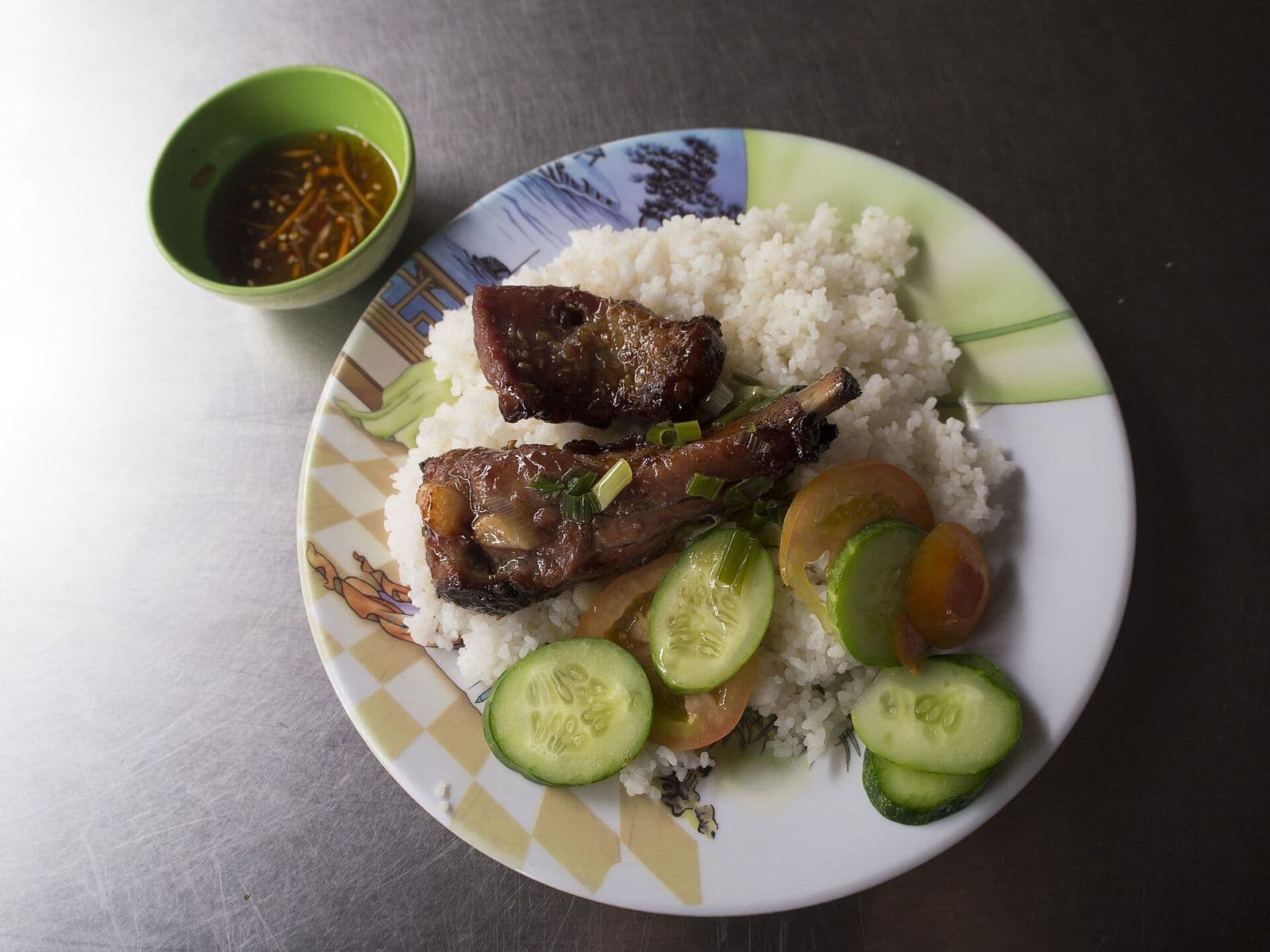
Ho Chi Minh City cooks sweet and rich: herbs by the handful, prawns and coconut. Hanoi cooks restrained and savoury: clear broths, clean flavours and very little garnish. It's not better and worse, it's two schools. The Michelin Guide has covered both cities since 2023, and both have starred restaurants. For rooftop bars, Saigon beats every city in the country.
Eat in Ho Chi Minh City
- Cơm tấm sườn nướng: broken rice with grilled pork chop, the signature southern plate. From 35,000 VND (~$1.40). Good spots around Bến Thành and in the old District 3.
- Hủ tiếu Nam Vang: noodle soup with prawns, pork and egg, Cambodian by origin. A clear broth, unlike northern phở.
- Phở Sài Gòn: yes, there's pho here too, but a different one: sweeter broth, a mountain of bean sprouts, basil and coriander, hoisin on the side. A northerner will call it ruined; a southerner will call it improved.
- Bánh xèo: a crisp rice pancake with prawns and pork, eaten wrapped in lettuce.
- Bánh mì Sài Gòn: the sandwich with pâté, pickled carrot, coriander and chilli. The southern version is hotter and sweeter than Hanoi's.
- Cà phê dừa: iced coconut coffee, the drink of the last few years.
Pho in Saigon and pho in Hanoi are really two dishes that share a name. The southern broth is sweetish and buried in greens; the northern one is clear and salty, with almost nothing added. Try both on the same trip and settle the argument yourself. The dish's story and where it's done best are in our pho bo guide.
Eat in Hanoi
- Phở bò: the dish's birthplace. Clear broth, very little greenery. Phở Gia Truyền on Bát Đàn street is the classic.
- Bún chả: grilled pork with rice noodles. Bún Chả Hương Liên, where Obama ate in 2016, is now a tourist stop, but the food is still good.
- Chả cá Lã Vọng: turmeric fish with dill. The restaurant of the same name has served it since 1871.
- Cà phê trứng: egg coffee, invented at Café Giảng in 1946. A thick whipped cream over black coffee.
Where to eat in Ho Chi Minh City · Hanoi food guide · Vietnamese cuisine, region by region
Transport, the metro and motorbike chaos
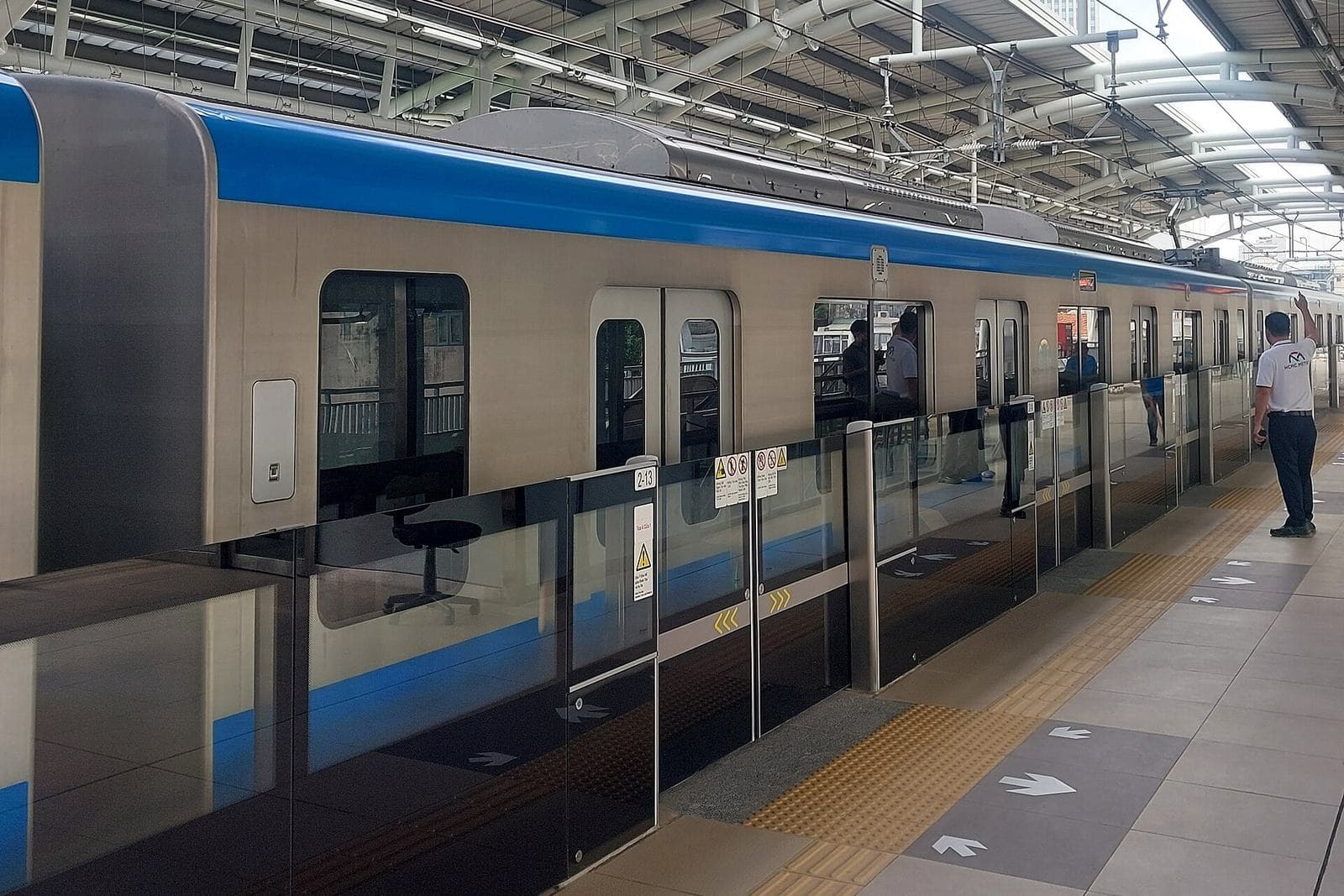
Ho Chi Minh City is a motorbike megacity, with around eight million of them, plus the new Metro Line 1, opened on 22 December 2024 after 12 years of construction. Hanoi has two metro lines, millions of motorbikes of its own and a dense bus network. Grab, Be and Xanh SM work the same way in both. Renting a scooter without the right licence is a gamble with a fine attached.
Metro Line 1: Saigon's big story of 2024–2026
The numbers:
| Point | Figure |
|---|---|
| Opened | 22 December 2024 |
| Length | 19.7 km |
| Stations | 14 (3 underground, 11 elevated) |
| Route | Bến Thành — Suối Tiên |
| Single ticket | 7,000–20,000 VND (~$0.30–0.80) |
| Trains | Hitachi (Japan) |
| Frequency | every 8 min at peak, 12 min otherwise |
| Hours | 05:00–22:00 |
The line links Bến Thành market in the centre with Suối Tiên park on the northeastern edge, in the former Thu Duc city. It's the main tourist and business corridor, with stops by the Opera House and near Bitexco, Landmark 81 and Thao Dien. Trains are clean and air-conditioned. After 12 years of waiting it's a symbol, and plenty of people ride it just to see it.
Line 2 (Bến Thành — Tham Lương) is under construction, with opening expected no earlier than 2028–2030. There's no metro to the airport yet. Hanoi has more lines running (two, with a third being built), but none of them is a tourist spine like Saigon's.
Motorbike chaos and how to live with it
The rule for crossing a road in Saigon: walk slowly and don't stop. Riders read your line and flow around you. Stop suddenly or run, and that's when you get hit. It's terrifying for two days and then it's normal. Hanoi works the same way, just a notch less dense.
Grab, Be, Xanh SM
| Service | What it's like | HCMC bike from | Hanoi bike from |
|---|---|---|---|
| Grab | widest coverage, English app | 15,000 VND | 12,000 VND |
| Be | local rival, 10–15% cheaper | 13,000 VND | 11,000 VND |
| Xanh SM | VinFast electric fleet, fixed fares | 30,000 VND (car) | 25,000 VND (car) |
Xanh SM is our pick for cars: new VinFast electric vehicles, good air-con, fixed prices and uniformed drivers. Coverage is better in Saigon, but it works in both cities.
Using the metro, renting a scooter safely and saving on taxis are all in our Ho Chi Minh City transport guide. For the north, see our Hanoi transport guide.
Fast Track — no queue at the border
5–10 minutes instead of an hour in the immigration queue
from$11per passenger
Where to stay: areas for visitors and expats
In Ho Chi Minh City, visitors stay in the old District 1 to be near everything, while expats live in Thảo Điền (old D2) or Phú Mỹ Hưng (old D7) for quiet and Western-style amenities. Budget options are the old District 3 and Chợ Lớn. Hanoi follows the same logic: Hoan Kiem for visitors, Tây Hồ for expats, the Old Quarter for atmosphere.
Since 1 July 2025 both cities use wards (phường) instead of districts in official addresses. The old names live on in conversation, in Grab and in rental ads, so we keep them below and add the new ward where it helps you search.
Six old districts of Ho Chi Minh City
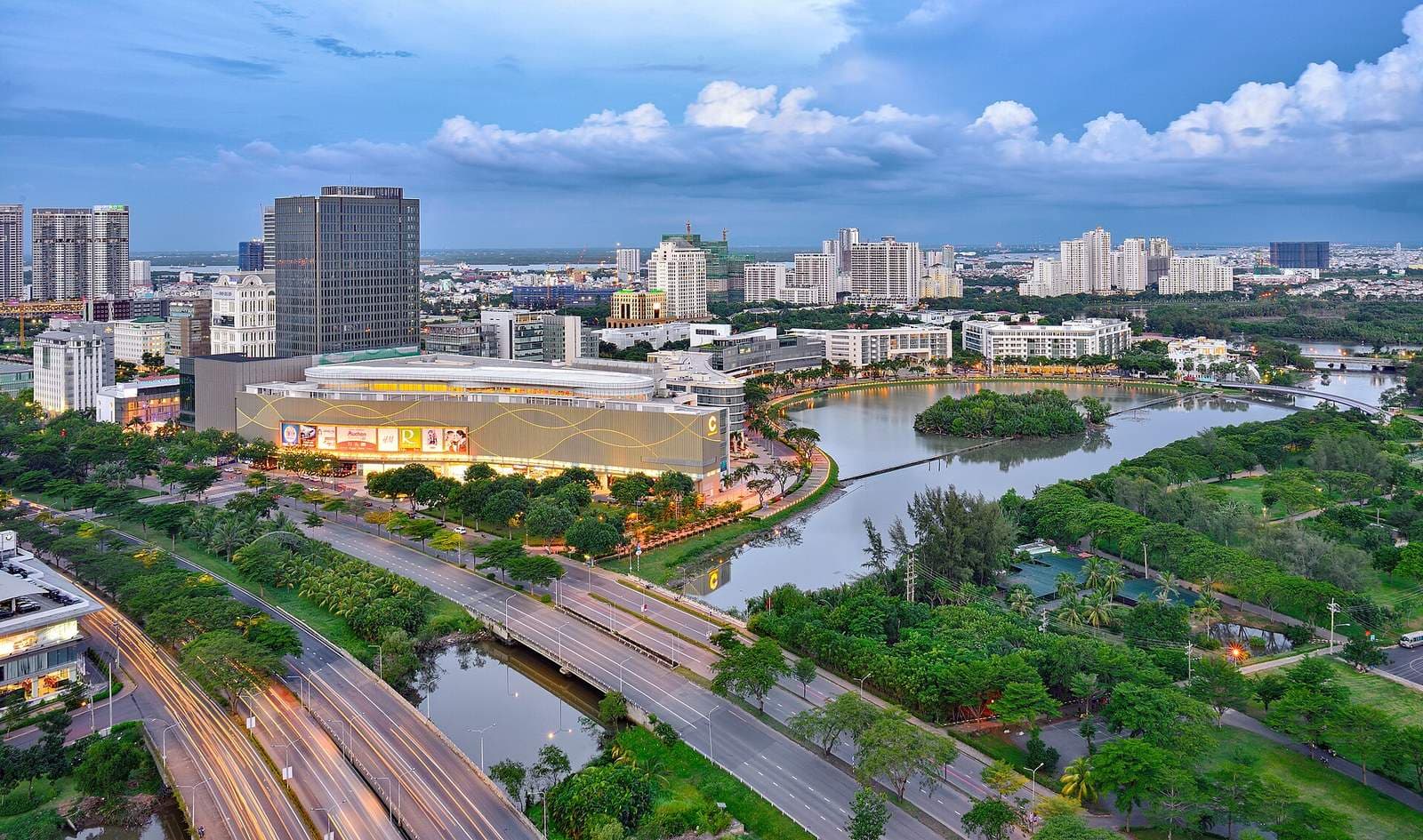
- Old District 1 (Quận 1, now the Sài Gòn and Bến Thành wards and neighbours): the tourist and business centre. Ben Thanh market, Bui Vien, rooftop bars, the Opera House, the big hotels. Hotels from $19, studios from $500 a month. Noise and traffic come with it.
- Old District 3 (Quận 3): next to the centre, quieter, greener and more local. The best short-stay base if the centre wears you out. Rent from $300 a month.
- Thảo Điền (old District 2, now the An Khánh ward): the main expat enclave. Western cafés, international schools (BIS, ISHCMC), yoga, spas, a river frontage on the Sông Sài Gòn. Studios from $350–500 a month.
- Phú Mỹ Hưng (old District 7, now the Tân Mỹ ward and neighbours): the Korean and Japanese quarter. New condos, parks and actual pavements, a rarity in Saigon, plus Crescent Mall. From $400 a month.
- Chợ Lớn (old District 5): Chinatown. Pagodas, traditional markets, cheap and very local. From $250 a month. English is rare.
- Bình Thạnh: the old district between the centre and Thao Dien, growing fast and a bit hip. Landmark 81, riverside condos, third-wave coffee.
"Thảo Điền and Thủ Thiêm... quickly became synonymous with the former District 2 following a swampy-riverside-to-new-money-development transformation which now attracts many families looking to raise families in the cleanliness and amenity of a foreigner-friendly neighborhood."Vietcetera, 2025
Hanoi's areas, for comparison
Hanoi's districts were abolished too, but the names Hoan Kiem, Tay Ho, Ba Dinh and Cau Giay passed to new wards, so searching by them still works.
| Area | Best for |
|---|---|
| Hoan Kiem / Old Quarter | visitors, history lovers |
| Tây Hồ (West Lake) | expats, families |
| Ba Đình | diplomats, upmarket |
| Cầu Giấy | cheaper rent, tech offices |
Hanoi areas for visitors and long stays are covered in our Hanoi districts guide.
Business and remote work: why people pick Saigon
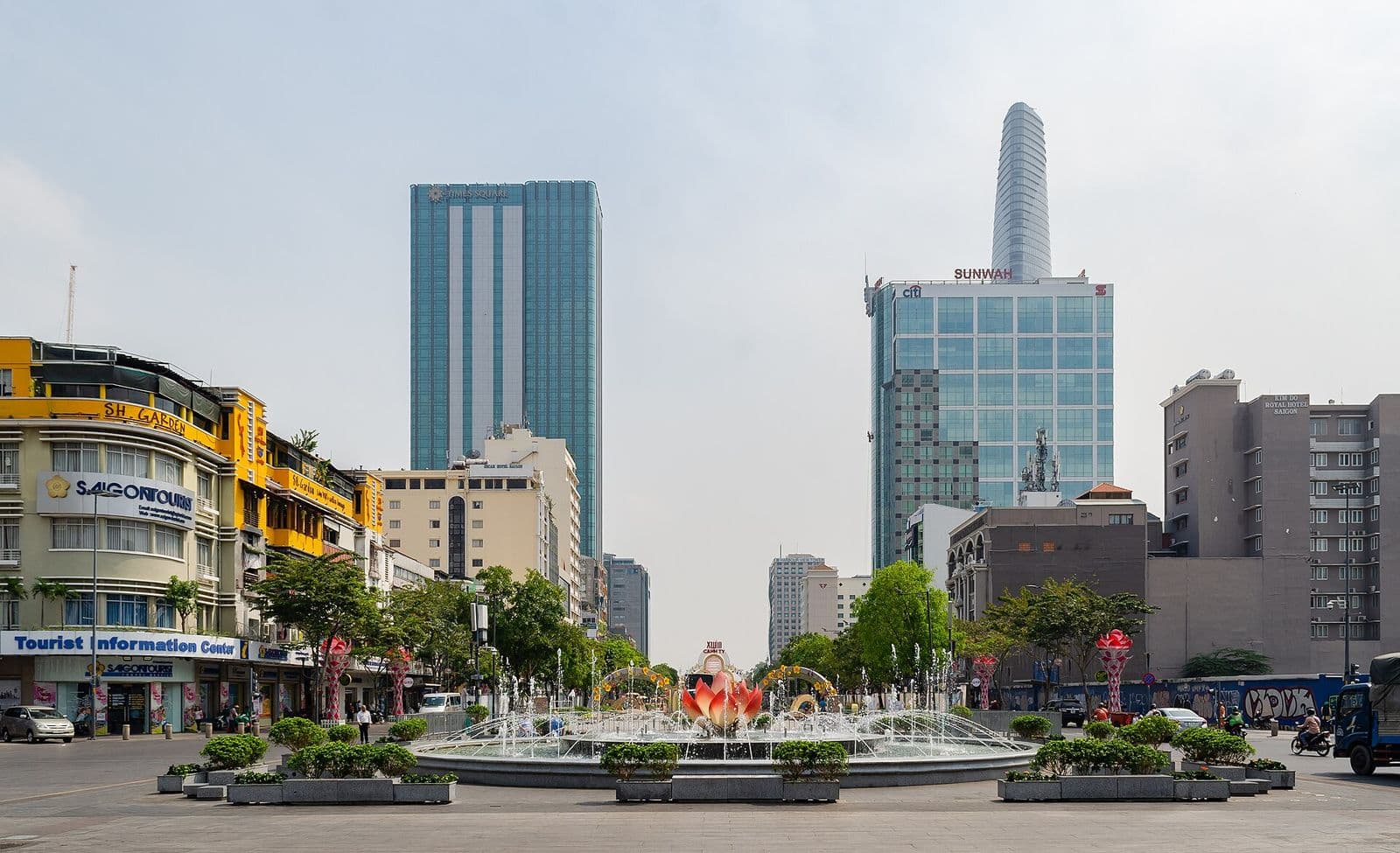
After the 2025 merger Ho Chi Minh City produces about a quarter of Vietnam's GDP and shares the top spot for foreign direct investment with Hanoi. It has the country's main stock exchange (HOSE), the biggest container terminal at Cát Lái, and since 2025 the deep-water port of Cái Mép and the industrial parks of former Binh Duong province inside its borders. If you're scouting a move, an office or a base for remote work, this is where to look first.
"This is not about addition, but multiplication."economist Tran Du Lich, chairman of the city's advisory council for Resolution 98, on the three-way merger, VietnamPlus, 2025
Business clusters in Ho Chi Minh City
- Old District 1: the financial centre. Bitexco Financial Tower, Saigon Centre, the regional offices of the big banks and consultancies.
- Phú Mỹ Hưng (old District 7): a Korean and Japanese business and residential cluster, with offices, international schools, restaurants and supermarkets.
- Thủ Đức: a "city within the city" from 2021 to 2025, now split into wards but still called Thu Duc. The Saigon Hi-Tech Park, R&D centres and the National University.
- Tân Bình: the old district by the airport, with logistics firms and airline offices.
Coworking and remote-work basics
| Coworking | Where | Day / month |
|---|---|---|
| CirCO | centre, D3, Thao Dien | 250,000 / 4,000,000 VND |
| Toong | centre, D3, D7 | 300,000 / 4,500,000 VND |
| Dreamplex | centre, Thao Dien | 350,000 / 5,000,000 VND |
| WeWork | centre | 400,000 / 6,500,000 VND |
Treat these as a guide, since coworking prices change often. In dollars that's roughly $10–16 a day or $160–260 a month. Home internet in Saigon averages 50–100 Mbps, most condos have fibre, and coworkings offer up to 200 Mbps. Cafés with fast Wi-Fi include Phin Deli, The Workshop, Bosgaurus and Saigon Coffee Roastery. Our Ho Chi Minh City coworking guide goes deeper.
Expat life in each city
| Point | Ho Chi Minh City | Hanoi |
|---|---|---|
| Where expats live | Thao Dien, the centre, Phu My Hung | Tay Ho, the centre |
| Community | larger, spread out, lots of business and nomad groups | smaller, closer-knit, more teachers and NGO staff |
| International schools | wide choice | fewer, concentrated around Tay Ho |
| Consulates / embassies | consulates-general | embassies |
Saigon's foreign community is bigger but spread across the centre, Thao Dien and Phu My Hung. There's no single expat hub the way Tay Ho works in Hanoi, but there are tech meetups, business chats and schools for every curriculum. Facebook groups and WhatsApp communities do the job of a club: that's where people find flats, handymen and doctors. If it's your first trip, start with our first-trip checklist.
Common mistakes when choosing
A few myths that come up in every pre-trip thread and get in the way of a good decision.
- "Saigon is a business city with no history." The 19th-century colonial core (cathedral, post office, Opera House, Hotel Continental) holds as much heritage as Hanoi. Add the war layer: Independence Palace, the War Remnants Museum, Cu Chi.
- "HCMC is 35 °C all year and unbearable." The annual average is about 27.5 °C and the hottest month, April, is around 30 °C. Hanoi's summer, with its humidity and typhoons, often feels worse.
- "The Saigon metro doesn't work." Line 1 opened on 22 December 2024 and runs daily from 05:00 to 22:00, every 8–12 minutes, for 7,000–20,000 VND.
- "Hanoi isn't really cheaper." It is, by 14–35% depending on what you buy. Rent, restaurants and bike taxis show the biggest gap.
- "Nobody checks licences on scooters." Since 1 January 2025 fines are 2–4 million VND on smaller bikes and 6–8 million on bigger ones, and insurance won't pay out without a valid licence.
Which city for whom: the verdict
With a week, choose one city. With two weeks or more, do both: four or five days in each, joined by a two-hour flight. For a winter base or scouting a move, pick Ho Chi Minh City. For classic Asian atmosphere and landscapes, pick Hanoi plus Ha Long.
Traveller type and our pick
| You are | City | Why |
|---|---|---|
| Wintering, November–March | Ho Chi Minh City | a steady 28 °C; Hanoi can hit 10 °C and drizzle |
| Scouting business or an office | Ho Chi Minh City | a quarter of GDP, the stock exchange, ports, MICE |
| A remote worker | Ho Chi Minh City | more coworkings, fast internet |
| A remote worker on a budget | Hanoi | rent 25–35% lower |
| A backpacker starting a route | Ho Chi Minh City | easy base for the Mekong, Phu Quoc, Con Dao |
| Into nightlife | Ho Chi Minh City | rooftop bars, Bui Vien, clubs in the centre and Thao Dien |
| A family with kids 6+ | Ho Chi Minh City | warmer, the metro as a ride, water parks, Suoi Tien |
| Into war history | Ho Chi Minh City | Cu Chi, Independence Palace, War Remnants Museum |
| Into colonial architecture | Ho Chi Minh City | the 19th-century core, with Landmark 81 next door |
| A food traveller | Ho Chi Minh City | more chef-led and international restaurants |
| A first-timer with 5–7 days | Hanoi | compact, more traditional, Ha Long nearby |
| Into nature | Hanoi | Ha Long, Sapa, Ninh Binh |
| After a slower pace | Hanoi | lakes, tea, tai chi |
| On a honeymoon | Hanoi + Ha Long | a night on a boat in the bay, spas in Tay Ho |
The universal advice: on a first trip to Vietnam, do both. Land in Ho Chi Minh City and spend a week in the south (Saigon, the Mekong, Phu Quoc), then fly or take the train to Hanoi for a week in the north (Hanoi, Ha Long, Ninh Binh). You'll see the whole country and never wonder "what if". Where to stay, what to eat and what to see at each end: our Ho Chi Minh City guide and Hanoi guide.
FAQ
Hanoi. Ho Chi Minh City, formerly Saigon, is the largest city and the economic centre, but not the capital. Hanoi became capital of reunified Vietnam in 1976, having been the capital of North Vietnam before that. Saigon was the capital of South Vietnam and was renamed Ho Chi Minh City in 1976 after the founding president of the North. Locals in the south still call it Saigon
For five to seven days, Hanoi: it's more compact, feels more traditional, and Ha Long Bay and Ninh Binh are close. For ten to fourteen days, do both. Fly into one and out of the other, with a two-hour domestic flight in between from about 1,200,000 VND (~$48). You get the south's energy and islands, the north's landscapes and two different food cultures
Ho Chi Minh City
- Everyday spending+14–18%
- Rent+25–35%
- Street food+20–40%
- Central studio in Saigon$400–700per month
- Central studio in Hanoi$300–500per month
The gap comes from the concentration of foreign companies and expats, who push up rents and café prices, especially in Thao Dien and the old District 1
Ho Chi Minh City, clearly: December to February brings 25–30 °C, dry skies and 60–70% humidity. Hanoi at the same time sits at 10–18 °C with drizzle and damp, and nights can drop to 5 °C. For a winter escape, a December holiday or travelling with small children, Saigon is the sensible choice. Hanoi is at its best in October–November and March–April
About 2 hours between SGN and HAN, with departures roughly every hour on Vietnam Airlines, VietJet and Bamboo Airways
- Planefrom 1,200,000 VND~$48about 2 hours
- Reunification Express trainfrom 1,200,000 VND~$4832–37 hours, sleeper berth
- Sleeper busfrom 600,000 VND~$2438–42 hours
Sales a month out can bring the flight lower. More on the train in our Reunification Express guide
Yes, if you have ten days or more. A good plan
- Land in Ho Chi Minh City
- Four or five days in the south: Saigon plus a Mekong day, then Phu Quoc or Con Dao
- Fly to Hanoi: two hours, and the fare costs about the same as a good dinner
- Four or five days in the north: Hanoi, two days in Ha Long, a day in Ninh Binh
Yes. Both are on Indochina Time, UTC+7, with no daylight saving. That puts them 7 hours ahead of London in winter (6 in summer), 12 hours ahead of New York in winter, and 3–4 hours behind Sydney depending on the season. For remote workers with European clients, your afternoon is their morning, which makes overlap easy
More in our Vietnam time zone guide
Ho Chi Minh City wins on infrastructure: more coworkings (CirCO, Toong, Dreamplex, WeWork), fast fibre in most condos (50–100 Mbps), and more international companies to network with. Hanoi wins on cost: rent is 25–35% lower and food and coffee 20–60% cheaper. If a smooth work setup matters most, choose Saigon; if stretching your budget does, choose Hanoi. Both share one time zone
Read next: Ho Chi Minh City guide · Hanoi vs Ho Chi Minh City · Where to go in Vietnam · Ho Chi Minh City districts


- Guide
Ho Chi Minh City Map: Districts & Where to Stay
A traveller's map of Ho Chi Minh City: District 1, District 3, Cholon and Binh Thanh, the main sights and where to base yourself.Ho Chi Minh City Map: Districts & Where to Stay - Guide
Cu Chi Tunnels 2026: How to Visit from Saigon
Cu Chi Tunnels guide: Ben Dinh vs Ben Duoc, what you see, tickets, how to get there from Ho Chi Minh City and whether the tour is worth it.Cu Chi Tunnels 2026: How to Visit from Saigon - Guide
Ho Chi Minh City Nightlife & Shows 2026: What to Do
Saigon entertainment guide: the AO Show, water puppets, rooftop bars, clubs, karaoke, cinemas, theme parks and river dinner cruises.Ho Chi Minh City Nightlife & Shows 2026: What to Do


