Mai Chau valley in 2026: stilt houses and White Thai homestays
Mai Chau is a green valley 145 km southwest of Hanoi, about three hours by road over the Thung Khe pass, where the city gives way to rice terraces and wooden houses on stilts.
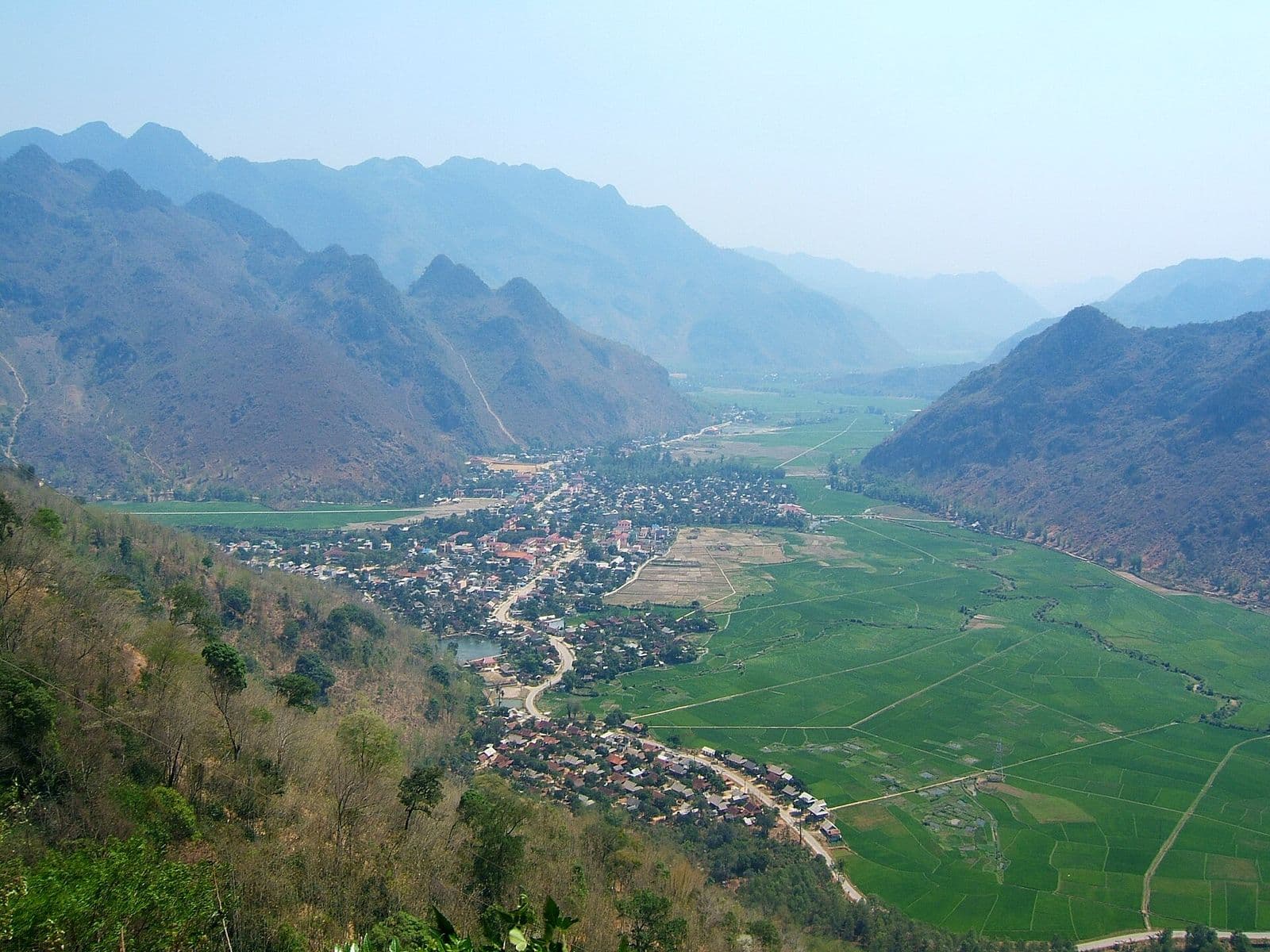
The people here are mostly White Thai (Thái Trắng), and the typical place to sleep isn’t a hotel but a family stilt house, from about 150,000 VND (~$6) a night. Late September and October bring gold rice to the horizon; February and March bring peach and plum blossom.
Mai Chau at a glance
| Fact | Value |
|---|---|
| Distance from Hanoi | 145 km |
| Travel time | 3–3.5 hours by limousine van |
| Coordinates (Lac village) | 20.6512, 105.0717 |
| Province | Phu Tho (Hoa Binh until 1 July 2025) |
| Elevation | about 200 m |
| Main villages | Lac, Pom Coong, Nhot, Van |
| People | White Thai (Thái Trắng) |
| Homestay from | 150,000 VND (~$6) |
| Best month | October (golden rice) |
Prices checked in September 2026. Rate used: $1 ≈ 26,000 VND.
Mai Chau in 60 seconds
Mai Chau is a mountain basin in northwest Vietnam. Until July 2025 it belonged to Hoa Binh province. The administrative reform folded Hoa Binh into Phu Tho and split the old Mai Chau district into communes, so the valley around Lac village is now Mai Chau commune. You’ll still see "Mai Chau District, Hoa Binh" on booking sites and bus tickets. It’s the same place.
Most people in the valley are White Thai, with Muong, Kinh and, higher in the hills, Hmong neighbours. Tourism revolves around a handful of villages at the foot of the mountains: Lac, Pom Coong, Nhot and Van. The stilt house isn’t a museum piece here. It’s where people live, and where you’ll sleep.
From Hanoi it’s 3–3.5 hours in a limousine van, which makes it the easiest ethnic-minority trip from the capital. No overnight train as with Sapa, and no rough road as with Pu Luong.
The valley is small. You can cycle most of it in half a day. The main stops are Lac village (the busy one), Pom Coong (calmer), Chieu Cave with its long stairway and valley view, and Mo Luong cave with its stalactites. And dinner with your host family: rice cooked in bamboo, grilled stream fish and rice wine drunk from a shared jar through bamboo straws.
Who it suits: a first trip to the north with one or two nights to spare, couples, families with kids over five. Who it doesn’t: people after cable cars and big markets. That’s Sapa, which fits better into a 7-day northern Vietnam itinerary.
Who the White Thai are
The Thai (Thái) are one of Vietnam’s 54 official ethnic groups, about 1.8 million people. They’re not the same as the Tay (Tày), a different people with a different language, which trips up a lot of English guides. The Thai are split into White (Thái Trắng) and Black (Thái Đen), traditionally by the colour of women’s dress. White Thai live in mountain valleys from Lai Chau down to Thanh Hoa, and Mai Chau is the most accessible of them.
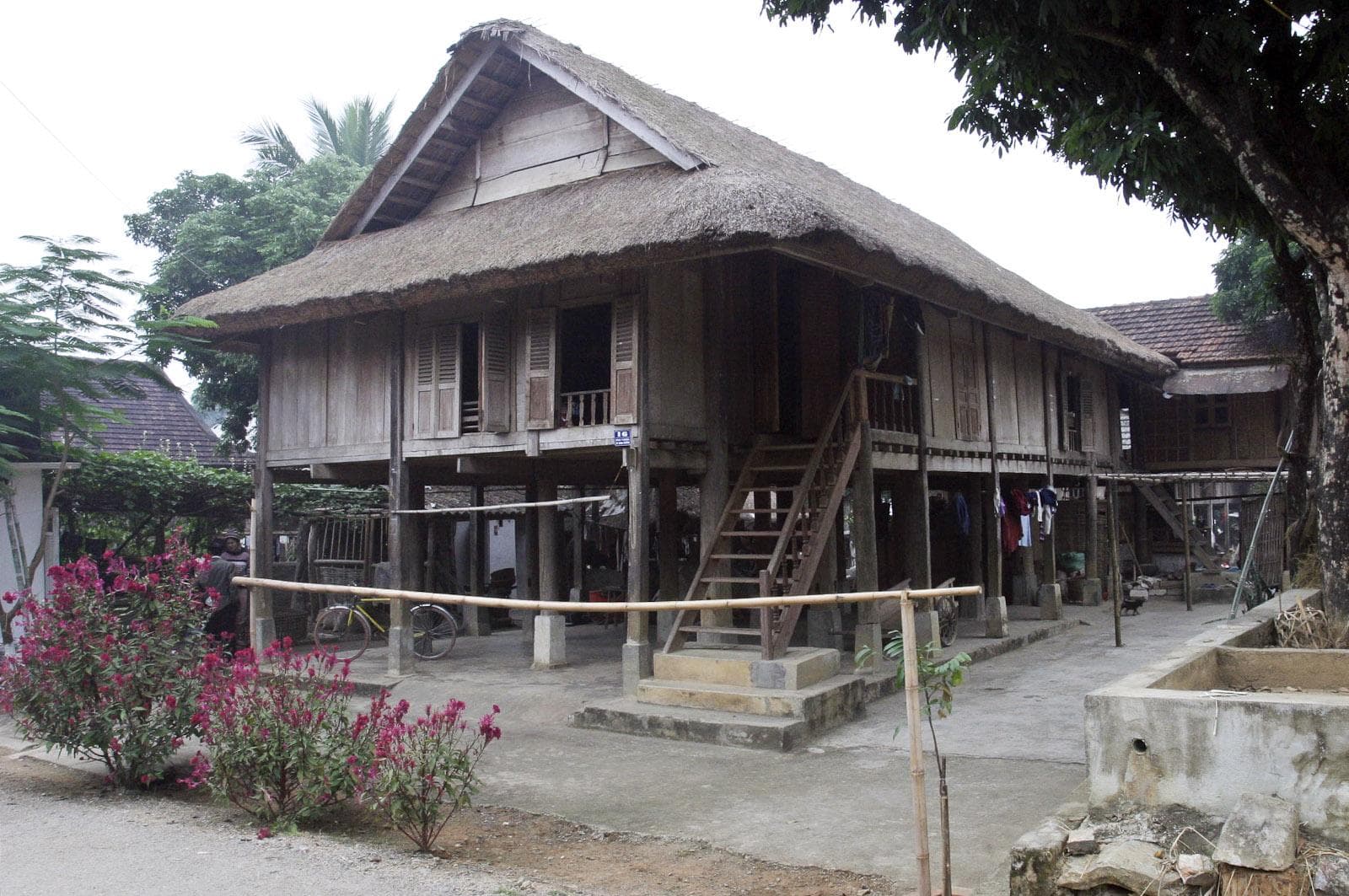
The stilt house (nhà sàn) is the defining building. Posts 1.5–2.5 m high lift the living floor off the ground. Underneath, families used to keep animals and tools; now it’s motorbikes, hay and storage. Traditional houses are held together with wooden pegs, bamboo ties and rattan rope rather than nails, and last 50–70 years without major repairs.
The living floor is one big room. Sleeping areas are behind a woven screen or a curtain. The kitchen, with an open fire, is in a corner. Toilets and showers are in a separate building in the yard or under the house. Homestays got electricity, hot water and Wi-Fi over the 2010s. Air-con is still rare.
Homestay reviews on TripAdvisor keep saying the same thing about the shared room: it sounds rough and turns out to be the highlight of the trip. Breakfast is cooked over the fire and eaten at a low table.
Guest etiquette is simple. Take your shoes off before the stairs. Don’t step on or sit on the threshold. Don’t point at the ancestor altar at the back of the room. Nod to the head of the house when you come in; no special greeting is needed.
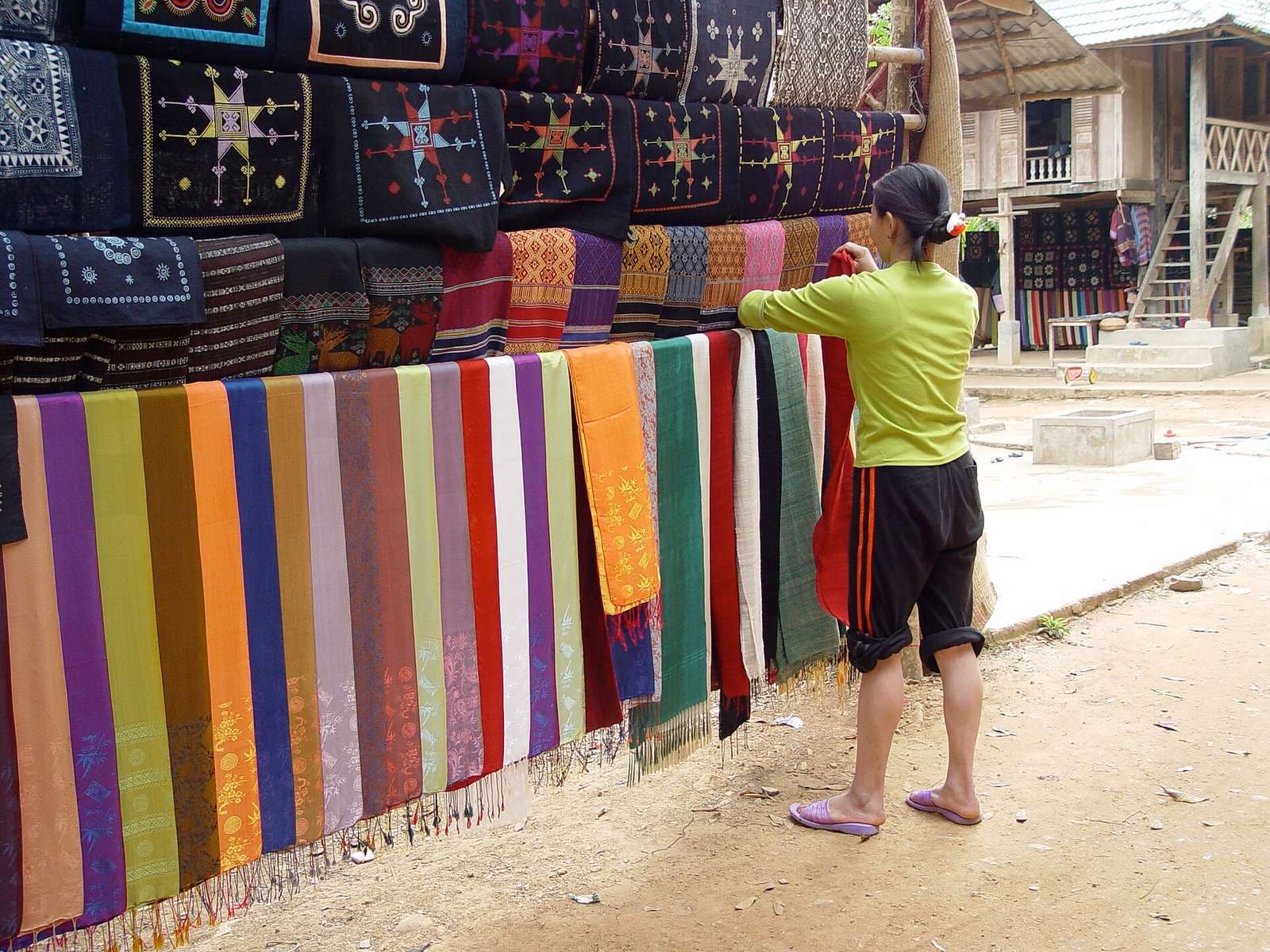
Brocade weaving is the White Thai’s main craft. Patterns pass down the female line, from grandmother to mother to daughter. A 40×150 cm scarf takes a woman about three days on the loom. In the workshops of Lac and Pom Coong a piece costs 200,000–500,000 VND (~$8–19). That’s actual handwork, not a factory souvenir.
How to get to Mai Chau from Hanoi and Noi Bai airport
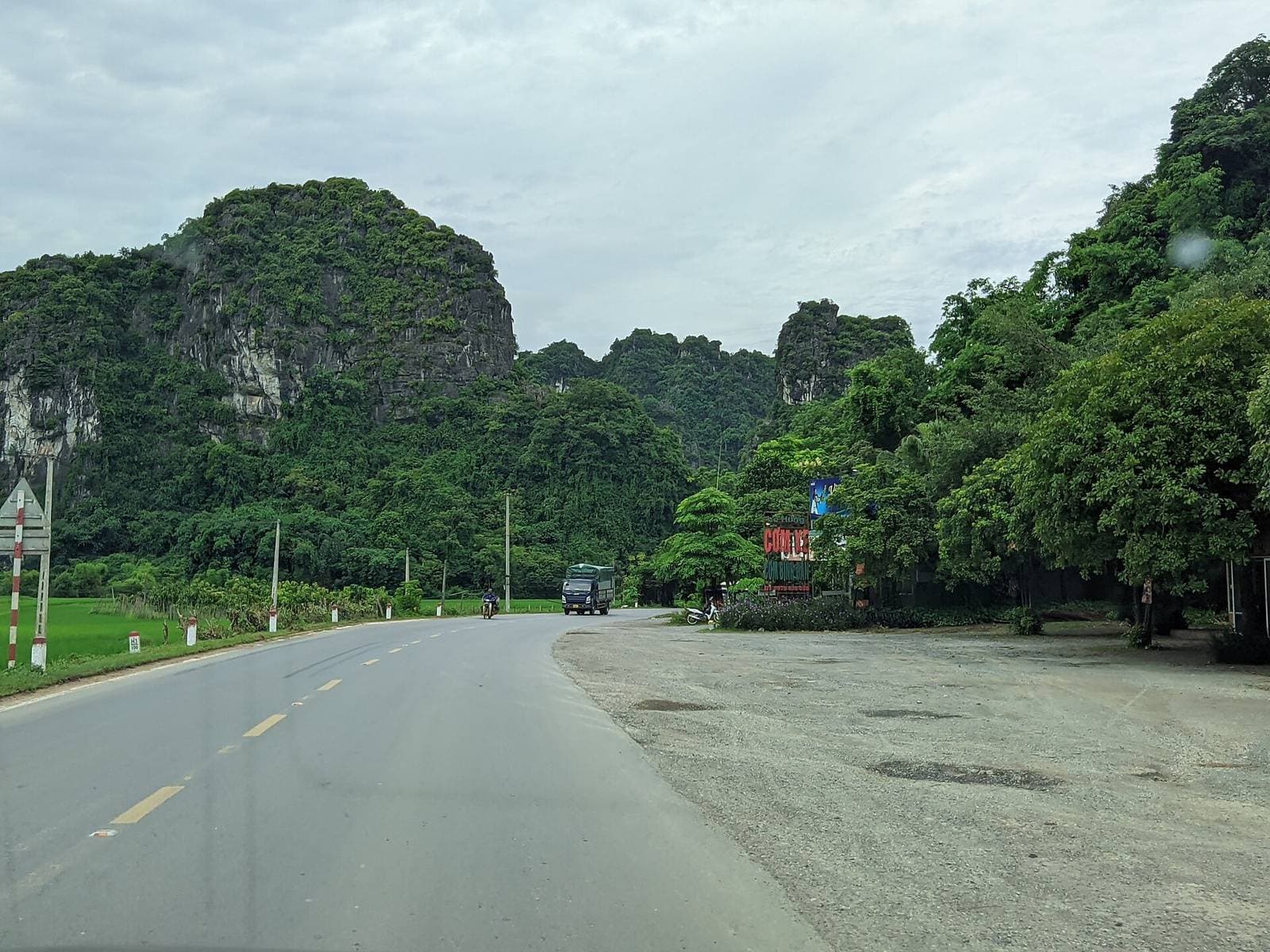
Hanoi to Mai Chau is 145 km. The road runs through Hoa Binh city, then climbs over the Thung Khe pass and drops into the valley. A limousine van takes about 3 hours (some runs are timed at 2 hours 50 minutes), a sleeper bus about 4.5, and a motorbike about 4. From Noi Bai airport, add an hour.
| Option | Time | Price | Best for |
|---|---|---|---|
| Limousine van (Huong Kien, D-Car, Phuong Ha) | 3–3.5 h | $8.50–13.50 | Solo travellers, couples |
| Sleeper bus from My Dinh | 4.5 h | $5–7 | Tight budgets, light bags |
| Private car with driver | 3 h | $70–110 per car | Families of 3–6, photo stops |
| 2-day tour from Hanoi | 2 days | $60–110 per person | No planning at all |
| Motorbike | 4 h | ~$3 petrol | Experienced riders |
Limousine van: the best option
"Limousine" here means a nine-seat minivan with leather seats, air-con and Wi-Fi. About ten companies run the route, including Huong Kien, D-Car and Phuong Ha. Departures from Hanoi run from 06:00 to 19:30, and Huong Kien alone has 12 a day.
Tickets cost 220,000–350,000 VND (~$8.50–13.50). Most operators pick you up at your hotel in the Old Quarter and drop you at your homestay. Book on Vexere (it has an English site and takes foreign cards), through your hotel reception, or on GetYourGuide for D-Car.
Sleeper bus: the cheapest
The older option: rows of reclining seats, no Wi-Fi, sometimes weak air-con in summer. Buses leave Mỹ Đình bus station from 06:00 to 18:00, tickets cost 130,000–180,000 VND (~$5–7), and the trip takes about 4.5 hours because the bus picks up along the way. Worth it only if the few dollars really matter.
Private car with driver
Three hours door to door, 1,800,000–2,800,000 VND (~$70–110) for a 4–7 seat car. Book through Klook, GetYourGuide or an Old Quarter agency. You can stop on the Thung Khe pass for photos and get dropped at the homestay door instead of on the main road.
From Noi Bai airport
Noi Bai is 175 km from Mai Chau. A direct taxi costs 2,000,000–2,500,000 VND (~$77–96) and takes about four hours. The cheaper route is the city bus from the airport into Hanoi (about an hour, up to 45,000 VND) and a limousine van from there. That’s around $15 all in, but an hour longer.
Motorbike
Highway 6 is a mountain road with trucks, blind-corner overtaking and few petrol stations after Hoa Binh. It’s for people who’ve already ridden in Vietnam for a while. Plan four hours each way and about 70,000 VND (~$3) of petrol. Bike rental in Hanoi is 150,000–200,000 VND (~$6–8) a day. Legally you need a Vietnamese licence or a 1968-convention International Driving Permit, and without one your insurance probably won’t pay out. Rules and risks are in our Vietnam transport guide.
Mai Chau homestays and where to stay
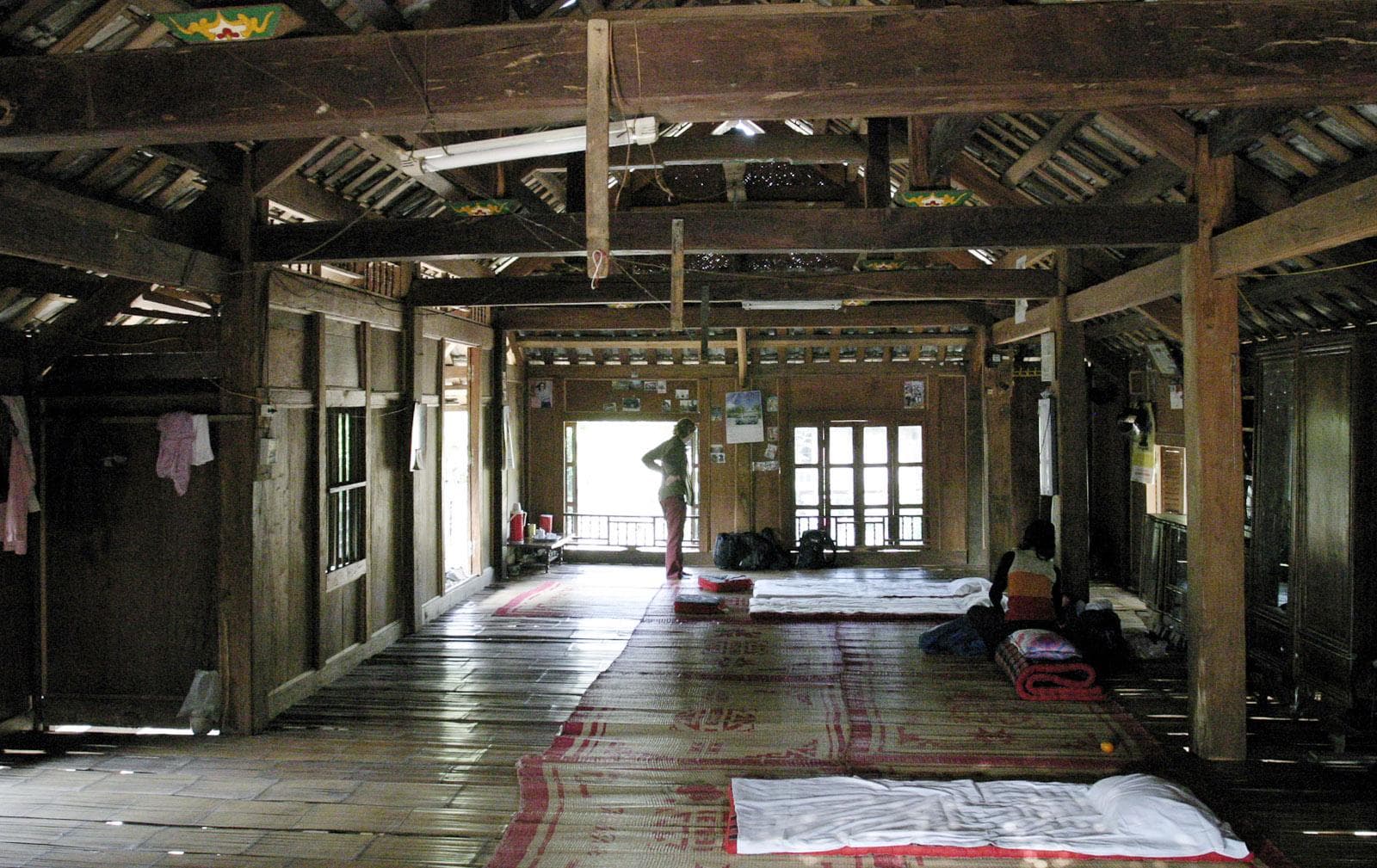
Accommodation comes in four tiers: a mattress on the floor for about $6, a private room in a family house, a boutique homestay with its own bathroom, and eco-lodges or resorts with a pool. Most homestays are family-run, and not all of them are on Booking. Some can only be booked on Agoda or directly through Zalo.
| Type | Per night, VND | Per night, USD | What you get |
|---|---|---|---|
| Mattress in a shared room | 150,000–200,000 | $6–8 | Up to 10 mattresses on the floor, curtains, shared bathroom, breakfast |
| Private room | 300,000–450,000 | $12–17 | Walled room, shared bathroom, quieter |
| Boutique homestay | 500,000–900,000 | $19–35 | Converted stilt house with A/C and private shower |
| Eco-lodge or resort | 1,500,000–4,500,000 | $58–175 | Bungalows with a pool, sometimes half board |
Currency converter
Seven places to stay
Mai Chau Ecolodge. The eco-lodge with the best view over the valley, next to Lac village. Stilt-house-style bungalows, a pool, a restaurant with Western and Thai food, and bikes included. About 2,500,000–4,500,000 VND (~$96–175), with breakfast and dinner. For people who want the valley with regular hotel comfort.
Mai Chau Nature Lodge. A lodge on the edge of Lac, between the road and the fields. Stilt buildings with private bathrooms, and help with trekking and family dinners. Roughly 1,000,000–1,800,000 VND (~$38–70).
Mai Chau Countryside Homestay (Pom Coong). A family homestay close to the small town centre, about 550,000 VND (~$21) a night. Quiet evenings, walking distance to the market.
Mai Chau Hideaway Lake Resort. On its own peninsula on Hoa Binh lake, in Suoi Lon village, about 35 minutes’ drive from Mai Chau town. Around 1,500,000–2,400,000 VND (~$59–91), with pools, a restaurant and boat trips. It’s a separate resort, not the stilt-house experience.
Mai Chau Mountain View. Mid-range, on the main road south of Lac, with mountain views. Roughly 1,200,000–2,200,000 VND (~$46–85), standard rooms.
Mai Chau Sun (Pom Coong). The family homestay local guides most often suggest for small kids: a garden to play in, and hosts who cook separate meals for children. Roughly 400,000–700,000 VND (~$15–27).
Valley View Hotel. A small hotel on the road between Lac and Chieu Cave, looking over the valley. Roughly 1,000,000–1,800,000 VND (~$38–70).
Budget mattresses in a shared room at 150,000–250,000 VND (~$6–10) are available in a good share of the houses in Lac and Pom Coong. Many people just book them on arrival.
How to choose
First visit and comfort matters: Mai Chau Ecolodge or Nature Lodge. You want the real low-table dinner with a family: a homestay in Pom Coong. Small children: Mai Chau Sun, or Hideaway for the pools, though you’ll have to drive to the valley. Solo on a budget: a shared-room mattress at any family in Lac.
The villages: Lac, Pom Coong, Nhot and Van
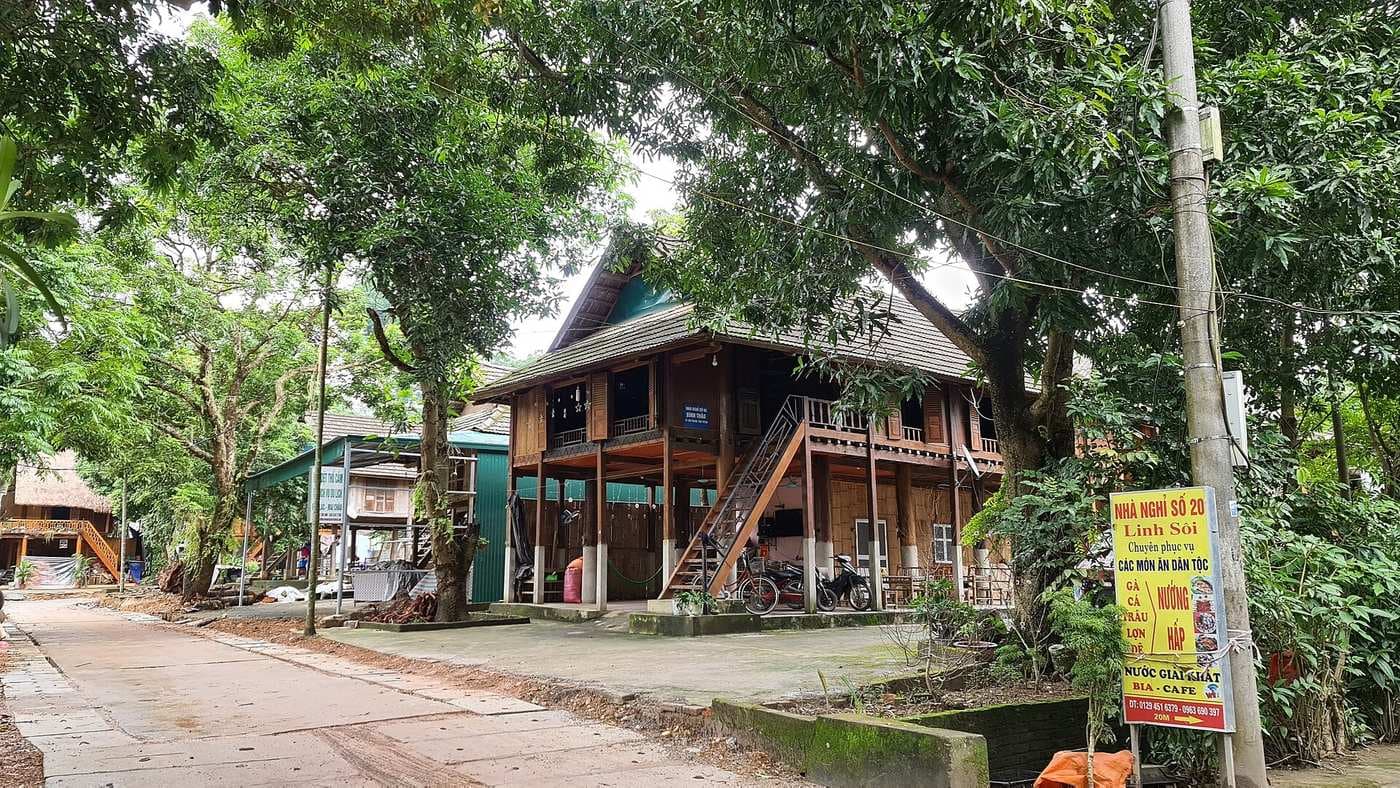
Mai Chau isn’t one place. It’s several White Thai villages a couple of kilometres apart, with Hmong communes up in the hills. Paved lanes and concrete paths through the rice make it easy to cycle between them. The map shows the main points: villages, caves, the pass and places to stay.
- Lac village (Bản Lác): The busiest village: dozens of homestays, souvenir stalls, bike rental
- Pom Coong village (Bản Pom Coọng): Quieter than Lac, weaving workshops — Beds from ~$6
- Nhot village (Bản Nhót): Quiet village by the fields — Family dinners without the crowds
- Chieu Cave (Hang Chiều): Long stairway up, best view of the valley — 20,000 VND (~$0.80)
- Mai Chau Ecolodge (Mai Châu Ecolodge): Bungalows ~$96–175 — Pool, half board
- Mai Chau Nature Lodge (Mai Châu Nature Lodge): Lodge by Lac, private bathrooms — ~$38–70
- Thung Khe pass (Đèo Thung Khe): Flagpole viewpoint over the valley — The "white pass"
- Pa Co (Xã Pà Cò): Hmong commune in the hills, 25 km away — Sunday market
Lac: the main gateway
Bản Lác is the most developed village, with a homestay in nearly every other house. The main lane is a souvenir market: brocade scarves, bamboo chopsticks, Shan Tuyet tea, bottled rice wine. It gets noisy in the evening and some sellers are pushy. On the plus side, it has the most homestays, bike rental (50,000–80,000 VND, ~$2–3 a day) and a couple of cafés with English menus.
Guidebooks and reviews agree that Lac has become much more commercial over the past decade. For quiet, head to the neighbouring villages.
Pom Coong: the quieter neighbour
Bản Pom Coọng is a kilometre from Lac. Same stilt houses, same layout, no souvenir rows. Less selling, more everyday life: kids playing by the lane, women weaving on open verandas. Staying here is a good middle ground between atmosphere and convenience.
Nhot and Van: for something quieter
Bản Nhót is about 1.5 km north of Lac across the fields. There are few homestays and hardly any tourists; a family dinner costs about 250,000 VND (~$10) per person, with the whole family at the table. Bản Văn is another quiet village you can reach by bike. Ask your host for directions, since not all the field paths show up on maps.
Things to do in Mai Chau
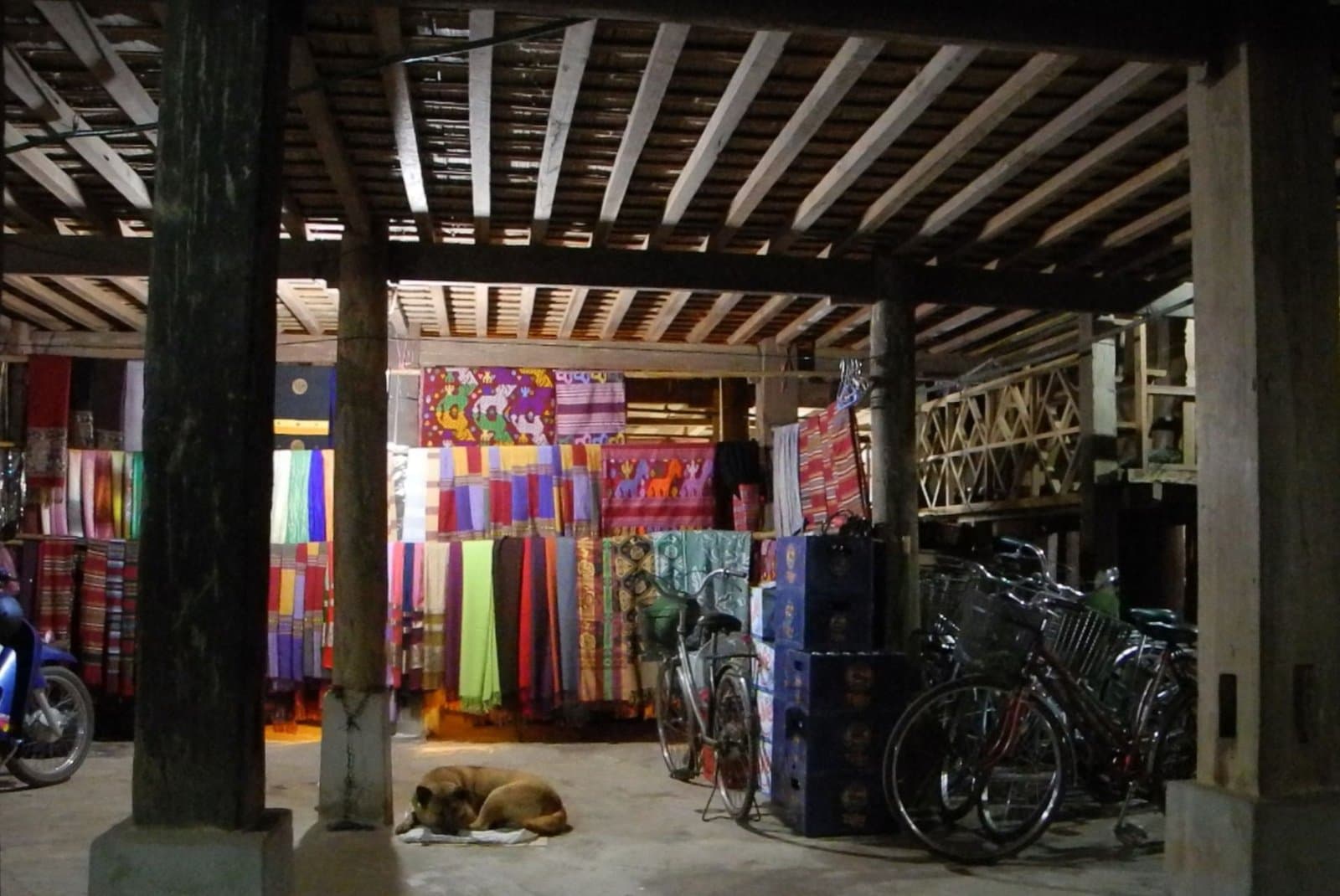
One day in Mai Chau: bike in the morning, a cave in the afternoon, dinner in the evening. Two days: add a trek or a weaving class. Three: combine with Pu Luong. Anything under a full day is a waste. The whole point of Mai Chau is its slow pace, and that takes time to settle into.
- Cycle the villages: Lac, Pom Coong, Nhot and Van. A loop of about 12 km, three relaxed hours. Every homestay rents bikes for 50,000–80,000 VND (~$2–3) a day. Flat tarmac, dirt tracks through the fields, hardly any cars. No helmets, so ride slowly.
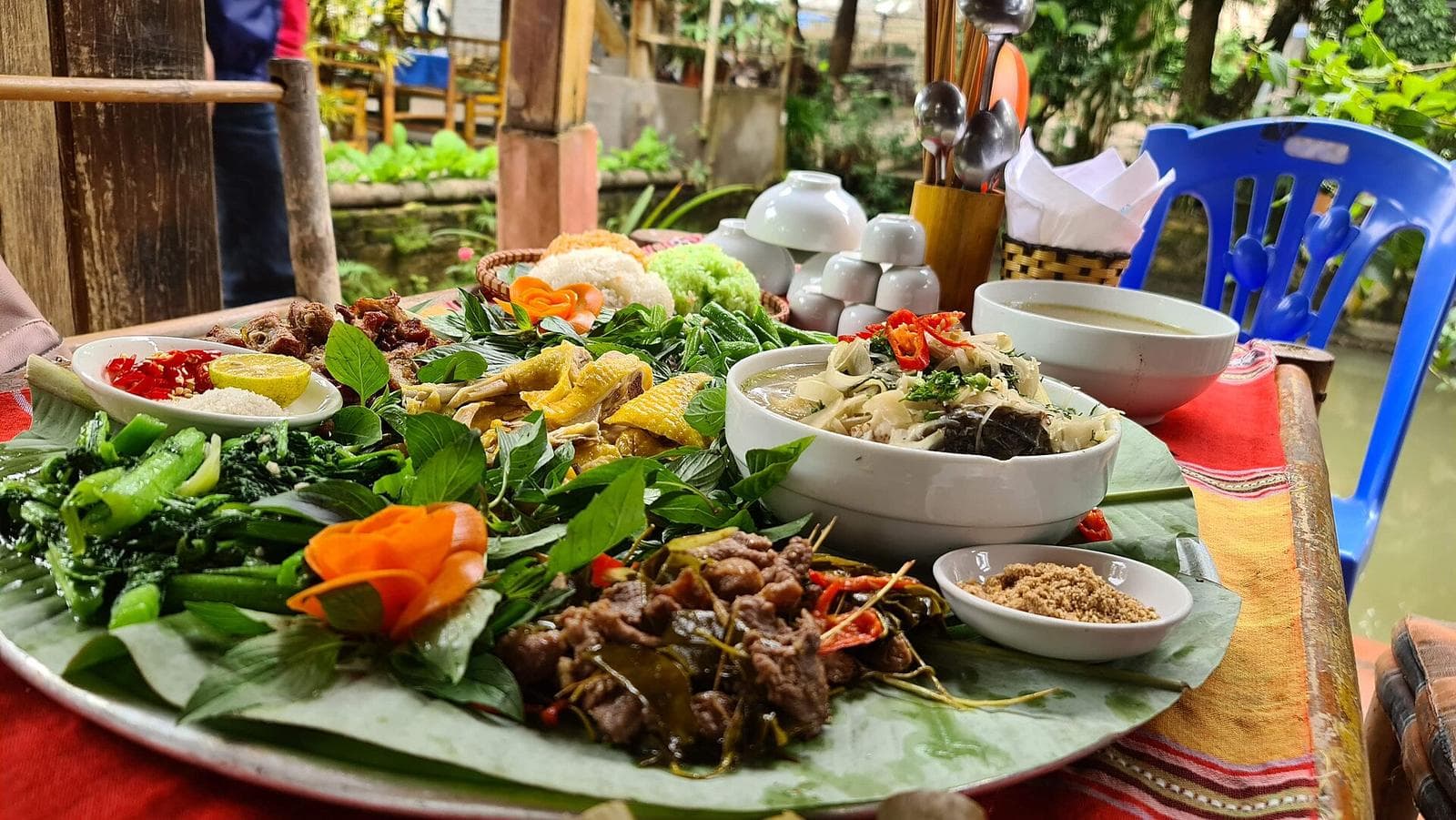
- Dinner with a Thai family. Order a day ahead and agree the menu. The usual spread: cơm lam (rice cooked in bamboo), cá suối nướng (grilled stream fish), thịt lợn quay (roast pork), rau rừng (wild greens) and, always, rượu cần, rice wine sipped from a shared clay jar through long bamboo straws. Expect 150,000–250,000 VND (~$6–10) per person.
- A bamboo dance evening. In the múa sạp the hosts clap bamboo poles together on the floor and guests jump between them in rhythm. It looks cheesy and turns out to be a great icebreaker. Shows with dinner start around 500,000 VND (~$19) per group; some homestays charge about 100,000 VND per person. Book through your homestay, usually when several groups are in the village.
- Mo Luong cave (Hang Mỏ Luông). A lit path into the mountain, stalactites, coloured lights. About 20,000 VND (~$0.80), 30–40 minutes. Ask your host for the entrance, as signs are patchy.
- Chieu Cave (Hang Chiều). A long stairway up the slope below the Thung Khe pass, with the best panorama of the whole valley at the top. Go early, before the heat and the tour groups. Around 20,000 VND, 1.5 hours up and down.
- A trip or trek to the Hmong in Hang Kia and Pa Co. Hmong communes in the hills about 25 km northwest of the valley: a different people, language and dress, with a Sunday market in Pa Co. The walking routes aren’t marked, so go with a local guide booked through your homestay or an agency. A guide for up to four people costs 600,000–900,000 VND (~$23–35).
- A brocade weaving class. About 1.5 hours in a workshop in Lac or Pom Coong. You’ll learn to set up the loom and count the pattern, then try it yourself. Expect 200,000–350,000 VND (~$8–13).
Mai Chau also works as a base for kayaking on Hoa Binh lake or a day trek into Pu Luong. Most homestays can set both up.
What not to do
- Don’t try to reach Sapa in a day. It’s about 430 km and nine hours, some of it on poor roads. Sapa is its own trip.
- Don’t buy "handwoven" brocade from street sellers in Lac. A lot of it is factory cloth. Buy in the village workshops.
- Don’t drink tap water. Homestays give you bottled water, and the shop by the market sells more for about 5,000 VND.
- Avoid the long holiday weekends (30 April–1 May and 2 September) and Tet. The roads jam up and homestay prices can double.
When to go: weather and seasons
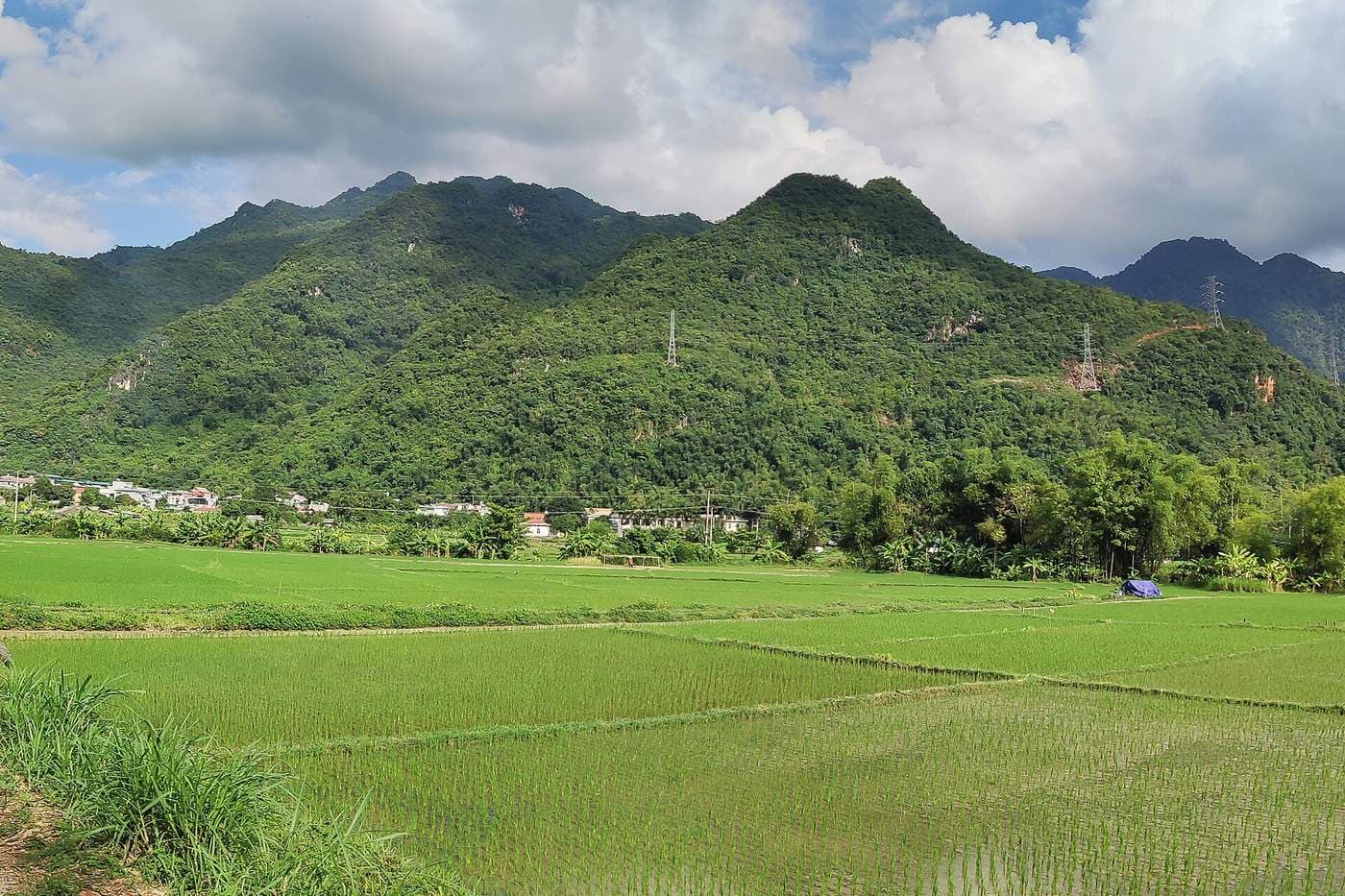
Mai Chau has a subtropical mountain climate with a dry season (October to April) and a wet one (May to September). Winter nights are cool, 12–14 °C, and stilt houses don’t hold heat. Summer is hot and humid, with short but heavy downpours. The best times to visit are late September and October for golden rice, and February and March for blossom.
| Month | Night | Day | Rain | Rice | Verdict |
|---|---|---|---|---|---|
| January | 12 °C | 22 °C | low | bare fields | Cold nights, morning mist ★★★ |
| February | 14 °C | 24 °C | low | preparing | Dry, peach blossom ★★★★ |
| March | 17 °C | 26 °C | low | seedlings | Warm and clear ★★★★★ |
| April | 20 °C | 29 °C | medium | planting | Everything turns green ★★★★ |
| May | 23 °C | 31 °C | high | young | Hot and sticky ★★ |
| June | 24 °C | 33 °C | high | green | Heavy downpours ★★ |
| July | 24 °C | 33 °C | high | heading | Humid ★★ |
| August | 24 °C | 32 °C | high | heading | Rains ease ★★★ |
| September | 22 °C | 30 °C | medium | turning gold | Harvest begins ★★★★★ |
| October | 20 °C | 28 °C | low | harvest | Peak season ★★★★★ |
| November | 17 °C | 26 °C | low | stubble | Cool and clear ★★★★ |
| December | 13 °C | 22 °C | low | empty | Cold, misty ★★★ |
The two best windows
Late September to October is the main one. The rice turns gold, skies are clear and days hit 25–28 °C. It’s peak season, so homestays can cost 20–30% more. Book at least two weeks ahead.
February to March is the second. Peach and plum blossom, cool nights and warm days, fewer people than in October and calmer prices. More on seasons in the north in our Hanoi weather by month guide.
What to avoid
June to August is the peak of the rains. The fields are lush, but downpours cut days short and wet trails get slippery. December and January have cold nights. Bring a warm layer if your homestay has no heating.
Fast Track — no queue at the border
5–10 minutes instead of an hour in the immigration queue
from$11per passenger
Mai Chau vs Sapa vs Pu Luong
Mai Chau, Sapa or Pu Luong is the question almost everyone planning a mountain trip from Hanoi ends up asking. Short answer: Mai Chau for a first trip and one or two nights, Sapa if you want the cable car and big markets, Pu Luong once you’ve done Mai Chau and want to go deeper.
| Factor | Mai Chau | Sapa | Pu Luong |
|---|---|---|---|
| Distance from Hanoi | 145 km | 320 km | 175 km |
| Travel time | 3–3.5 h | 5–6 h by bus, or 8 h night train + 1 h | 4–5 h |
| Elevation | ~200 m | 1,600 m | 200–1,700 m |
| Crowds | moderate | very high | low |
| Main ethnic groups | White Thai | Hmong, Dao | Thai, Muong |
| Best time | Sep–Oct, Feb–Apr | Mar–May, Sep–Nov | May–Jun, Sep–Oct |
| Typical stay | homestay | hotel/hostel | eco-lodge/homestay |
| Bed from | ~$6 | ~$12 | ~$20 |
| Highlight | stilt houses, family dinners | Fansipan cable car, markets | rice terraces, quiet |
| Days needed | 1–2 | 3–4 | 2–3 |
| For | first-timers | a first trip north | returning visitors |
The verdict
First trip north with two nights in the mountains: Mai Chau. Close, cheap, easy, and nothing to plan far ahead. You get the essentials: stilt houses and dinner with a Thai family.
You want the cable car and a busy market: Sapa. Just know it’s the most touristy mountain town in the country and some of the authenticity is gone. It fits well into a 7-day northern itinerary.
You’ve done Mai Chau and want more: Pu Luong. A nature reserve over the border in Thanh Hoa province, with terraced rice, bamboo water wheels and 2–3 day treks. Fewer tourists, slightly higher prices.
Family with kids under seven: Mai Chau. Shorter drive, slower pace, no night train.
Reviewers on TripAdvisor often call Mai Chau "Sapa twenty years ago": fewer crowds and more ordinary village life, but also fewer routes for a longer stay.
Vietnam’s rice terraces · The Ha Giang loop · Sapa trekking and villages
How much a Mai Chau trip costs
A two-day, one-night trip from Hanoi for two people costs about $70 on a budget, around $150 at mid-range and $380 or more for comfort. The difference is transport, the type of room and how you eat.
Budget: $70–100 for two
- Sleeper bus both ways for two: $20–28
- Shared-room mattresses with breakfast: $12
- Bike rental for a day: $4–6
- Dinner and food: $15–25
- Mo Luong and Chieu caves: $3
- Buffer: $6
The backpacker version. Downsides: a tiring ride, no privacy at night, a basic menu.
Mid-range: $150–220 for two
- Limousine van both ways for two: $34–54
- Boutique homestay with private bathroom: $38–70
- Family dinner with rice wine: $20
- Bikes and caves: $8
- Bamboo dance evening, your share of a group of six: $20
- Weaving class or guided trek: $15
- Buffer: $10–25
The sweet spot: comfort and the real thing.
Comfort: $380–600 for two
- Private car with driver both ways: $140–220
- Mai Chau Ecolodge with half board: $190–350
- Activities and souvenirs: $50–75
Less authentic but easy. Good for anniversaries or families who want the photos without surprises.
Mai Chau tours from Hanoi: book or go on your own?
A standard two-day tour from Hanoi costs 1,600,000–2,800,000 VND (~$60–110) per person and includes return transport by minivan, a homestay night, a family dinner, a guided bike ride and breakfast. Handy if you don’t want to deal with vans and bookings.
A three-day Mai Chau and Pu Luong tour costs 3,500,000–5,800,000 VND (~$135–225). It covers both places plus a trek between them. Worth it if you have three days and want the most out of them.
When a tour makes sense and when it doesn’t:
- Take a tour if you’re travelling solo and want zero hassle. Groups of 6–12, an English-speaking guide, everything included.
- Go independently if you’re two or more. A limousine van, a homestay from Booking and dinner on the spot come out 1.5–2 times cheaper than a tour for the same experience.
Where to buy: Klook, KKday, GetYourGuide or your hotel reception in the Old Quarter. Skip the street touts with folders. It’s usually the same basic tour marked up by about 30%.
Ninh Binh: what to see · 7 days in northern Vietnam · Pu Luong nature reserve
Practical tips: SIM cards, money and health
Mai Chau isn’t Hanoi, and some everyday things work differently. The short version: cards work at the lodges but not at family homestays, there are only a few ATMs in town, and mobile data is good in the valley with gaps in the hills. For getting around the rest of the country, see our Vietnam transport guide.
SIM cards and internet
Viettel has the best coverage in the valley and the villages. Vinaphone and Mobifone work but are weaker in the hills. Buy a SIM or eSIM at Noi Bai airport or in Hanoi before you go, or set up an eSIM before you fly; there’s little choice in Mai Chau. Homestays have free Wi-Fi, but it slows down in the evening when every guest logs on.
Money
ATMs are in Mai Chau town only, not in the villages. They take Visa and Mastercard, usually allow 3,000,000–5,000,000 VND (~$115–190) per withdrawal, and charge 30,000–50,000 VND (~$1–2) a time. Machines can run empty or go offline, so bring at least 3,000,000 VND (~$115) in cash from Hanoi for two people for two days. That covers dinner, activities and souvenirs.
Homestays and cafés take cash only. Eco-lodges and resorts take Visa and Mastercard, and sometimes QR payments through Vietnamese apps that need a local bank account.
Pharmacy and health
There are pharmacies near the market in town with the basics: paracetamol, activated charcoal, bandages, antiseptic, antihistamines. Mai Chau has a small hospital, but for anything serious you go to Hoa Binh city (about 65 km) or Hanoi. Bring your own kit: diarrhoea tablets, painkillers, antiseptic, plasters. There are mosquitoes, so pack a DEET repellent. Make sure your travel insurance covers motorbike riding if you plan to ride.
Language
Homestay hosts speak basic English. Younger family members are usually easy to talk to; with older relatives, Google Translate with the offline Vietnamese pack does the job.
FAQ: Mai Chau
The easiest way is a limousine van: Huong Kien, D-Car, Phuong Ha and about ten other operators run the route. It's a nine-seat minivan with air-con and Wi-Fi, 3–3.5 hours, and tickets cost 220,000–350,000 VND (~$8.50–13.50). Departures run from 06:00 to 19:30, and most pick you up at your Old Quarter hotel. Book on Vexere, which takes foreign cards, or through your hotel
Two days and one night is enough. On the first day, cycle the villages, see a cave and have dinner with your host family. On the second, climb to Chieu Cave in the morning and have lunch before heading back. For a trip to the Hmong at Pa Co or a Pu Luong add-on, plan three days and two nights. More than two nights in one village gets repetitive
A stilt house (nhà sàn) is the traditional White Thai home, raised 1.5–2.5 m off the ground on posts. The living floor is one big room, with sleeping areas behind curtains. Most homestays in the Mai Chau valley are converted stilt houses with electricity, showers and usually Wi-Fi. A night costs from 150,000 VND (~$6) for a floor mattress to 900,000 VND (~$35) for a private room
Mai Chau if you have one or two nights for the mountains from Hanoi and want quiet and a first taste of village life. Sapa if you have 3–4 days and want the Fansipan cable car, big markets and more trekking routes. Mai Chau is half the distance from Hanoi (145 km against 320), the beds are cheaper and there are far fewer tourists. Sapa offers more variety but takes 5–6 hours to reach and needs more days
More on Sapa itself in our Sapa guide
Price per night by type of stay
- Mattress in a shared roomfrom 150,000 VND~$6with breakfast
- Boutique homestay500,000–900,000 VND~$19–35private bathroom
- Eco-lodge bungalowup to 4,500,000 VND~$175half board
Prices rise 20–30% in October and can double over Tet. Book at least a week ahead in high season
The White Thai (Thái Trắng) are part of the Thai people, one of Vietnam's 54 official ethnic groups. Together with the Black Thai they number about 1.8 million and live in the northwestern mountain provinces from Lai Chau and Son La to Thanh Hoa. The name comes from the colour of traditional women's dress. Their culture is known for stilt houses, brocade weaving, rice wine from a shared jar and the xòe circle dance, which UNESCO listed as intangible heritage in 2021
October is the best month: golden rice at harvest time (from late September), 25–28 °C days and little rain. The second window is February to March, with peach and plum blossom, clear skies and cool nights. Avoid June to August (heavy rain and humidity) and December to January (nights of 10–12 °C in poorly insulated stilt houses). April and September are transition months with less predictable weather but lower prices
Read next: Day trips from Hanoi · Sapa · Vietnam’s rice terraces · Top Vietnam attractions


- Guide
Con Dao Beaches: Which One to Visit and When (2026)
A practical guide to Con Dao beaches: which swim year-round, which appear only at low tide, park permits, snorkeling and turtle season. 2026 prices.Con Dao Beaches: Which One to Visit and When (2026) - Guide
Quy Nhon Tours 2026: Islands, Phu Yen, Real Prices
Every day tour from Quy Nhon in 2026 — Ky Co and Hon Kho islands, the Phu Yen day trip, Cham towers. Verified prices in VND and USD, operators, what to skip.Quy Nhon Tours 2026: Islands, Phu Yen, Real Prices - Guide
Phu Quoc Spa & Massage: Prices, Salons & Tips 2026
Spa and massage in Phu Quoc: types, best salons and resort spas, mud baths, booking, 2026 prices and tipping — what to expect as a foreigner.Phu Quoc Spa & Massage: Prices, Salons & Tips 2026